
In this month’s ‘Phenomena’, we look at hostile architecture – design that polices and shapes cities across the world
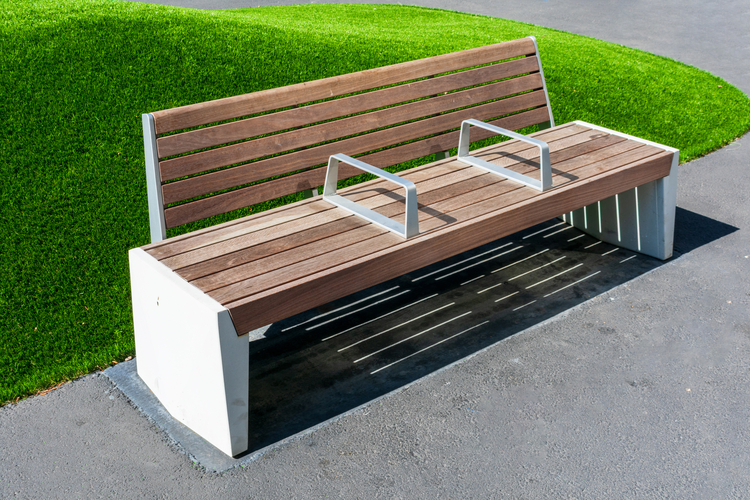
Walk through almost any British city centre and you’ll start to notice the small things: benches broken up by metal bars that serve no practical purpose; doorways lined with studs; bus shelter seats angled just enough to make staying put uncomfortable. These features rarely announce themselves, yet they quietly dictate how public space can be used – and by whom. This is ‘hostile architecture’ – design that doesn’t just shape our cities, but polices them.
Commonly rebranded by planners as ‘defensive design’, this urban strategy uses the built environment to curate who is allowed to exist in public and how they’re permitted to behave. It’s a physical manifestation of social engineering, deliberately shaping space to discourage certain behaviours, such as loitering, sleeping or resting.
Forms of hostile architecture include segmented benches, spikes embedded in surfaces, sloped seating and even noise deterrents – all designed to guide people away from using public space in ways that are deemed undesirable.
Enjoying this article? Check out our related reads…
The targets are clear: the rough sleeper seeking a dry corner, the teenager lingering with friends, the people who have nowhere else to be. By making public space uncomfortable, councils and private developers hope to make the social ‘disorder’ of poverty invisible to the investors and tourists they wish to attract.
We see similar practices in the 20th century: civil engineering used to shape not just spaces but social access. Influential planners such as Robert Moses reshaped American cities with vast parkway and public works projects that, according to some urban historians, privileged car owners over public transport users, effectively restricting access for poorer residents.
In the UK today, hostile architecture has evolved into a sleek, modern erasure. Some cities have installed ‘mosquito’ alarms that emit a high-frequency screech only audible to younger people to deter them from loitering, and intermittent sprinklers or noise systems that drench or disturb anyone attempting to sleep in sheltered alcoves.

Yet the irony is that this cruelty is a poor investment. Research by the homelessness charity Crisis shows that defensive architecture can worsen the lived experience of people experiencing homelessness and makes it harder for them to access support services. Rather than addressing root causes, it scatters people across a city, making homelessness more hidden but no less urgent.
This kind of design doesn’t just target people sleeping rough – it reshapes public life for everyone. A bench designed to deter lying down is just as unwelcoming to an older person who needs a rest, a disabled person managing pain, or a parent juggling a pram. When discomfort becomes a planning strategy, public space ceases to be truly public.
As debates continue around homelessness, urban renewal and the future of laws such as the Vagrancy Act, we face a simple choice: do we design cities that exclude problems from view, or cities that acknowledge and support the people who live in them? Removing the spikes won’t solve homelessness – but leaving them in place says a great deal about what, and who, our cities are really for.