
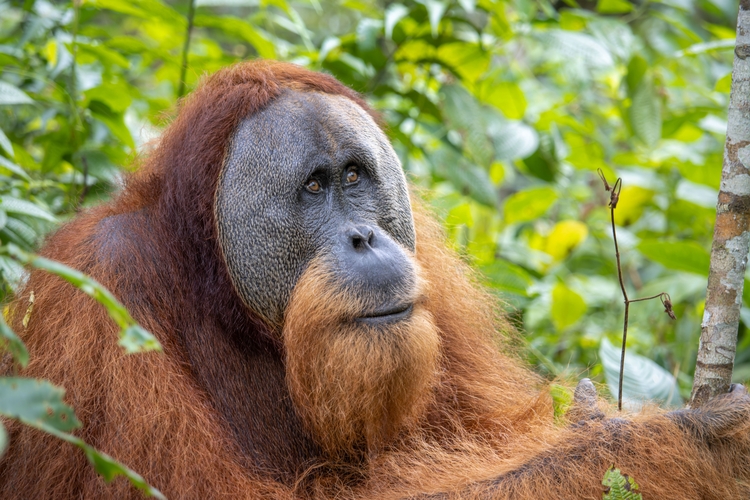
From the vaquita – the world’s rarest marine mammal – to the Sumatran rhino, discover the species facing extinction across the world
By
Around the world, there are approximately 2.16 million species recorded. Such a vast number includes 1.05 million insects, more than 11,000 birds, 11,000 reptiles and more than 6,000 mammals.
For some of these species, though, extinction looms over their future as a very possible reality – thanks to a range of factors from hunting, illegal trading, habitat degradation and more. Those impacted in these ways face increasing likelihoods of entirely vanishing from the planet: but which species are they?
Enjoying this article? Check out our related reads…
Here we cycle through ten of the most endangered animal species in the world, according to data taken from the IUCN Red List. All of these species are noted as ‘Critically Endangered’, only one ranking away from being categorised as ‘Extinct in the Wild’.
1) Yangtze giant softshell turtle (Rafetus swinhoei)

The Yangtze giant softshell turtle is a species believed to be composed of just three individuals, one of which has been kept for decades in the Suzhou Zoo in China. Historical records for the species place it throughout the Red River basin of Yunnan and Vitnam, as well as the coastal plains of northern Vietnam. The last records of the turtle living in the lower Yangtze River region date from the 1930s.
Due to increased agricultural and industrial development, the species has declined by more than 99 per cent across the past two generations.
It also faces extreme pressure from exploitation of adults and eggs for consumption, and targeted capture attempts in recent years due to its increased value. Historically, the turtle was killed for its meat to be consumed in local villages.
2) Vaquita (Phocoena sinus)

Known to only live in the northern Gulf of California, the vaquita is believed to only exist in a 300 square kilometre section of the ocean. Around 18 individuals make up its population, which has declined significantly across the last 30 years.
In 1997, abundance was estimated at 567; by 2008 that had dropped to 245 animals, and by 2015 it was estimated at 59.
The main threat that the vaquita faces is being caught in gillnets of various mesh sizes. Around 84 animals were killed as bycatch from a single port in 1993 – alone representing a 15 per cent share of the total population at the time. Other threats that are not as significant include pesticide exposure and ecological changes as a result of reduced flow from the Colorado River.
3) Saola (Pseudoryx nghetinhensis)
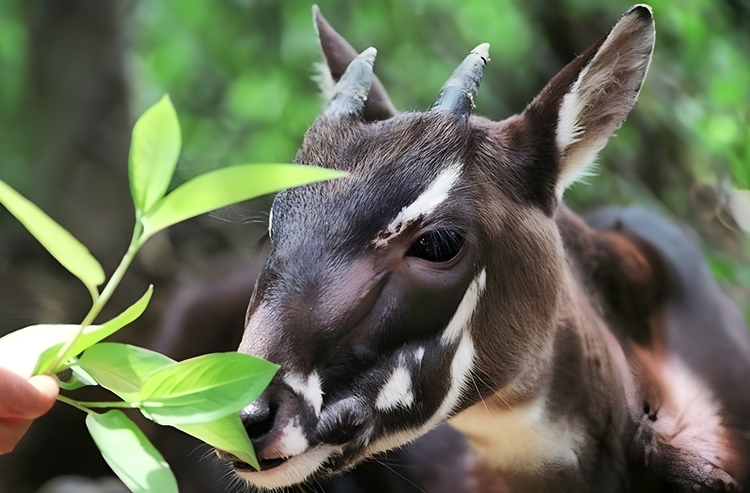
The saola – often dubbed the Asian unicorn – was only discovered back in 1992, making it the first large mammal species discovery in more than 50 years at the time.
The species only lives in the Annamite Mountains region of Laos and Vietnam. There are an estimated 50–300 individuals left in the population, with anywhere between five and fifteen subpopulations – none of which live in captivity.
To date, scientists have recorded saolas in the wild on only five occasions from camera-trap photos.
Natural saola populations have most likely always been relatively low, but the greatest threat facing its already limited abundance is hunting. The animal is often accidentally snared in the intense, general pursuit of other species valued in the region’s wildlife trade. Habitat destruction has also degraded areas that the saola frequents.
Protecting the remaining population requires more effective patrolling against snaring and other types of hunting. Another priority, according to the IUCN, is to conduct a range wide assessment of the species’ status and conservation opportunities.
4) Tapanuli orangutan (Pongo tapanuliensis)
Due to high levels of habitat degradation and fragmentation – along with illegal killing – the Tapanuli orangutan is estimated to have experienced a significant population reduction in recent decades. There are an estimated 800 or fewer individuals in the species, making it the least numerous of all great ape species.
Approximately 14 per cent of the geographical range of the orangutan is not protected at all, nor even allocated as forest estate.
With current management, the keys threats being faced by the Tapanuli orangutan are not being effectively reduced. As such, the IUCN predict an 83 per cent decline in the species across the course of three generations.
5) Javan rhino (Rhinoceros sondaicus)

The Javan rhino currently resides in Indonesia in lowland tropical rainforest areas, but used to be found in a plethora of countries from Myanmar, Vietnam and Malaysia to Bangladesh and China.
Based on camera trap data, an estimated 68 animals (29 adult males, 24 adult females and 15 juveniles) live in Ujung Kulon National Park on the western tip of Java. Unfortunately, the population hasn’t grown significantly in the last two decades due to possible food competition with the Javan banteng and human encroachment.
The long-term cause for population decline can be attributed to excessive demand for rhino horn and other products for medicine.
Although the Ujung Kulon population is believed to be stable, the park may be close to carrying capacity and the population probably cannot grow without additional intervention.
6) Kakapo (Strigops habroptilus)

Around 149 kakapos – large, flightless and nocturnal parrots – comprise the species’ population, which live in New Zealand.
Each year, on Stewart Island, more than 50 per cent of monitored adults were killed by cats. Introduced stoats and black rats contributed to the decline, posing threats to eggs and chicks.
Abnormally low egg fertility and exceedingly low natural reproductive rates are major concerns for the future viability of the kakapo.
7) Cebu flowerpecker (Dicaecum quadricolor)

The Cebu flowerpecker is endemic to the island of Cebu in the Phillippines, and lives primarily in tall forest patches on karst limestone. It was believed to have become extinct in the early 20th century, but was rediscovered in 1992 at a forest in Tabunan.
There are around 60 to 70 individuals comprising the population, which are threatened regularly by illegal settlement, road construction, shifting cultivation, illicit logging and habitat clearance for mining. The species may also have suffered from the impacts of a recent typhoon – Typhoon Haiyan – that stripped many areas of leaves and fruit.
Local forest wardens regularly conduct forest patrols to keep a look out for the birds, as well as regular Cebu Flowerpecker watches. Field research into the species’ ecology is still ongoing.
8) Sumatran rhinoceros (Dicerorhinus sumatrensis)

The Sumatran rhinoceros has a population of fewer than 80 individuals. Until the early 1990s, numbers continued to decline at a rapid rate with estimated losses of 50 per cent or more of the population per decade.
According to the IUCN, it is the most threatened large mammal on Earth, residing in tropical rainforests and montane moss forest in Indonesia and perhaps in Myanmar.
The three major threats impacting the Sumatran rhinoceros are small population effects, human disturbance and poaching. Poaching is primarily driven by demand in Vietnam and China for the alleged medicinal properties of rhino horns and other body parts.
Ultimately, many centuries of overhunting combined with habitat loss has resulted in the Sumatran rhinoceros being reduced to a tiny percentage of its former population and range.
9) Pondicherry shark (Carcharhinus hemiodon)
The Pondicherry shark is a small, very rare whaler shark living in the Indo-West Pacific. The species appears to occur in shallow coastal waters, with some reports it can even enter rivers.
There are around 249 mature individuals, all of which face treats from shark fishing. This practice is widespread, intensive and generally unregulated across its range, and practices are well known to be unsustainable.
Due to its small size, it is likely that the Pondicherry shark has been captured by gillnets and line fisheries. In India alone, there are more than 13,400 gill netters operating along the west coast, with many other types of net gear deployed in coastal areas.
10) African forest elephant (Loxodonta cyclotis)
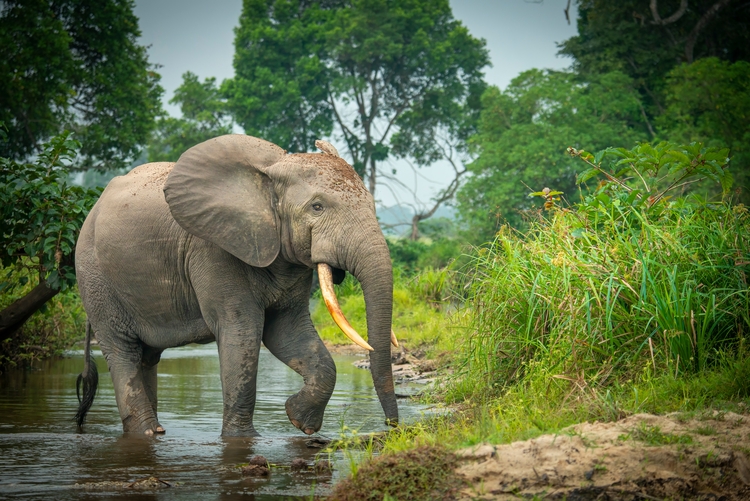
African forest elephants once occurred across the entire humid forest area of western and central Africa, and currently are found in 20 countries. Their range is decreasing and highly fragmented in western Africa, where seven range countries are reported to have fewer than 100 African forest elephants each.
Poaching for ivory is the main cause of death of African forest elephants, with persistent poaching pressure at many sites evident from their first surveys in the 1970s to the present day. Rapid land use change also threatens the species, with land conversion due to the ongoing expansion of the nearby human population reducing the viable habitat that the elephants can use.


