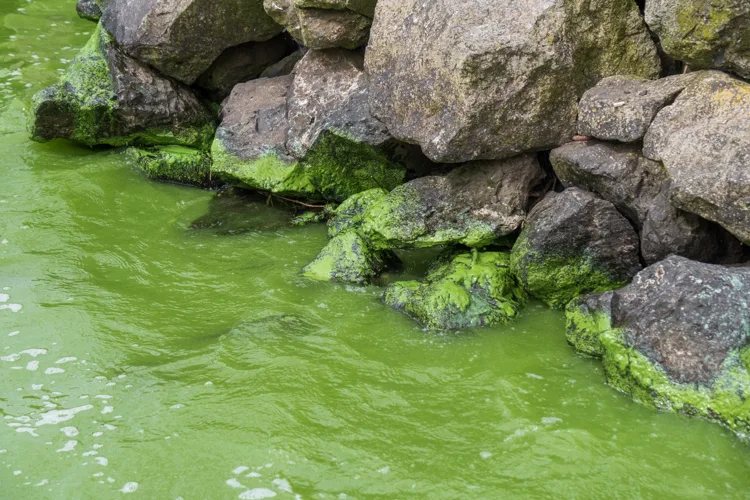
Toxic algal blooms have turned the UK’s largest lake green, but new research reveals that its problems began thousands of years ago – and reforestation could offer a solution
By
From above, Lough Neagh appears as a vast, inky body of water surrounded on all sides by an expansive patchwork of agricultural plots. Since 2023, however, its dark waters have frequently been clouded in green – toxic algae that, from this aerial view, can be seen blooming across the lough.
At ground level, the situation appears even worse; thick, stinking green scum coats the surface, clinging to rocks, boats and unwary wildlife.
This is the UK’s largest lake and the biggest body of fresh water in the British Isles. It supplies 40 per cent of Northern Ireland’s drinking water, has long been the site of Europe’s largest wild eel fishery – a centuries-old industry – and is an internationally recognised wetland for tens of thousands of migrating birds.
But Lough Neagh is ‘hypertrophic’, swamped by excess nutrients from nearby fields and sewage releases. Three summers ago, as record heat and decades of pollution triggered huge algal blooms, local campaigners described it as ‘dying in plain sight’.
In response, the Northern Ireland Executive approved a 37-point action plan in July 2024, including measures to reduce agricultural pollution and improve wastewater infrastructure.
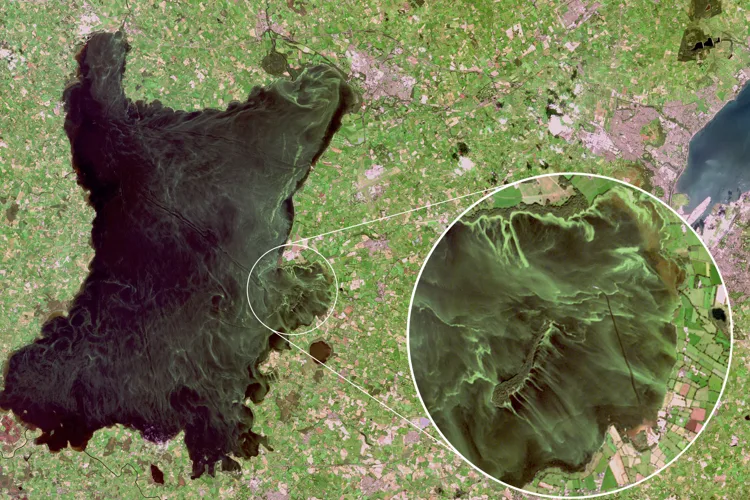
While the crisis recently came to a head, the problems facing Lough Neagh are far from new. In fact, recently published research reveals that algae were blooming in the lough by the mid-19th century, long before the modern agricultural intensification of the 20th century.
Alex Chepstow-Lusty is a palaeoecologist at the University of Sussex who reconstructs how vegetated landscapes have changed over centuries, and how human activity helped reshape them. Reconstructing the history of how plants take root and spread across different ecosystems is a complex, painstaking task because wood and other plant matter leave few lasting visible traces. Fortunately, they do leave behind microscopic clues for scientists such as Chepstow-Lusty to uncover – most notably, pollen.
In the late 1990s, while researching how Incan agroforestry reshaped the land in the highlands of Peru, Chepstow-Lusty was invited by Queen’s University Belfast to take a look at a newly retrieved sediment core from Lough Neagh. Drilled from the lakebed, the core held layers of mud and organic material spanning thousands of years. Trapped within this mud was a vast archive of pollen dating back to the early Holocene.
Extracting and analysing these microscopic fossils would require some particularly aggressive chemicals. Pollen grains, Chepstow-Lusty explains, have an outer wall made of an incredibly resistant material called sporopollenin. Known as the diamond of the plant world, it’s so chemically inert that it can survive inside lake sediments and fossil beds for hundreds of millions of years.
‘There’s a scene in an early episode of Breaking Bad where one of the characters tries to dissolve a body in a bathtub full of hydrofluoric acid, rather than a plastic container as instructed,’ says Chepstow-Lusty. The acid soon eats through the ceramic tub and the floor, causing everything to fall through to the hallway below. This same acid can be used to break down rock and silt, leaving the pollen walls intact.
By identifying and counting these microscopic grains layer by layer through the core, Chepstow-Lusty mapped out a precise timeline of how the region’s vegetation shifted over thousands of years. He found that, long before human influence reshaped the basin, the landscape around Lough Neagh underwent a dramatic post-glacial transformation.
In the early Arctic tundra period, the terrain was largely open, populated only by low-lying herbs, dwarf willows and dwarf birches.
Enjoying this article? Check out our related reads…
As the climate warmed, forest species systematically colonised the region – starting with pioneering juniper and hazel – until a dense, closed canopy covered the catchment: part of the vast temperate rainforest that once stretched across much of the UK.
Chepstow-Lusty compares these ancient Atlantic rainforests – in scale, density and ancient tree sizes – to the surviving primeval forests of Poland. The archaeological record shows that Mesolithic hunter-gatherers had little to no disruptive impact on these woodlands, but they did carve impressive log boats from the trunks of ancient oaks and pines. ‘There’s nothing of that size growing in Ireland today,’ says Chepstow-Lusty.
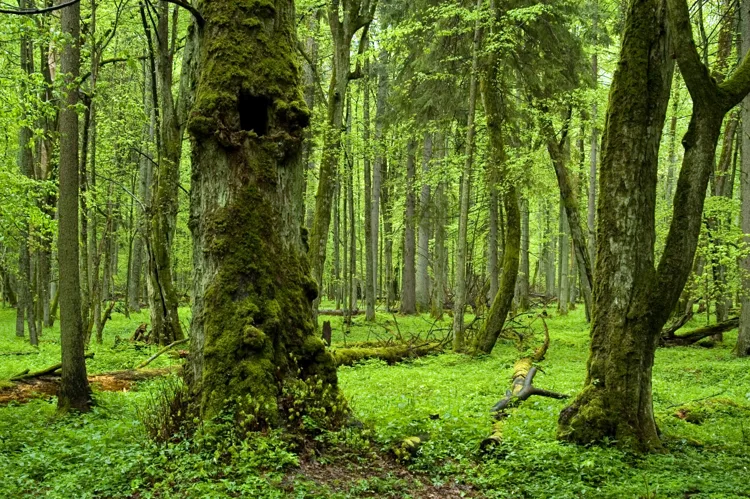
These ancient forests held firm until the arrival of the first Neolithic farmers, who made the initial structural break in the canopy by clearing trees and harvesting foliage for livestock, marking the beginning of human-driven landscape alteration – and, Chepstow-Lusty discovered, the re-emergence of algal blooms.
In addition to tracking plant pollen, Chepstow- Lusty had long made a habit of counting non-pollen microfossils – specifically Pediastrum, a genus of green algae whose populations surge whenever nutrient levels and soil erosion rise. These green algae are distinct from the cyanobacteria responsible for today’s toxic blooms.
The core revealed that before trees colonised the catchment area, Pediastrum flourished in the open, nutrient-rich landscape of the post-glacial tundra. But as dense forests took hold, they acted as a natural sponge, locking up nutrients and stabilising the soil.
With runoff choked off, the algae all but vanished from the lake for thousands of years – until early farmers opened up the forest once more.
Following his initial analysis of the Lough Neagh core, Chepstow-Lusty returned to his fieldwork in South America, but he remained fascinated by the lake’s ecological record, repeatedly revisiting the data alongside the late palaeoecologist Julie Fossitt.
As the lough descended into a full-blown crisis in 2023, their findings raised a critical question: could catchment reforestation be the key to saving Lough Neagh?
Agricultural runoff isn’t the only issue facing Lough Neagh. Decades of sand dredging have scoured the lakebed and redistributed trapped phosphorus, and raw sewage discharges, warming waters and invasive zebra mussels all encourage toxic blue-green algae.
Stopping farm pollution and upgrading wastewater plants are necessary first steps, but Chepstow-Lusty’s findings suggest a longer-term solution may be key to keeping Lough Neagh’s water clean.