


The evidence is mounting. From butterflies to beetles, insects are disappearing at an alarming rate – and the consequences reach far beyond our windscreens

By
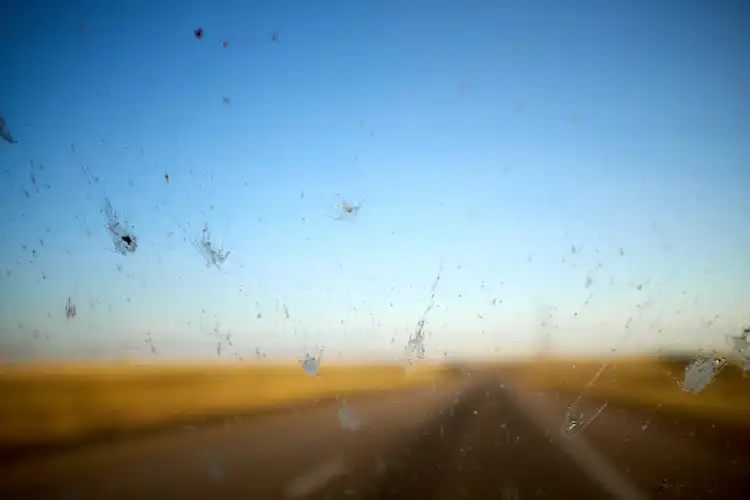
As any Baby Boomer will tell you, with the car windows rolled down, a journey through the countryside was accompanied by the constant, rhythmic thwack of insects against the windscreen. Today, you can drive on a (much hotter) summer’s day and find your windscreen remarkably – and hauntingly – clear.
For a long time, the so-called windscreen phenomenon was dismissed as anecdotal observation rather than scientific evidence. But the data – and the landscape – now support what many people have noticed. Insects haven’t learned to dodge our cars. They are disappearing.
Enjoying this article? Check out our related reads…
According to the latest data from the EU’s 27 member states, the index of 17 grassland butterfly species declined by 47 per cent between 1991 and 2024. A study by the University of North Carolina analysed 20 years of data from a sub-alpine meadow in Colorado, where direct human impact is minimal, and recorded a 72 per cent decline in flying insects. In the UK, the citizen science project Bugs Matter tracks insect impacts on vehicle number plates rather than windscreens (anyone can take part using a smartphone app). In 2025, it reported a 59 per cent drop in bug abundance over five years. We now have evidence that the world is becoming eerily quieter. It’s the silent unravelling of the very fabric of life.
Insects are the primary engine of our planet’s ecosystems. They are the pollinators responsible for around 75 per cent of food crops. They form the base of the food chain for birds, reptiles and small mammals. They represent a vast share of animal diversity and biomass and more than 70 per cent of described animal species. Their relentless decline threatens a point of collapse – an ‘insectageddon’ that would deal a catastrophic blow to global food security. The main culprits are pesticide use, habitat loss and climate-induced phenological mismatch (as temperatures rise, insects emerge from dormancy earlier, falling out of sync with the plants they depend on). The obvious solution is to reverse all three trends – beginning with our steadily warming climate.
It’s true that recent studies suggest insect population trends are complex, highly localised and often involve winners and losers rather than a uniform collapse everywhere. But the real concern is the loss of specialist species – those highly adapted to particular plants – while generalist and invasive species become disproportionately more common.
The EU has launched a €13million research initiative to improve insect monitoring. The goal is to move away from ‘splat counts’ towards an automated, sensor-based picture of insect population health. The lack of a truly global monitoring network remains a major obstacle to conservation. Insects in the Global South, for instance, remain vastly understudied. Researchers are now advocating for a variety of global indices to track long-term trends more systematically.
That would only be a start. Humanity remains dangerously far from reversing a decline that it has driven for decades.
How much worse will 2026 be for insects? We have no technology capable of measuring insect populations in real time. Yet if you had to place a bet, where would you put your money?
As I write, barely a week after the summer solstice, two severe heatwaves have already swept across Europe. People have died. Air conditioning has strained power grids to their limits. The risk of wildfires has soared. No-one can know exactly what will have happened by the time you read these lines, but summer 2026 has already acquired the status of Europe’s hottest on record. And that, unlike many of the season’s individual events, was widely predicted.
To be fair, climatologists’ qualitative prediction – that Europe would warm faster than the global average – has proved correct. But the quantitative prediction – how fast and how extreme that warming would become – has consistently lagged behind reality. ‘Heatwaves are here to stay, until we turn the tap off to global emissions,’ Samantha Burgess, deputy director of the Copernicus Climate Change Service, told Nature. This isn’t the new normal; it’s the new abnormal. Just ask the bees, ladybirds, fireflies, butterflies, moths and beetles struggling through prolonged heatwaves while striving to accomplish their biological purpose – to survive and reproduce.
I swear, it’s not about being nostalgic for the good old days. I really do wish I still had to clean my windscreen.


