Author John Kampfner talks to Victoria Heath about his insights from travelling across the world
Kampfner’s travel insights
– Don’t overplan – leave space for spontaneity
– Remain curious and open to the world around you
– Travel can be as much about unlearning and learning
A self-described ‘citizen of everywhere’, author and journalist John Kampfner has always seen himself as unrooted. Born in Singapore to a Slovak father and a mother from Kent – with family ties that stretch to Mexico – he has never felt anchored to a single place. Instead, Kampfner has built a life of movement. ‘I see myself as somebody who just loves to go places and interact and learn,’ he says.
While still at university, he travelled to Cambodia to report on refugees from Pol Pot’s killing fields, at a time when, as he puts it, ‘you would just turn up somewhere and figure it out’. Since then, Kampfner’s reporting has taken him to more than 100 countries across four decades in journalism, and into the writing of eight books that examine the forces shaping modern societies. From politics to culture, his work has often focused on moments of tension and transition, tracing how nations respond under pressure.
Enjoying this article? Check out our related reads…
In recent years, however, Kampfner’s perspective on the world has taken a turn. ‘I had become a professionally pessimisti,’ he admits, having correctly anticipated political upheavals from Brexit to Trump. Yet he came to see that anticipating events isn’t the same as driving progress. Instead, he began to wonder whether it might be more useful to look at countries doing things well, rather than focusing on the ways the world may be fracturing.
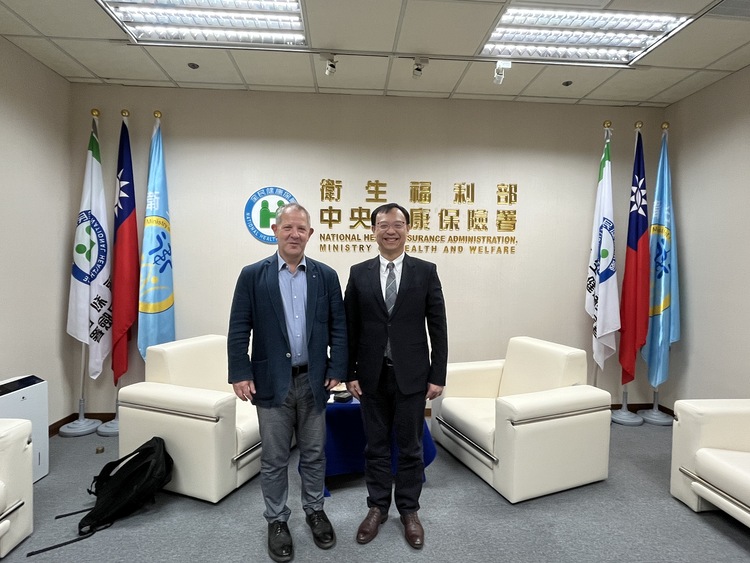
This idea became the starting point for a three year journey across ten countries for Braver New World, his latest book, which explores how different societies confront shared challenges – from climate change to healthcare, education and economic resilience.
At times, the lessons he encountered through these travels arrived on a grand scale. In Morocco, Kampfner stood before the world’s largest concentrated solar power plant in Ouarzazate. Its scale is overwhelming, but so too is the ambition behind it: a country once reliant on imported fossil fuels now generates more than half its energy from renewables.
In Costa Rica, he walked through the high-elevation cloud forest of Monteverde – a landscape shaped by decades of reforestation – encountering wildlife in its natural habitat. What was once cleared and destroyed for agriculture has been rebuilt, not only restoring ecosystems but strengthening the country’s economy through ecotourism.
What each country taught Kampfner on his journey is that nations don’t need to excel in every area, but simply get one thing right and ensure it’s something others can learn from and apply elsewhere.
Across these travels, Kampfner often worked to tightly structured schedules, with several interviews each day forming the backbone of his reporting. And yet, he insists on carving out space within that structure. ‘You need to give yourself that extra little bit of wiggle room,’ he says, not just to avoid exhaustion, but to remain open. ‘You have to allow for spontaneity, because that often produces the most exciting moments.’
However detailed the research or tightly planned the schedule, Kampfner also resists arriving to new places with fixed conclusions. ‘If you’re not open to people and open to being surprised, then you obviously limit what you’re going to find out.’
Travel, in this sense, becomes less about confirming what we think we know, and more about unlearning it.
It’s in these moments – a conversation off schedule, a place encountered by chance – that new perspectives tend to surface and grow. As such, the value of travel, Kampfner suggests, isn’t always immediate. It can reveal itself later – in the questions that we ask, the assumptions that we discard and the places that we begin to see differently.