Victoria Heath meets Jon McCormack, the fine art photographer and senior Apple engineer whose stunning images of natural patterns reveal the beauty hidden in plain sight
Humans are wired to recognise patterns. Familiar structures – cars moving along roads, skyscrapers rising into the sky – are psychologically grounding, helping us to make sense of the world. But natural patterns are never exact. A wave resembles the one before it, but is never the same – and likewise for tree branches, flowers and other forms. This blend of familiarity and variation activates the brain’s reward system, sparking a dopamine effect that makes looking at patterns in the natural world both regulating and relaxing.
Enjoying this article? Check out our related reads…
Few people are as attuned to these patterns as photographer Jon McCormack. He’s also vice president of camera and photos software engineering at Apple, where he helps oversee the software behind the iPhone camera – one of the most widely used cameras in the world. It’s a rare overlap: a fine art photographer whose personal work is rooted in slowness, attention and the natural world, but whose day job involves shaping the way billions of people make images every day.
From cracked mud in Death Valley to illuminated algae flowing through Kenya’s Lake Magadi and caffeine molecules seen under a microscope, McCormack is drawn to what he calls ‘tiny landscapes’ – intricate details that might otherwise pass by unnoticed.
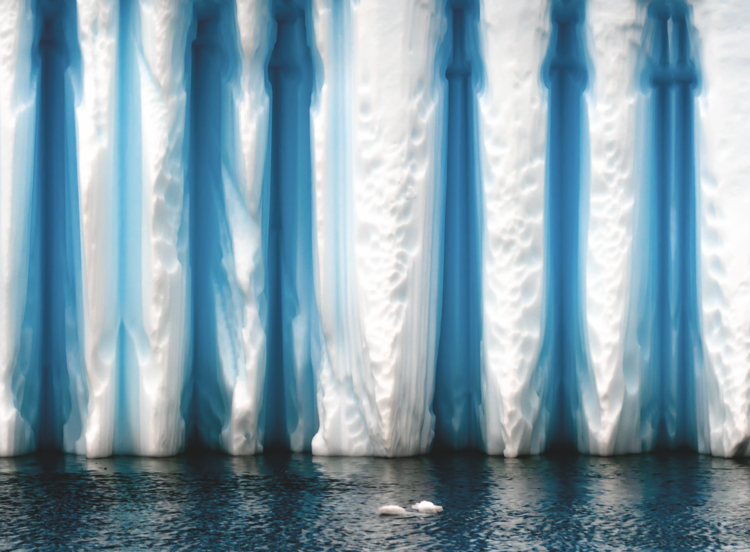
This way of seeing hasn’t always defined his work. It began during the Covid-19 pandemic, when McCormack – originally from a cattle, sheep and wheat farm in rural Queensland, Australia – moved to a small coastal town in northern California. Over the next eight months, he returned to the same stretch of beach every evening, initially photographing it in the ‘traditional’ sense – horizon shots, expansive views, stretching vistas. But over time, his attention shifted to something much more subtle.
Instead of the overarching scene, he found himself drawn to the smaller moments within it: the interaction between the tide, light, wind and sand. ‘The practice of searching for these patterns became almost meditative, and an incredibly peaceful project.’
McCormack quickly became inspired by the transience of these patterns. ‘They were never to be repeated, because every single one was some interesting combination of natural conditions like light, atmosphere and wind. So it’s not like I could go back and retake it the next day – the world would have moved on.’
Patterns are also a means of navigating for McCormack, who is colourblind. ‘Most people are able to use colour to make sense of things, but for me, patterns are how I interact with the world.’ It’s a perspective shaped by his background, too, having studied mathematics and computer science at university – fields that rely on identifying and making sense of patterns in data. ‘The quest for patterns has really been a way of bringing my science brain and artistic brain together into balance.’
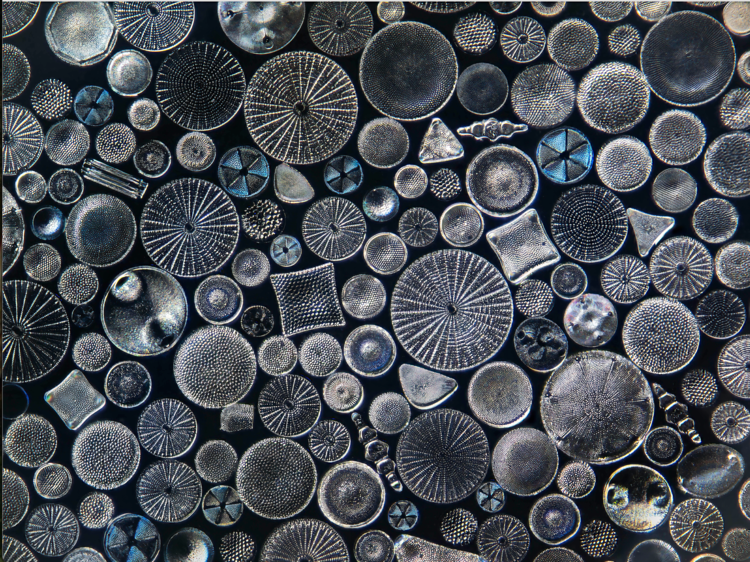
But photographing patterns can come with its challenges, too. One photograph in McCormack’s latest book, Patterns, looks like a drawer full of buttons. In reality, these shapes are diatoms – none of them bigger than the width of a human hair. For that photograph, McCormack had to capture images through a microscope, taking 25 different pictures at different focal planes and merging them for the final result.
His work on patterns has taken him across the world, including to Kenya’s Suguta Valley, where he viewed the entire length of the valley on Google Earth in advance to map out its photographic possibilities. He also spends a significant amount of time researching weather and light conditions, and using online tools to find out information about the places he photographs before he gets there. But not every location allows for such preparation. McCormack’s favourite landscapes to photograph – ice caves in Svalbard and Iceland – are impossible to fully understand before stepping inside them. ‘It’s really just a case of knowing that they’re there, getting there and making the best of the situation,’ he says.
In these regions, landscapes carry the effects of a warming planet. ‘In southern Iceland, the glacial wall is retreating between 50 and 100 metres per year. Every ice cave that I’ve ever photographed, I can never go back to, because they tend to occur near the edge of the glacial wall. So, there’s a great deal of sadness about ice caves for me.’
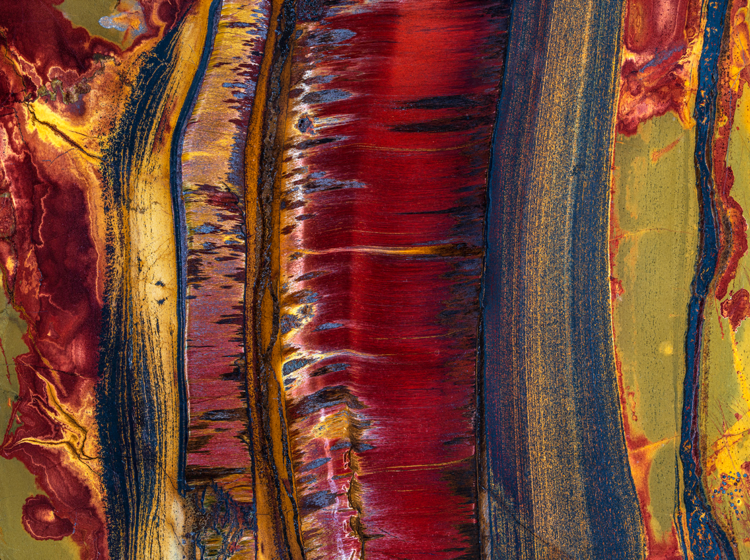
For McCormack, then, photography is a ‘celebration of existence’ – a way of capturing moments that may one day disappear, like these vast icy structures. That instinct to preserve a moment is also at the heart of the technology he works on at Apple, where the iPhone camera has helped make photography almost frictionless. It can be seen in the billions of photographs taken on smartphones, whether capturing a birthday, a meal, or, as so many do, a fleeting moment on holiday.
But McCormack worries that this constant documentation can sometimes distance us from the very places we’re trying to capture. ‘Often, we spend so much time trying to get the perfect shot of a place that we don’t slow down enough to enjoy it,’ he says. It’s true: take one look at any tourist attraction across the world and you’ll likely see swathes of tourists with their phones held up in the air.
Instead, taking the time to put down the camera and immerse yourself in a place can reveal far more than a photograph ever could. Because, as McCormack’s work suggests, to really see the world, you first have to slow down enough to notice it.