
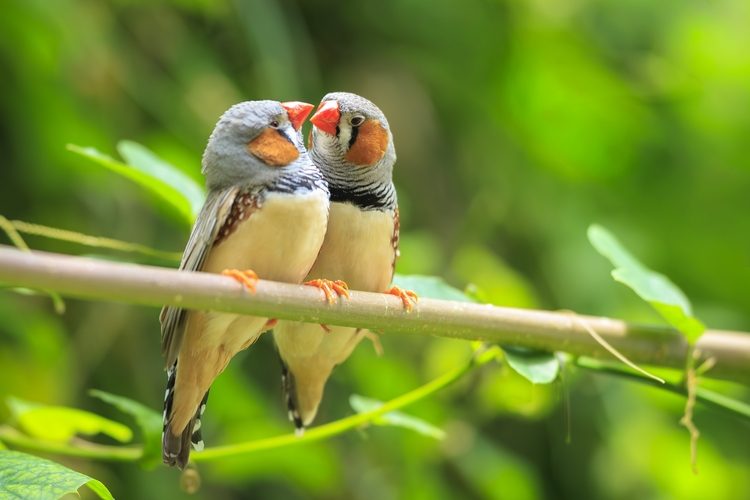
A team of scientists make progress toward a world in which humans can talk to animals through research on zebra finches
By
This week, The Coller Dolittle Challenge for Two-Way Interspecies Communication has awarded its annual $100,000 prize to a scientist who has discovered that zebra finches classify their calls by meaning, more so than by the sounds they make.
The prize is awarded for the most promising research aimed at developing an algorithm for communicating with animals.
Enjoying this article? Check out our related reads…
Using AI machine learning and detailed observations of animal behaviour spanning more than a decade, Dr Julie Elie from the University of California, Berkeley, and her team investigated the acoustic features of zebra finches’ vocalisations. In turn, they created a ‘dictionary’ classifying vocalisations into 11 categories or call types, with meanings ascribed to them, such as bonding, aggression, or hunger.
These vocalisations were then tested. Elie trained zebra finches to press buttons that played her categorised call types, and each day she rewarded only one call type with seeds. Quickly, the birds learned which call type was being rewarded and skipped non-rewarded call types. Elie explained that the birds’ behaviour was similar to scrolling on social media, moving on if the beginning of a video doesn’t capture attention.
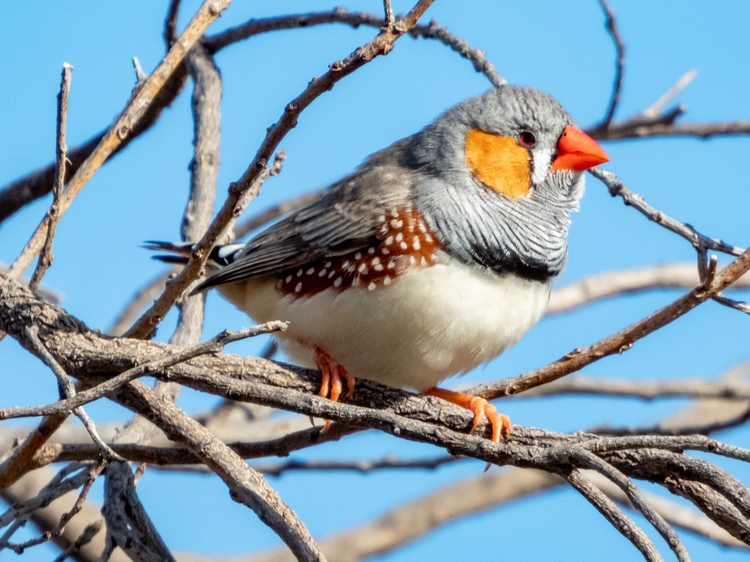
However, the most remarkable scientific advancement was discovered after the categorisation exercise. Elie and her team looked more closely at the errors birds made while seeking the rewarded call type.
Zebra finches made mistakes on calls that had similar meanings, even though they did not sound the same. But, they never mistook calls with similar acoustic patterns but distinct meanings. ‘Their responses indicated they have a mental imagery of the meaning of their vocalisations,’ said Elie. ‘In other words, they understand the meaning of their call types.’
‘It’s been a fascinating collaborative exercise to ask the zebra finches questions about their vocalisations. The fact that, sometimes, the birds get the classification of their own calls wrong has enabled us to gain huge insight into their perceptions and mental imagery,’ said Dr Julie Elie.
Jonathan Birch, professor of philosophy at London’s School of Economics and Politics, said: ‘Dr Julie Elie has been doing absolutely phenomenal work across more than 15 years, not just building up a dictionary of the 11 ‘core words’ of the zebra finch’s vocabulary but also asking the finches themselves, through ingenious experimental techniques, whether she’s got the meanings right. It’s a stunning example of how to move rigorously from recording thousands of calls to understanding their meanings.’
The prize was first launched back in 2024 by the Jeremy Coller Foundation in partnership with Tel Aviv University. Shortlisted contestants for this year’s prize include a Swiss-US team that found bonobos have calls that resemble human sentences; a French team that proved African striped mice can reveal their identities through ultrasonic squeaks; and another French team that sought to understand the noises chimpanzees make.


