A visit to the Galápagos Islands with naturalist guides reveals an archipelago in motion – tortoises on the march, lava still cooling and a fragile balance as record visitor numbers test one of the world’s great living laboratories
By
One Wednesday in March 1535, the bishop of Panama – a man named Tomás de Berlanga – saw an island. Bishop Berlanga was bound for Peru, sent to help settle a territorial dispute between two rival Spanish conquistadors who were dividing up the Inca Empire. On the way, his ship had become stranded in the windless waters at the equator. For six days, he later reported to King Carlos V of Spain, powerful currents engulfed and carried his ship and its crew west. With few provisions left on board, they went ashore, searching the island for water. They found only sea lions, giant tortoises, serpent-like iguanas and rocks.
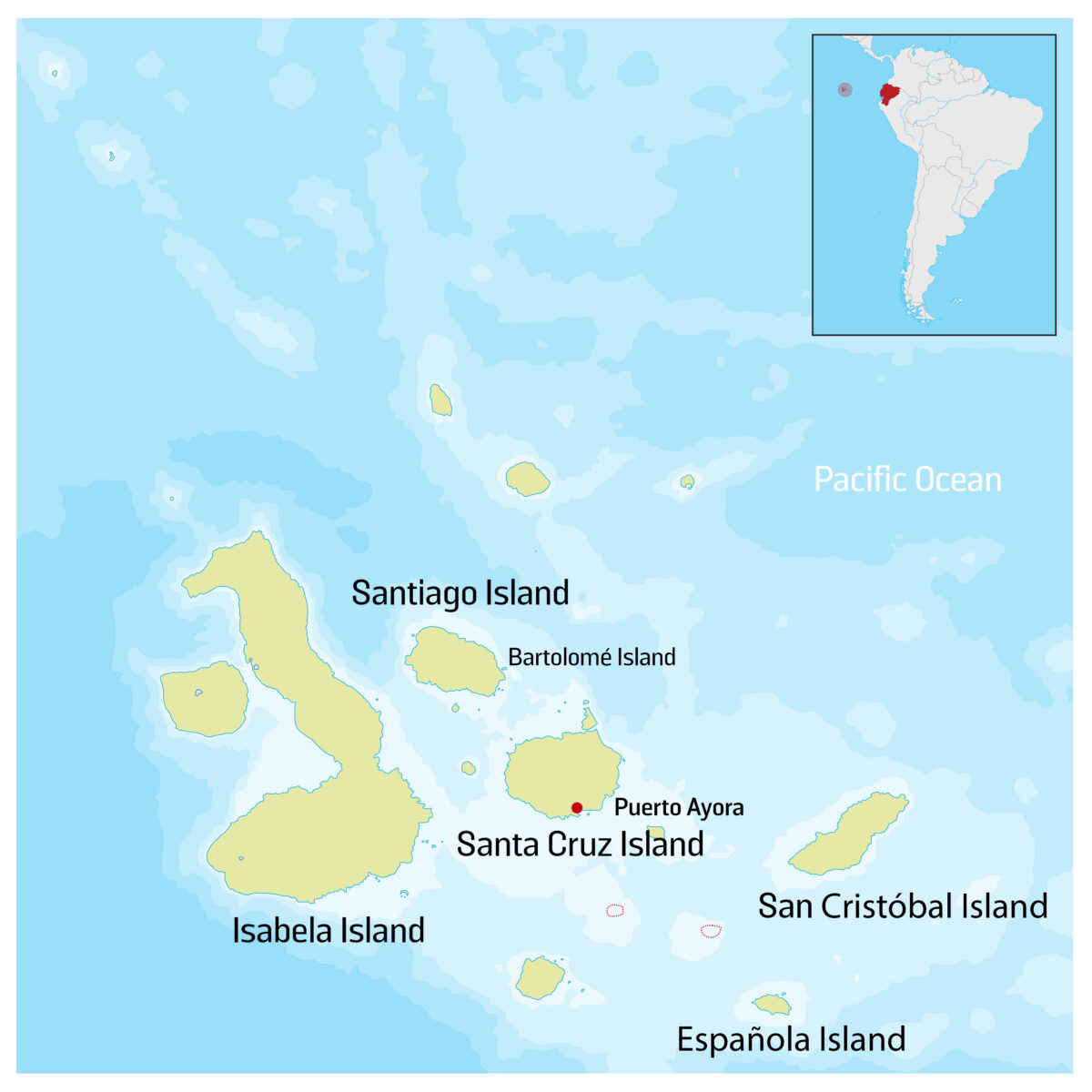
Exactly 300 years later, and 265 days after setting sail from Plymouth, British naturalist Charles Darwin alighted on San Cristóbal, the easternmost of the Galápagos Islands. At this point in history, the archipelago was well known to seafarers; following Berlanga’s report, and later accounts by Spanish and Portuguese sailors, a cluster of islands called the Ysolas de los Galopegos was recorded on a revolutionary new world map by the Flemish cartographer Gerard Mercator. By the time Darwin arrived, an assortment of settlers, convicts, exiled soldiers, whalers and pirates – and a whole menagerie of cattle, goats, pigs, cats and rats – had populated or regularly visited a handful of the islands.
Check out our related reads…
Darwin spent 36 days in the Galápagos, visiting four of the 13 major islands (there are many more islets) before HMS Beagle sailed on across the Pacific Ocean to Tahiti. Upon his return to England two years later, he presented several hundred bird specimens collected during the five-year voyage to a professional acquaintance – ornithologist John Gould – for identification. Among them were four mockingbirds, each caught on a different Galápagos island. While the birds all bore an unmistakable similarity to those found on the American mainland, each one, Gould revealed, was a distinct species.
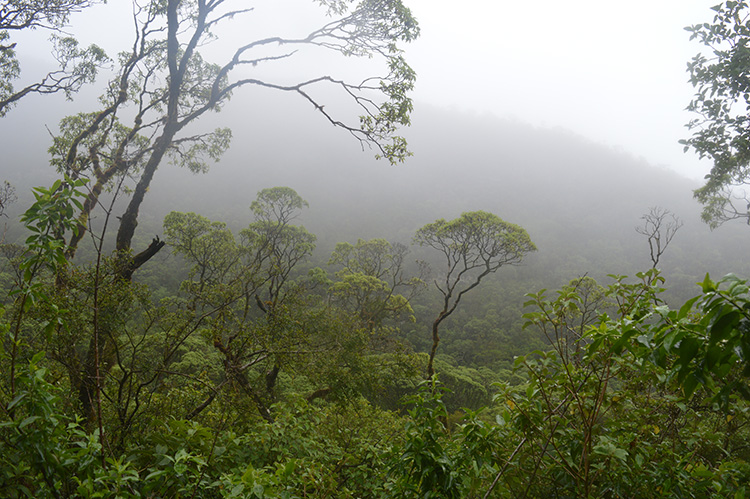
One long, straight road connects the ferry terminal on Santa Cruz, today the most visited of the Galápagos Islands, to the central highlands. The tarmac is bordered on either side by a stunted forest of Scalesia trees, giants of the daisy family. When Darwin set foot on the shores of San Cristóbal in mid-September some 190 years ago, he was met with a parched and seemingly lifeless landscape. Had he visited a few months earlier, he likely would have found the arid lowlands transformed by months of rain. Once you climb above 400 metres, however, the atmosphere in the archipelago is always humid. A fine coastal mist – the garúa – sustains a flourishing community of moisture-loving tree ferns, orchids, mosses and liverworts year-round. As we reach each summit in the gently undulating road, a vivid green landscape stretches out ahead as far as the eye can see.
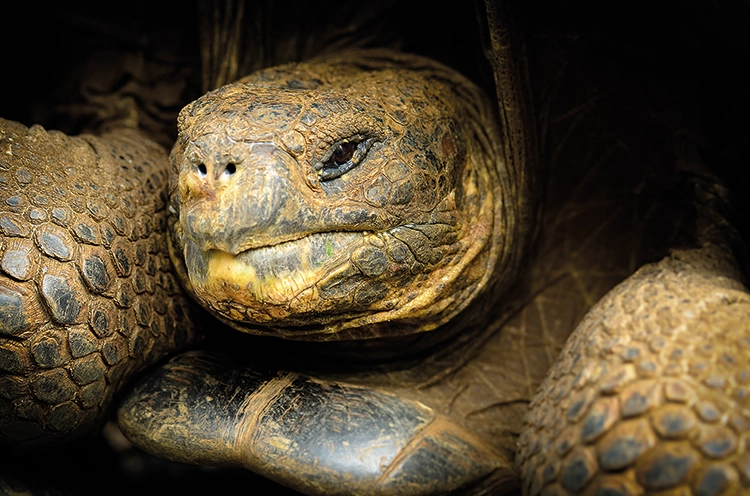
Twice, the car passes a promisingly dome-shaped boulder near the grass verge. Each year in Santa Cruz, around June, as many as 3,000 giant tortoises begin a slow, lumbering descent from the highlands to dig nests in the warm lowland soil and feast on newly emerged foliage. Darwin had wondered at the well-worn tracks that cut through the earth and vegetation on San Cristóbal. He discovered their creators a little while later, wallowing in the mud of a rare freshwater spring. An ongoing study, led by the Charles Darwin Foundation since 2009, shows that giant tortoises follow the same migration routes year after year. Today, these routes are increasingly obstructed by an expanding network of farms, roads and tourist infrastructure – particularly on Santa Cruz – and an invading tide of elephant grass and blackberry shrubs. ‘The Galápagos face many challenges,’ Francisco Andino Robalino tells me.
I meet Andino Robalino at Finch Bay, a beachfront hotel across the bay from Puerto Ayora. More than a third of the Galápagos’ population, which has surged from around 2,000 in the 1960s to 32,000 today, lives in this small harbour town on the southeast coast of Santa Cruz. I walk past the waterfront souvenir shops selling caps, T-shirts and fridge magnets, and step around a slumbering two-metre-long male sea lion to the water taxi.
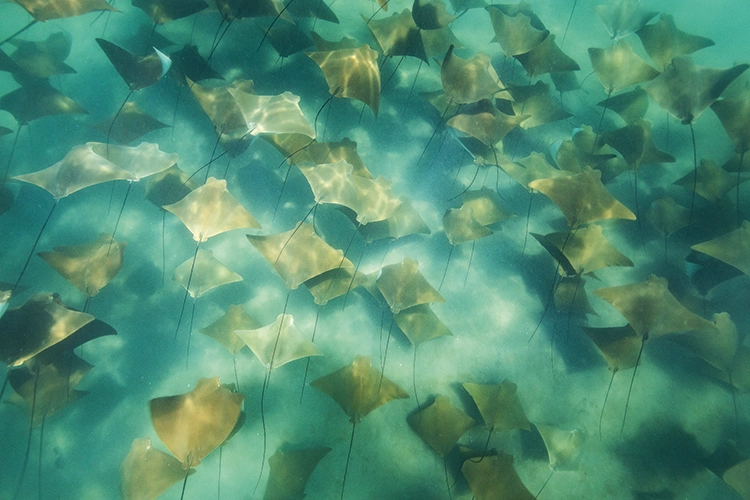
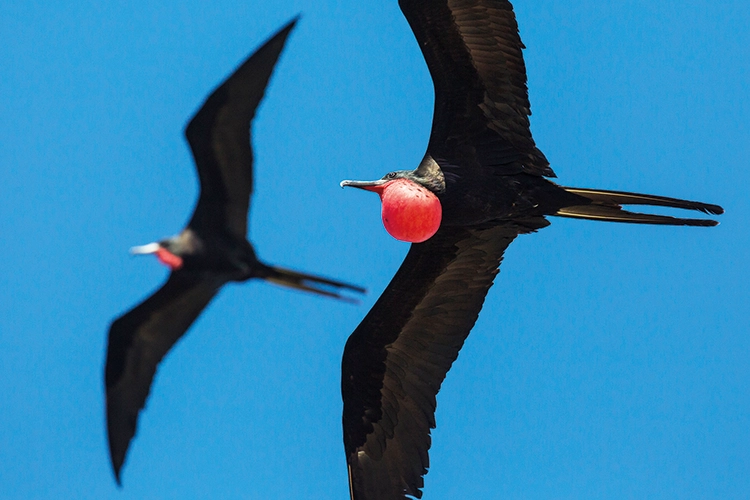
Much later, while standing on a quiet beach formed by fragments of pale coral and jagged jet-black rocks, someone will say that the whole archipelago resembles a prehistoric world. But even here, on this five-minute boat crossing a stone’s throw from the cruise ships and dive shops, it feels like a land frozen in time. Clusters of palm-sized marine iguanas huddle at the edge of the pier, and vermilion Sally Lightfoot crabs shuffle along the water’s edge. A blue-footed booby perches on a guano-painted cliff among prickly pear and candelabra cacti. Beside the boat, a solitary blacktip reef shark cruises through the turquoise water, and a group of golden cownose rays emerges from the shadowy depths. Overhead, frigate birds fill the sky like pterosaurs.
Andino Robalino is dressed in the seemingly universal uniform of the Galápagos guides: a light beige, long-sleeved shirt and matching trousers, hiking shoes, a wide-brimmed hat and fingerless gloves. I shelter from the sun beneath a parasol. As we talk, a pair of pintail ducks waddle between waiters and tables topped with cocktail glasses before dipping into a swimming pool that’s as warm as bathwater. Andino Robalino is the youngest of three siblings, all of them naturalist guides. His mother, he tells me, is an environmental teacher who taught her children to take care of their home.
Despite the burgeoning population, official figures state that just three per cent of the Galápagos Islands are inhabited. The rest is managed by the Galápagos National Park, which has approved 60-odd sites for tourism activities – as long as all visitors are accompanied by a licensed naturalist guide. It’s a popular job, says Andino Robalino, both well paid and reserved solely for Galápagos residents. It’s also a demanding application process; would-be guides must study not only biology and conservation, but also geology, chemistry and economics, since 80 per cent of the Galápagos economy is based on tourism. But Andino Robalino was inspired by the belief that he could help change at least a few visitors’ perspectives. ‘We are the ambassadors of the Galápagos, and that means showing tourists the reality here.’
We head back to Puerto Ayora, along raised boardwalks that lead through a mangrove thicket, and on to the Charles Darwin Research Station, a hub of scientific research and conservation programmes. The sultry air hums with the buzz of insects, and a curious mockingbird follows us from tree to tree.
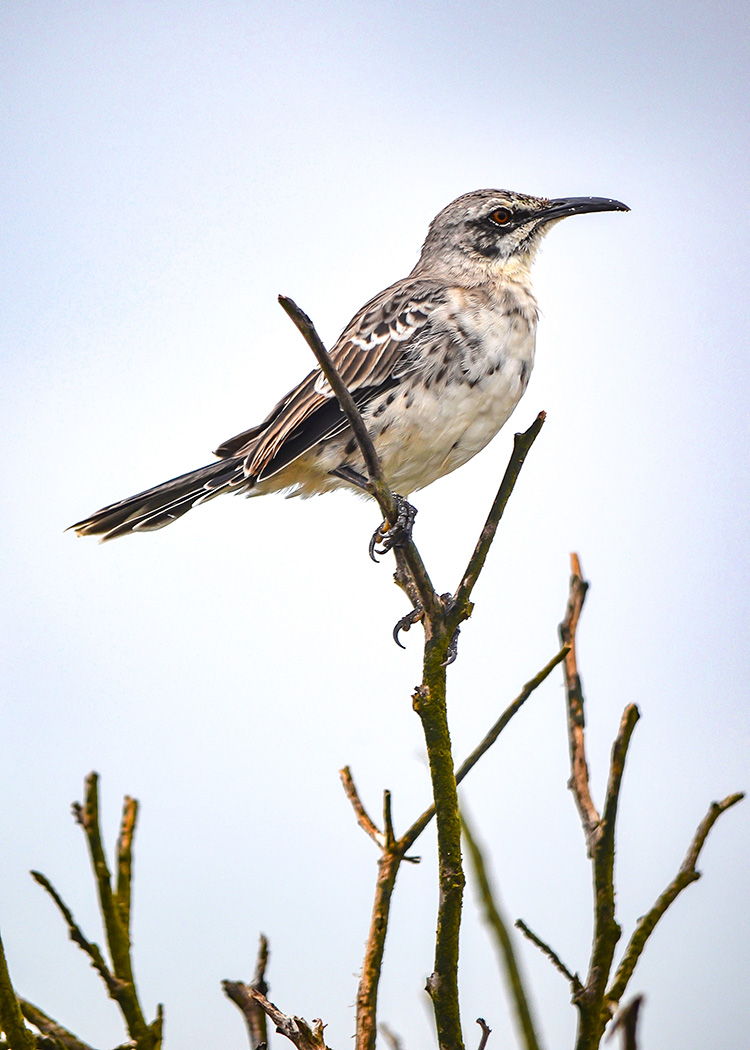
Since On the Origin of Species was first published, the Galápagos Islands have been forever linked with Darwin’s ground-breaking theory of evolution, a theory first sparked by his observations of that small, brown bird. Just as remarkable are the unique geological processes that have created the perfect natural laboratory for evolution to occur. The Galápagos archipelago sits above the Nazca tectonic plate, which has been moving eastwards at an annual rate of 40 to 160 millimetres for the last 170 million years. Beneath the plate is a mantle plume, a column of hot, buoyant rock that rises from deep within the Earth. As the plate drifts over the stationary hotspot, the magma from the plume occasionally punches up through the plate, forming a new volcano each time.
Over millions of years, this tectonic conveyor belt has created a trail of progressively older, less active islands. It’s why the western Galápagos Islands, Fernandina and Isabela, are the youngest and most volcanically active, while the eastern islands, San Cristóbal and Española, are slowly eroding and sinking back into the sea. At Sullivan Bay, on Santiago Island, a vast lava flow reveals the volcanic activity that continues to form the islands. The black basalt rock that cakes the landscape is billowy and rippled, formed from hot, fluid pāhoehoe lava that once oozed from the island’s volcanic vents. Dotted across the surface are a series of reddish-yellow tuff and cinder cones, each one from a small explosion.
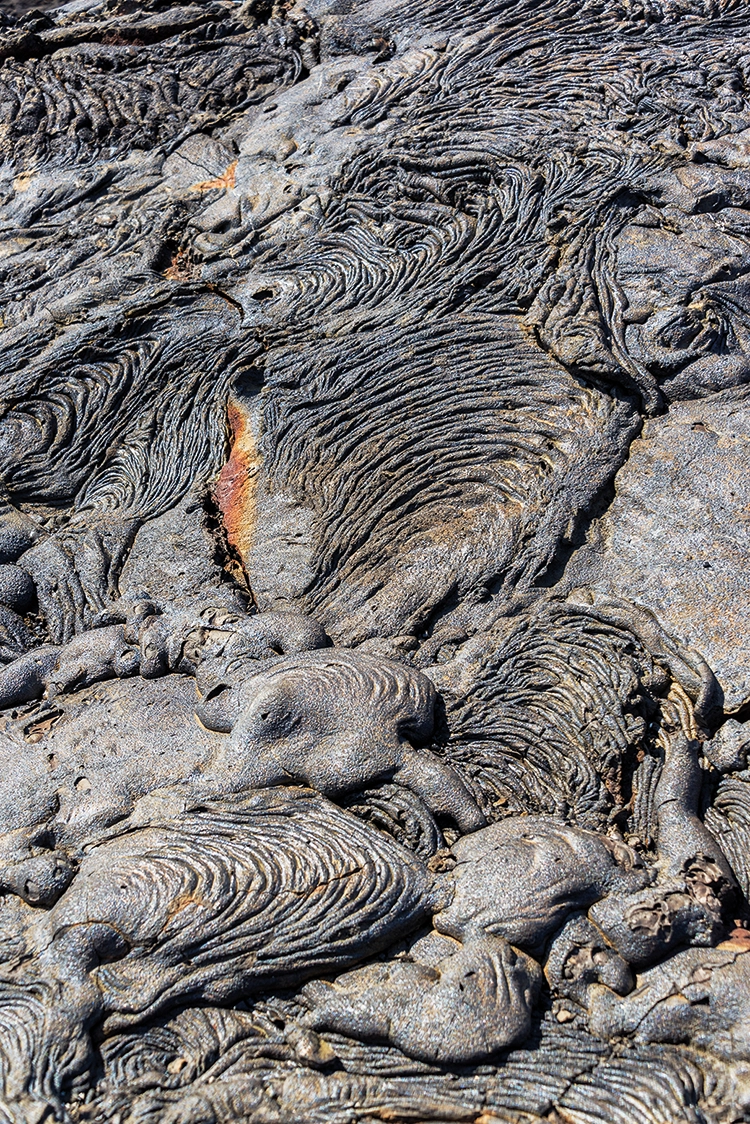
A few days after leaving Santa Cruz on La Pinta, an expedition yacht, I visit Sullivan Bay. A Zodiac lands us on a white coralline sand beach that abuts the lava field. As the lava cooled, it stretched, tearing fissures in the crust that must be carefully navigated. With my eyes on the ground, I spot a lava lizard basking on a piece of driftwood; little else looks alive here. Researchers have confirmed that two relatively recent eruptions took place on Santiago, in 1897 and from 1904 to 1906, using two techniques. One, radiometric dating, analyses the ratio of specific isotopes (argon-40 to potassium-40) to determine exactly when the rock solidified. The other, a simpler process, measures the slow-growing lichens that have finally begun to colonise the new rock.
Each time a new Galápagos island has formed, it has created new opportunities for life to move in. Since the islands are so remote, all of the plants and animals that exist there today have arrived through long-distance dispersal, either by flying, swimming or floating. Similar ocean currents to the ones that brought Bishop Berlanga ashore in 1535 probably carried the first giant tortoises, which can survive astonishing lengths of time without food or water, from the American mainland a few million years earlier. With no natural predators or competition, different species adapted and evolved rapidly, filling different ecological niches.

The islands and their inhabitants are still evolving. In the 1970s, a severe drought lasting 551 days led to a poor supply of the small, soft seeds preferred by Galápagos ground finches. Scientists found that within a few generations, the beaks of the medium ground finch became larger and thicker to cope with the larger, harder seeds that remained. At the Charles Darwin Research Station, Ambre Tanty-Lamothe, director of marketing and communications, explains how new and invasive species – from the avian vampire fly that feeds on the blood of finch hatchlings, to the Himalayan blackberry that easily outcompetes other plants for territory – are also adapting to life here.
While the media and tourism industry have long painted the Galápagos Islands as a last bastion of exceptional, untouched nature, the reality is clearly quite different. These islands have never been frozen in time. Even human modification began centuries ago, long before Darwin’s arrival, when the first settlers on Floreana cut down the highland forests to create pastures and herded tortoises in their hundreds to the beaches to eat. Tourism is the latest challenge facing the Galápagos, with last year’s record of nearly 330,000 visitors representing a threefold increase over the past two decades. With so much of the islands’ income coming from the sector, it’s a crucial balancing act. ‘We have seen in Ecuador and around the world that in places that don’t have tourism, you leave space for other activities – often extractive activities such as illegal mining,’ adds Mateo Estrella Duran, Ecuador’s minister of tourism.
In 2024, the Galápagos National Park entrance fee doubled to US$200, a move that doesn’t appear to have reduced visitor numbers, but that Estrella Duran says will finance much-needed community projects, including public water systems and waste management, helping to reduce human pressure on the islands. But all the people I speak to – from guides to the director of the Charles Darwin Foundation, Rakan Zahawi – don’t want tourist numbers to rise any further. ‘It’s not a place for mass tourism,’ agrees Estrella Duran, adding that limits are likely to be introduced in the next ten years. In anticipation, the ministry is promoting tourism in the rest of the country, such as the capital, Quito, and the Andean–Chocó cloud forest. ‘Many people don’t even know that the Galápagos are part of Ecuador,’ he admits.
At the Charles Darwin Foundation’s Giant Tortoise Breeding Centre, Andino Robalino points out the saddleback tortoise, whose long neck has evolved to reach high-growing cactus pads – a key food source in the arid lowlands. We watch as tiny tortoises nibble leafy greens and fully grown adults munch on prickly pears. The breeding programme has become one of the world’s most successful conservation stories, releasing more than 10,000 young tortoises back into the wild, and bringing the Española tortoise – which once numbered a mere 15 individuals – back from the brink of extinction. Andino Robalino says that many of the islands’ visitors are
interested in the conservation work. Others, not so much. ‘Sometimes, people don’t care at all. I don’t know why they come. Maybe it’s just because they could, or maybe it’s so they can say that they have been. The Galápagos shouldn’t be for everyone.’

If you go
Metropolitan Touring, which owns and operates both the 48-passenger expedition yacht La Pinta and the Finch Bay Hotel on Santa Cruz, is a pioneer of sustainable tourism in the Galápagos Islands. A variety of cruise and land-based accommodation packages are available. www.metropolitantouring.com
To find out more about conservation action in the Galápagos, visit www.darwinfoundation.org