From snow leopard populations revitalising in Nepal to seagrass meadows in Spain, discover how the world is conserving its habitats and wildlife in 2025….
By
Across the world, scientists estimate there are around 8.7 million species. As well as this, there are countless ecosystems – from the arid plains of deserts to lush rainforests and vast expanses of ocean – that make up the habitats of all these creatures.
Conserving these landscapes and wildlife is certainly no easy feat; it requires the collaborative effort of scientists, researchers and organisations to ensure they can remain stable for generations to come.
As 2025 draws to a close, here we cycle through some of the most impactful conservation efforts made this year…
1) Nepal’s stable snow leopard populations

This year, Nepal announced its national estimate of its elusive snow leopard population – 397 individuals – marking the first robust estimate of these creatures in the nation. Such a figure is a relatively stable population for the region.
Until now, estimates were only made based on surveys of snow leopard tracks, scat and tree scrapes.
Enjoying this article? Check out our related reads…
The big cats are some of the least studied in the world – in 2021, a WWF publication showed that just about 23 per cent of snow leopard’s global range has been systematically studied, and less than 3 per cent have empirical data on abundance.
Studying snow leopards is vital as they play a major role in numerous Asian ecosystems, helping to balance herbivore populations and protecting crucial mountain habitats from overgrazing.
2) Preventing rhino poaching in Kenya

More than 80 per cent of Kenya’s rhinos are found in 11 of the country’s reserves, which face a high risk for rhino poaching. Despite these threats, Kenya has managed to reduce – and in some cases, completely halt – poaching.
To do this, Kenya’s Wildlife Service partnered with WWF, FLIR and Teledyne to deploy thermal cameras in reserves. Equipped with night vision and artifical intelligence, the cameras can detect wildlife, vehicle movements and humans at night. If suspicious activity is detected, the cameras will send automatic alerts back to the control room, allowing rangers to respond quickly.
In particular, the technology has helped two major reserves – Ol Pejeta Conservancy and Solio Game Reserve – to achieve zero poaching since the technology was installed.
3) 150 struggling species recovered in England

Running from August 2023 to March 2025, a £13 million species recovery programme in England saw the revival of species such as water vole, oystercatcher, lady’s slipper orchid, hazel dormouse and Atlantic salmon.
From the Lizard Peninsula in Cornwall to Cumbria and Northumberland, 63 different projects involving 78 partners transformed landscapes and supported the recovery of 150 species, many of which were on the brink of national extinction, through research, captive breeding, habitat creation, and conservation translocations.
The scheme’s successes included the first wild-hatched red-billed chough chick in Kent for over 200 years, the successful reintroduction of black grouse to the North Yorkshire Moors, and the return of the large marsh grasshopper to the Norfolk Broads after an 85-year absence.
4) France’s largest rewilding programme

This year, the non-profit organisation Rewilding Europe selected its eleventh rewilding landscape – Dauphiné Alps in southeast France – as its eleventh rewilding landscape.
Stretching for 480,000 hectares between the cities of Grenoble, Montélimar, and Gap, it is the largest rewilding initiative in France to date.
The Dauphiné Alps have a plethora of diverse habitats, including forest and semi-wooded shrubland, as well as alpine meadows, numerous cliffs, and some of the most important braided river sections in France. As well as this, species such as wolves, vultures and Alpine ibex live in the area.
To begin with, rewilding actions in the landscape will focus on protecting and rewilding forests, rewilding rivers, and boosting natural grazing through the reintroduction of semi-wild horses and bovines on land that is no longer used for agriculture.
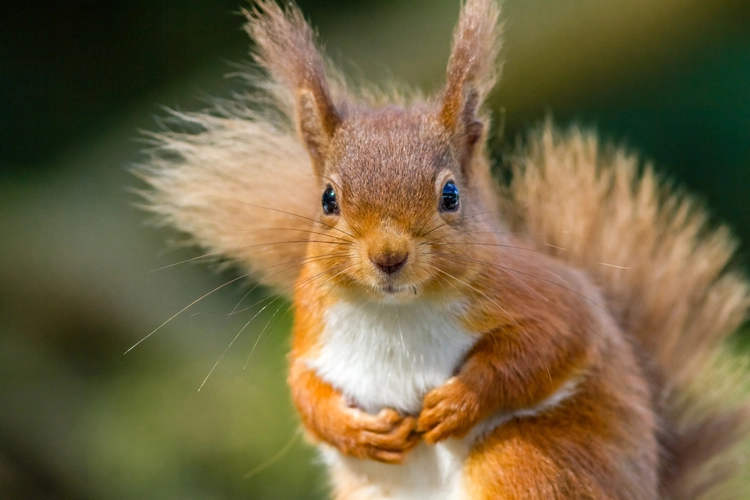
5) Red squirrels’ expanding range in Scotland
After a ten-year reintroduction programme, red squirrels have expanded their range across the Scottish Highlands by more than a quarter.
Scotland is home to around 80 per cent of the UK’s population of red squirrels, a population which came dangerously close to extinction when foresters killed them as pests and their natural habitat was destroyed.
The charity spearheading the project, Trees for Life, intends to expand the species’ range further as part of its Missing Species programme for the Highlands. The programme also aims to bring back a further three Scottish keystone animals: the lynx, beavers and a modern-day equivalent of aurochs, the original wild cattle.
One benefit of moving squirrels to the Highlands is that they can help forests naturally expand. This is because red squirrels forget where they have buried some of their winter stores of nuts and seeds, and so these regions then become full of plants.
6) Spain launches seagrass restoration initiative

In 2025, Spain launched a new marine restoration initiative across the Alicante coast, where authorities and scientific institutions alike are beginning a multi-year programme to expand Posidonia oceanica seagrass meadows inside the Serra Gelada Natural Park.
To reduce physical damage to the seagrass meadows that can be caused by boats, the project will install ecological moorings on the seabed. These systems prevent chains and anchors from dragging along the sea floor, a common cause of meadow fragmentation in Mediterranean tourist zones during summer months.
Protecting Posidonia oceanica seagrass meadows is vital considering they act as vital carbon sinks in coastal zones. Healthy meadows also help to buffer wave energy, and in turn reduce erosion and help beaches to retain sand.