
• Skip to main content
  • Skip to secondary menu
  • Skip to primary sidebar
  • Skip to footer
Geographical

Geographical

Official magazine of the Royal Geographical Society (with IBG)

  • Geographical Home
  • News
  • Features
  • Opinion
    • Climatewatch
    • Front Lines
  • Podcast
  • Travel
    • Discovering Britain
    • Passport
  • Culture
    • Book reviews
  • Quizzes
    • Crosswords
  • Choose Geography
    • University directory
    • Masters courses
    • Course guides
      • Climate change
      • Environmental science
      • Human geography
      • Physical geography
    • University pages
      • Aberystwyth University
      • Brunel University
      • Cardiff University
      • University of Chester
      • Edge Hill University
      • The University of Edinburgh
      • Newcastle University
      • Nottingham Trent University
      • Oxford Brookes University
      • The University of Plymouth
      • Queen Mary University of London
    • Geography careers
      • Charity/non-profit
      • Education & research
      • Environment
      • Finance & consulting
      • Government and Local Government
    • Applications and advice
  • Magazine
    • Issue previews
    • Subscribe
    • Manage My Subscription
    • Special Editions
    • Geographical Archive
    • Advertise with us
  • Subscribe
    • Direct Debit Changes

Satellites accurately detect methane emissions in large-scale test

19 October 2026
2 minutes

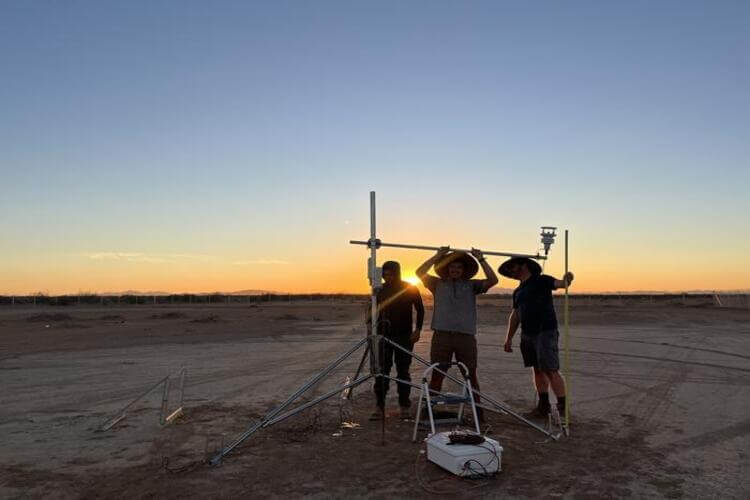
Researchers Adam Brandt, Josh Romo, and Taylor Adams set up a meteorology station during preparations for controlled methane releases.
Researchers Adam Brandt, Josh Romo, and Taylor Adams set up a meteorology station during preparations for controlled methane releases. Image: Frances Reuland

Monitoring the harmful and potent greenhouse gas using satellites could help slow global temperature increases


By Victoria Heath

Researchers have conducted the largest-ever controlled test of space-based methane monitoring, helping to detect super-emitters of the planet-polluting gas.

‘There has been significant scepticism over the years about whether methane tracking really works because it’s a challenging technical problem to detect the gas from space,’ said senior study author Adam Brandt. ‘Our results should give regulators, policymakers, producers of methane, and the general public a lot of confidence moving forward.’

The study, published in Nature, found that dedicated methane sensors can correctly detect nearly all methane plumes released on clear days.


Enjoying this article? Check out our related reads…

  • Tackling methane could have a big and quick impact on climate change
  • Phenomena: frozen methane bubbles
  • Cutting methane emissions
  • Millions of satellites poised to enter space pose ‘grave threat’ to night skies
  • Two European satellites launch into space, expanding understanding of Earth

To reach their conclusions, researchers timed 481 methane releases at a Stanford research site in Casa Grande, Arizona, to overpasses by 11 government, non-profit and commercial satellites through 2025. Fifteen research teams across nine countries then independently analysed the observations, assessing whether each satellite image showed a methane plume and how much of the gas was released.

They compared with the known releases. Under ideal conditions, with few clouds and moderate wind, the satellite instruments reliably detected plumes when methane flowed at rates of about 50–200 kilograms per hour.
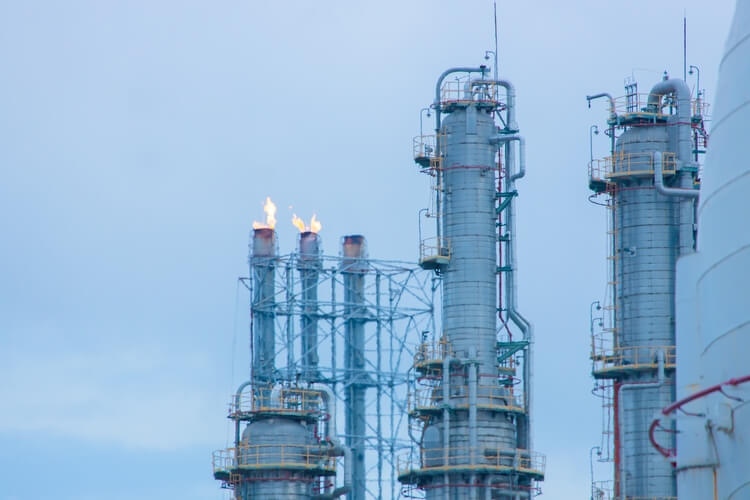
Methane Gas Fire High Flare Stack Flaring Tower Platform in Refinery Petroleum Plant or Flame Burn On Offshore Oil Extraction Process.
During its first 20 years in Earth’s atmosphere, methane is 80 times more potent than carbon dioxide at trapping heat. Image: Quality Stock Arts/Shutterstock

Satellite monitoring systems detect methane using infrared light reflected off Earth’s surface, so they can struggle to detect plumes through clouds.

‘This poses problems in some key methane-emitting regions,’ the authors write, ‘including tropical oil and gas producers Nigeria and Venezuela, as well as cold, cloudy climates like Canada and Russia.’

Methane is the world’s biggest driver of climate change after carbon dioxide. While carbon dioxide lasts longer, methane is 80 times more potent at trapping heat during its first 20 years in Earth’s atmosphere.

In 2023, the oil and gas sector accounted for about 78 million tonnes of anthropogenic methane emissions worldwide, making the industry a major source of this planet-polluting gas.

In 2022, the UK signed a global methane pledge to collectively reduce global methane emissions by at least 30 per cent by 2030, compared with 2020 levels. In the UK alone, methane represented 14 per cent of the total greenhouse gas emissions in 2022, with the main sources originating from agriculture, waste and the fuel supply sectors.
Themes News

Protected by Copyscape

Primary Sidebar

SUBSCRIBE

GEOGRAPHICAL WEEKLY LOGO FREE - Sign up to get context, clarity and perspective in a noisy world, every Friday

Popular Now

QUIZ: Flags of the World – Northern Europe

QUIZ: Flags of the World – Northern Europe

November Geographical covers

Out now: November 2026’s Geographical Magazine

Black sea on map

Drones attack at least seven cargo vessels in Black Sea

QUIZ: Physical Geography Trivia

QUIZ: Physical Geography Trivia

Egypt Saudi Arabia flags

Egypt shows support for Saudi Arabia against Houthi attacks

Footer

  • Facebook
  • Instagram
  • LinkedIn
  • Reddit
  • TikTok
  • Twitter
  • YouTube

Geographical print magazine cover

Published in the UK since 1935, Geographical is the official magazine of the Royal Geographical Society (with IBG).

Informative, authoritative and educational, this site’s content covers a wide range of subject areas, including geography, culture, wildlife and exploration, illustrated with superb photography.

Click Here for SUBSCRIPTION details

Want to access Geographical on your tablet or smartphone? Press the Apple, Android or PC/Mac image below to download the app for your device

Footer Apple Footer Android Footer Mac-PC

More from Geographical

  • Subscriptions
  • Get our Newsletter
  • About Us
  • Contact Us
  • Advertise with us
  • Privacy policy
  • Terms & Conditions

Copyright © 2026 · Site by Syon Media