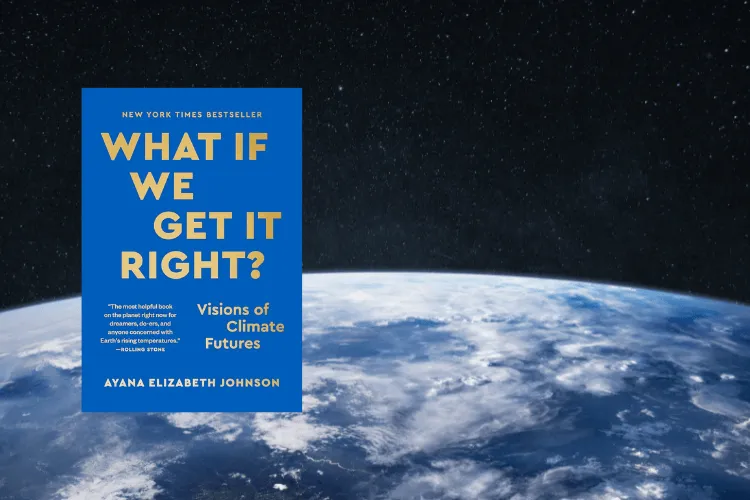
Mark Rowe reviews Ayana Elizabeth Johnson’s latest work on the ways we can enact change for the climate at both macro and micro levels
Great title for a book and a welcome premise, What If We Get It Right? is a question that isn’t asked – or answered – often enough. Narratives telling us how and why the planet is going to hell in a handcart are two a penny, but they generally leave the deflated reader spiralling further down the doom loop. We know things are bad. Can we do better, and if so, what would that look like?
Author Ayana Elizabeth Johnson takes us on a punchy, breezy journey through the ways in which we can enact change at both the macro and micro level. If we do get it right, there’s a chance we might emerge blinking, like Alice stepping through the looking glass, into a world in which we transform our energy, food and transport systems, and where the societal and environmental outcomes are infinitely more positive. A marine biologist by training and co-founder of a city-focused ocean climate think tank, Johnson conveys the urgency of the situation with conviction.
Enjoying this article? Check out our related reads…
The answers are, of course, nuanced: we need ‘a big basket of solutions’, as one of her interviewees says, not a single silver bullet. The book is peppered with facts and figures that spell out the benefits of making the right environmental choices. For example, the climate impacts of burning fossil fuels cost around US$500billion a year, yet net zero represents a business opportunity worth more than US$1.2trillion. Johnson explores solutions ranging from a transition to renewable energy – while cautioning against investing too heavily in any one technology – to climate resilience and diverting investment away from fossil fuels and into clean energy.
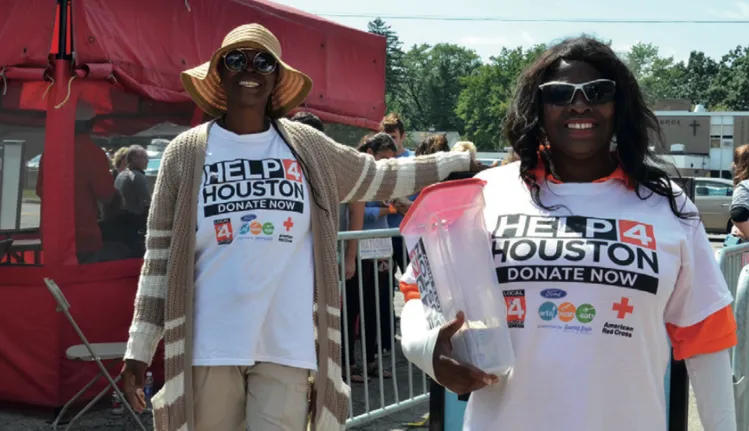
More widely, the book gives space to ethnic minority voices that are often on the frontline of climate change but are rarely heard. There’s an interview with Colette Pichon Battle, a Black lawyer motivated by the devastation of Hurricane Katrina to drive solutions for minority communities. Meanwhile, Maroon communities – settlements founded by formerly enslaved Africans – are reimagined through ‘the lens of an Afrofuturist solar-punk meets salvage-punk world brimming with Black joy’. Other interviews draw on the wisdom of elder statespeople such as Bill McKibben, whose 1989 book The End of Nature was among the earliest landmark warnings about climate change.
Johnson is engaging, with her intellect, passion and impatience all evident in equal measure. Yet, difficult as it is to disagree with the direction of the book, at times it feels like an extended wish list for a green, left-of-centre utopia. We can all agree that a positive vision is essential. Getting from here to there is proving socially and politically messy, so the benefits of this painstaking transition need to be clearly articulated. Yet Johnson’s vision leans towards a Panglossian, misty-eyed nirvana, a world where ‘we share snazzy retrofitting hacks and extreme weather prep tips, we linger outside, in parks and on sidewalks, with friends and neighbours. Biodegrading is the norm, composting is ubiquitous, landfills aren’t needed.’ Even if we do get it right, it seems unlikely that the future will look quite like this.
The presentation of the book – a blend of interviews, opinion pieces, portraits, vignettes and standalone pages of bullet points – is unconventional. There’s a strong case for this approach: after all, the last thing the planet needs is another book with prose drier than a drought-stricken prairie.
Yet the interviews are reproduced verbatim and without editorial filtering, which makes them feel ponderous at times. Another innovation is the constant annotation of the text, guiding readers towards what they should regard as significant. What Johnson considers key insights are marked with an asterisk; points of concern are flagged with an exclamation mark; poignant anecdotes are accompanied by a heart symbol. Depending on their disposition, readers may regard this either as evidence of the author’s enthusiasm or as the slightly grating earnestness of a schoolteacher marking environmental studies homework.
One practical drawback for UK readers is that the book is focused almost exclusively on the USA. As a result, many of the examples and policy discussions feel exclusionary, as though they are written primarily for an audience of US-based policy wonks and climate activists.
We desperately need more books to act as a counterpoint to the flourishing literary genre of climate apocalypse. It’s just a pity that, despite its passion and good intentions, this isn’t quite that book. Nonetheless, it is a worthwhile read that offers a timely reminder that, however unhinged any given administration may be, many Americans are deeply troubled by the environmental direction their country is taking – and are determined to get it right.