
• Skip to main content
  • Skip to secondary menu
  • Skip to primary sidebar
  • Skip to footer
Geographical

Geographical

Official magazine of the Royal Geographical Society (with IBG)

  • Home
  • Briefing
  • Science & Environment
  • Climate
    • Climatewatch
  • Wildlife
  • Culture
  • Geopolitics
    • Geopolitical hotspots
  • Study Geography
    • University directory
    • Masters courses
    • Course guides
      • Climate change
      • Environmental science
      • Human geography
      • Physical geography
    • University pages
      • Aberystwyth University
      • Brunel University
      • Cardiff University
      • University of Chester
      • Edge Hill University
      • The University of Edinburgh
      • Newcastle University
      • Nottingham Trent University
      • Oxford Brookes University
      • The University of Plymouth
      • Queen Mary University of London
    • Geography careers
      • Charity/non-profit
      • Education & research
      • Environment
      • Finance & consulting
      • Government and Local Government
    • Applications and advice
  • Quizzes
  • Magazine
    • Issue previews
    • Subscribe
    • Manage My Subscription
    • Special Editions
    • Podcasts
    • Geographical Archive
    • Book reviews
    • Crosswords
    • Advertise with us
  • Subscribe
    • Direct Debit Changes

People eat six times as much chicken than 65 years ago, UN report finds

9 June 2026
2 minutes

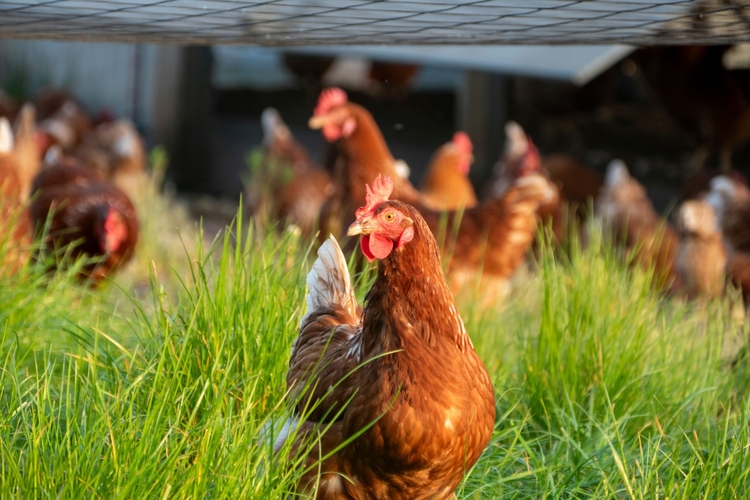
Chickens in grass
Eating more poultry increases greenhouse gas emissions from agriculture. Image: Shutterstock

Average global meat supply rose from 25 kilograms per person in 1961 to 47 kilograms by 2022


By Victoria Heath

The average person today consumes around six times as much chicken and twice as much pork as people did 65 years ago, a new report by the UN has found.

Data from the Food and Agriculture Organisation (FAO) show that global poultry supply increased from less than 3 kilograms per person in 1961 to 17 kilograms per person in 2022.


Enjoying this article? Check out our related reads…

  • Geo explainer: Is lab-grown meat the future of food?
  • Will chickens power the world?
  • Is lab-grown meat the future of agriculture?
  • The rise of urban farming in the UK
  • The food revolution necessary for a sustainable future

Beef supply remained stable at around nine kilograms per person, while pork supply doubled between 1961 and 2022 to 15 kilograms per person.

Such increases pose a significant threat to the environment, as agriculture is the world’s second-largest source of greenhouse emissions. Animal agriculture accounts for around 12 to 20 per cent of global greenhouse gas emissions and drives biodiversity loss.
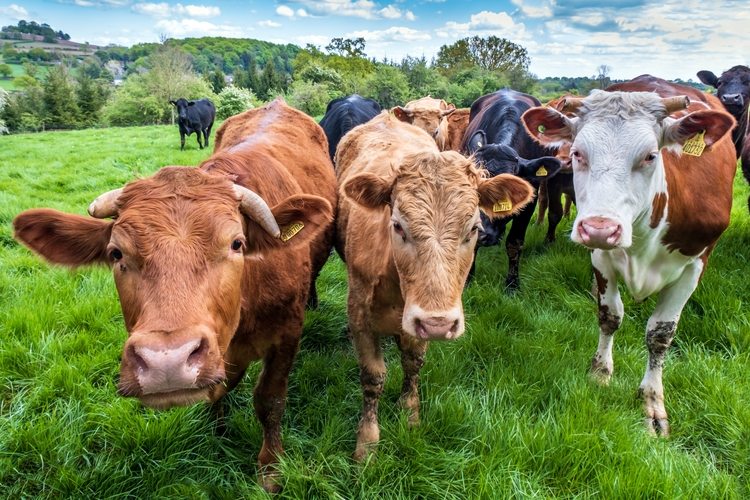
Cows in a field
The world’s largest beef producers include the United States, Brazil, and the European Union. Image: Shutterstock

In the next decade, projections suggest emissions from the sector will rise by 7.6 per cent – with livestock thought to account for around 80 per cent of that increase.

Switching from meat-heavy diets to plant-based diets is one of the most effective ways of reducing these greenhouse gas emissions. One study, published in Frontiers in Nutrition, found that switching from a Mediterranean to a vegan diet results in 46 per cent less CO2, 33 per cent less land, and 7 per cent less water. In addition, it lowers other pollutants linked to global warming.

Despite these benefits, the FAO fell short of recommending a reduction in meat consumption in its latest report – drawing criticism from some experts.

‘This report documents the problem clearly but stops well short of that conclusion,’ said senior scientist at the Stockholm Environment Institute, Cleo Verkuijl.

To reduce meat consumption, other scientists – not involved in the UN report – have looked at incorporating lab-grown meat into diets. Already, the lab-grown meat industry comprises more than 175 companies on six continents, backed by approximately $3.1 billion in investments.

A major appeal of lab-grown meat is its significantly lower environmental footprint compared to traditional meat production. Compared with conventional beef, lab-grown beef requires 45 per cent less energy, 99 per cent less land and produces 96 per cent fewer greenhouse gas emissions.
Themes Briefing Farming Food United Nations

Protected by Copyscape

Primary Sidebar

SPRING SALE

GEOGRAPHICAL WEEKLY LOGO FREE - Sign up to get context, clarity and perspective in a noisy world, every Friday

Popular Now

Great white shark

First-ever video footage of great white shark in Mediterranean

Montserrat island aerial view

UK Government announces Montserrat is joining the Blue Belt Programme

UN Court in New York, USA

How the UN’s General Assembly climate resolution changes everything

Crashing waves on rough sea

Trump administration to dismantle 900 deep-sea monitoring instruments

QUIZ: Physical Geography Quiz

QUIZ: Physical Geography Quiz

Footer

  • Facebook
  • Instagram
  • LinkedIn
  • Reddit
  • TikTok
  • Twitter
  • YouTube

Geographical print magazine cover

Published in the UK since 1935, Geographical is the official magazine of the Royal Geographical Society (with IBG).

Informative, authoritative and educational, this site’s content covers a wide range of subject areas, including geography, culture, wildlife and exploration, illustrated with superb photography.

Click Here for SUBSCRIPTION details

Want to access Geographical on your tablet or smartphone? Press the Apple, Android or PC/Mac image below to download the app for your device

Footer Apple Footer Android Footer Mac-PC

More from Geographical

  • Subscriptions
  • Get our Newsletter
  • About Us
  • Contact Us
  • Advertise with us
  • Privacy policy
  • Terms & Conditions

Copyright © 2026 · Site by Syon Media