
• Skip to main content
  • Skip to secondary menu
  • Skip to primary sidebar
  • Skip to footer
Geographical

Geographical

Official magazine of the Royal Geographical Society (with IBG)

  • Geographical Home
  • News
  • Features
  • Opinion
    • Climatewatch
    • Front Lines
  • Podcast
  • Travel
    • Discovering Britain
    • Passport
  • Culture
    • Book reviews
  • Quizzes
    • Crosswords
  • Choose Geography
    • University directory
    • Masters courses
    • Course guides
      • Climate change
      • Environmental science
      • Human geography
      • Physical geography
    • University pages
      • Aberystwyth University
      • Brunel University
      • Cardiff University
      • University of Chester
      • Edge Hill University
      • The University of Edinburgh
      • Newcastle University
      • Nottingham Trent University
      • Oxford Brookes University
      • The University of Plymouth
      • Queen Mary University of London
    • Geography careers
      • Charity/non-profit
      • Education & research
      • Environment
      • Finance & consulting
      • Government and Local Government
    • Applications and advice
  • Magazine
    • Issue previews
    • Subscribe
    • Manage My Subscription
    • Special Editions
    • Geographical Archive
    • Advertise with us
  • Subscribe
    • Direct Debit Changes

Bottom trawling undermining protection for iconic marine species

7 July 2026
3 minutes

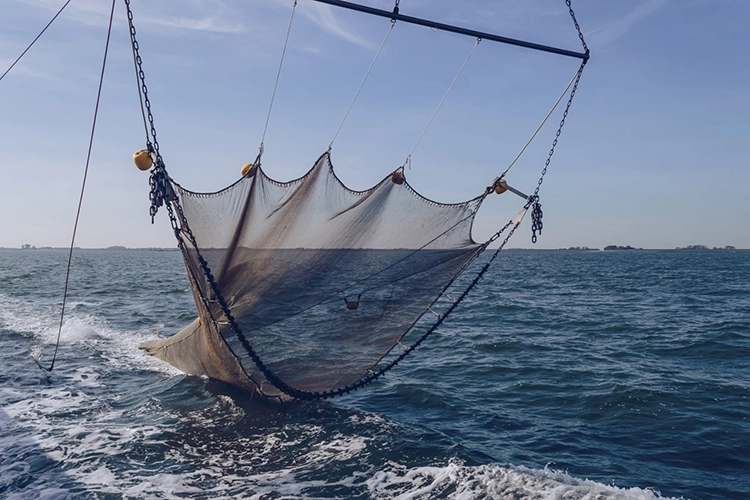
Bottom trawling gear targets animals indiscriminately. Image: Shutterstock

New report finds that just two Marine Protected Areas (MPAs) out of 113 in the UK ban bottom-trawl fishing across the whole site


By Victoria Heath

Just two out of 113 Marine Protected Areas (MPAs) in the UK ban the highly destructive practice of bottom-trawl fishing across the whole site, a new report by Oceana UK has found.

These MPAs are designated to protect dolphins, porpoises, whales and seabirds, but bottom trawling can lead to issues from entanglement to prey depletion. For example, one harbour porpoise sanctuary in the North Sea was subjected to more than 30,000 hours of apparent bottom trawling in 2025 alone.


Enjoying this article? Check out our related reads…

  • UK against trawling in protected seas in wake of Attenborough film
  • The 10 largest marine protected areas
  • Cutting down the tree of life
  • Supertrawlers spent more than 7,300 hours fishing in UK MPA’s since Brexit
  • New maps help conserve Ascension Island MPA

Bottom trawlers drag heavy metal gear and nets – weighing up to several tonnes – across the seafloor to capture fish. The process is popular with commercial fishing companies, as it makes it easy to catch large quantities of fish. It is especially rampant in areas designed to safeguard some of Britain’s most beloved wildlife such as puffins and porpoises.

Dragging this gear across the seabed creates underwater noise, disrupting feeding for both species that rely on sound to hunt and seabirds such as puffins and terns, which use sight. It is widely considered one of the most destructive fishing methods because of its indiscriminate nature: non-target marine life such as dolphins and porpoises are regularly captured.

Bottom trawling also releases carbon back into the atmosphere. On the seafloor of the UK and Isle of Man, 240 million tonnes of carbon are stored within the top 10cm of sediments. When gear is dragged across these carbon-rich sediments, carbon dioxide is released.

A bottlenose dolphin, Coll, Inner Hebrides, Scotland
Dolphins can become entangled in bottom trawling gear. Image: Shutterstock

In other countries, bottom trawling can pull up vast swathes of coral. In New Zealand, commercial fishers removed nearly 200 tonnes of coral from the seabed over a 13-year period, with bottom trawling accounting for 99 per cent of this total.

Currently, no UK MPAs designated for porpoises, whales or dolphins are fully protected from bottom trawling across their entire sites, and only two exist for seabirds.

According to the UK Government’s own assessments, bottom trawling is a threat in 75 per cent of these MPAs.

‘Areas designated to protect some of our most iconic species are still allowing a destructive activity that the government’s own assessments identify as a threat. This raises a serious question about the credibility of the UK’s marine protection measures and the true extent of its ambitions,’ said executive director of Oceana UK Hugo Tagholm.

‘The UK has promised to effectively protect 30 per cent of the ocean by 2030, but there is a risk of bold targets being reduced to little more than blue washing. If we are serious about meeting that commitment, protection must exist in practice, not just on paper,’ Tagholm continued.
Themes News Ocean

Protected by Copyscape

Primary Sidebar

SUMMER SALE

GEOGRAPHICAL WEEKLY LOGO FREE - Sign up to get context, clarity and perspective in a noisy world, every Friday

Popular Now

Aid workers in Brazil

Why aid work is becoming more dangerous than ever

QUIZ: Capital Cities – Hard

QUIZ: Capital Cities – Hard

Two dice displaying 1.5 and 2C concept

World is set to cross 1.5°C global warming threshold

Aerial wildfire

How wildfires could push the climate crisis beyond repair

Three children explore a lush forest trail, each holding a clear plastic jar, searching through the underbrush on a nature adventure.

Children are losing touch with nature – but not their desire to…

Footer

  • Facebook
  • Instagram
  • LinkedIn
  • Reddit
  • TikTok
  • Twitter
  • YouTube

Geographical print magazine cover

Published in the UK since 1935, Geographical is the official magazine of the Royal Geographical Society (with IBG).

Informative, authoritative and educational, this site’s content covers a wide range of subject areas, including geography, culture, wildlife and exploration, illustrated with superb photography.

Click Here for SUBSCRIPTION details

Want to access Geographical on your tablet or smartphone? Press the Apple, Android or PC/Mac image below to download the app for your device

Footer Apple Footer Android Footer Mac-PC

More from Geographical

  • Subscriptions
  • Get our Newsletter
  • About Us
  • Contact Us
  • Advertise with us
  • Privacy policy
  • Terms & Conditions

Copyright © 2026 · Site by Syon Media