Unpacking Mark Carney’s speech at Davos to understand how middle power countries like Canada can prosper in this turbulent new world
By
For decades, middle powers like Canada, the UK and most of Europe prospered under the assumption that a rules-based international order, however imperfect, would continue to underpin global stability. That assumption, Mark Carney argues, no longer holds.
In a speech that rejected both nostalgia and fatalism, Canada’s Prime Minister described a world in which great power rivalry has returned in force, economic interdependence has become a tool of coercion, and the rituals of multilateralism increasingly mask a harsher reality.
So, what did Carney’s speech actually highlight? At its core was a challenge to stop pretending that the old order still works and to confront the world as it is, rather than as many countries wish it to be. Below, we cycle through five key points Carney made — and what they mean not just for Canada, but for middle power countries across the globe.
A world order that has cracked, not evolved
Carney is unequivocal in his diagnosis: the world is not moving through a period of managed transition, but living through a rupture. The rules-based international order that shaped global politics for much of the post-war era has not simply weakened; it has lost its ability to constrain behaviour. Great powers are increasingly willing to bypass, reinterpret or ignore shared norms when they conflict with national interest.
What makes this moment distinct, Carney argues, is the way economic interdependence itself has been transformed. Trade, finance and supply chains were once presented as sources of mutual benefit and stability. Today, they are routinely deployed as instruments of leverage, punishment and control. Tariffs, access to markets and financial infrastructure have become tools of coercion rather than cooperation. For middle powers, this marks a fundamental shift: the assumption that openness automatically delivers security and prosperity is no longer credible.
The cost of ‘living within a lie’
To explain how the old order persisted for so long despite its flaws, Carney turns to Václav Havel’s concept of ‘living within a lie’. The international system, he suggests, endured not because it functioned as advertised, but because countries continued to act as if it did. Governments praised rules they knew were unevenly applied, defended institutions they knew were weakening and avoided calling out inconsistencies to preserve short-term stability.
This collective performance had a price. By tolerating double standards and selective enforcement, middle powers helped sustain an illusion that ultimately hollowed out legitimacy. As great powers now abandon even the pretence of restraint, continuing to comply, remain silent or apply principles inconsistently no longer buys protection. Instead, it deepens vulnerability. For Carney, honesty — naming reality as it is — becomes the first act of strategic self-defence.
Why retreating behind national walls is not the answer
As trust in global rules erodes, many countries are seeking strategic autonomy in energy, food, defence and critical supply chains. Carney treats this instinct with sympathy. A country that cannot feed itself, fuel itself or defend itself has few options when pressure is applied. In a world where economic integration can be weaponised, reducing exposure is a rational response.
But Carney is clear-eyed about the risks. Autonomy pursued in isolation leads towards a world of national fortresses: fragmented, inefficient and ultimately poorer. Every country attempting to duplicate supply chains, stockpile resources and insulate itself from shocks raises costs and lowers resilience. The result would be a more brittle global system, not a safer one.
Carney’s argument is that resilience does not have to mean retreat; it can be built through shared investment, common standards and coordinated diversification among trusted partners.
The case for middle powers acting together
A central theme of Carney’s speech at Davos was the distinction between great powers and those caught in between. Great powers, for now, retain the market size, military capacity and leverage to dictate terms. Middle powers, according to Carney, do not.
When they negotiate bilaterally with hegemons, they do so often from a position of weakness, competing with one another to appear the most accommodating.
Carney is blunt about the consequences. This is not genuine sovereignty, he argues, but its performance — the appearance of autonomy while accepting subordination. The alternative is collective action.
By coordinating their policies, investments and standards, middle powers could potentially pool influence, share risk and create a third path between submission and isolation. Acting together, they are perhaps more likely to shape rules, rather than merely absorb the consequences of power politics.
Canada’s response: honesty, strength and coalition-building
Canada’s strategy, as laid out by Carney, rests on what he calls ‘value-based realism’. This means holding firm to core principles — sovereignty, territorial integrity, human rights and the prohibition of force — while engaging pragmatically with a world of diverging interests. It is an approach that rejects both moral grandstanding and quiet acquiescence.
In practice, this involves building strength at home through economic reform, major investment in energy, technology and defence, and the removal of internal barriers to growth.
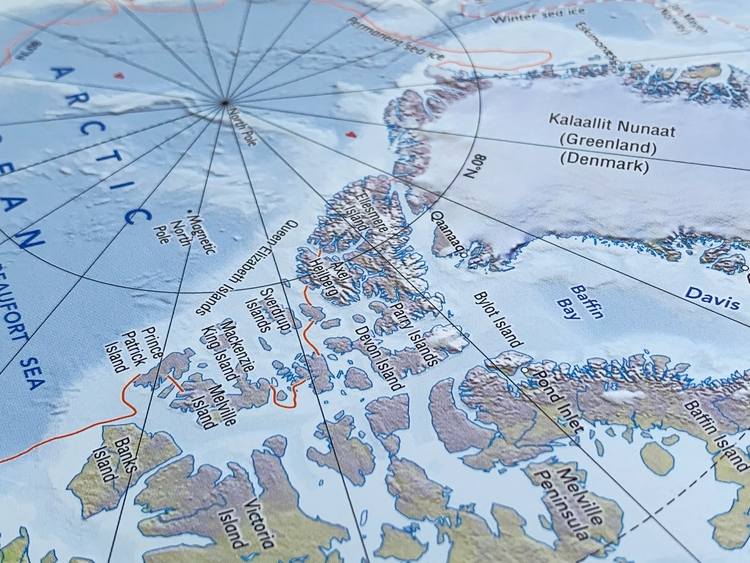
Abroad, it means diversifying partnerships and forming flexible, issue-specific coalitions — on trade, critical minerals, Arctic security and artificial intelligence — rather than relying solely on universal institutions that no longer function as intended. Carney’s core argument suggests middle powers earn the right to principled foreign policy by reducing their vulnerability to retaliation, and by acting together rather than alone.