
A journey through the ruins, battlefields and legends of the Aegean
By
A top a windy ridge, separated from the wine-dark sea by the fertile plains of the fair-flowing Scamander River, lies a legendary city: Troy. For nearly 3,000 years, epic tales of a ten-year battle waged here by rival kingdoms, and a hero’s perilous journey home, have captured the imaginations of generations of explorers, conquerors and artists – including director Christopher Nolan, whose blockbuster adaptation of The Odyssey hits theatres this summer.
Enjoying this article? Check out our related reads…
Among those captivated by Homer’s vivid descriptions of the Trojan War was the wealthy 19th-century Prussian businessman Heinrich Schliemann. At the time, many European scholars believed the city to be a myth, a fabricated setting for a fictional conflict between Agamemnon, King of Mycenae, and Priam, the last king of Troy. But in 1870, armed with copies of The Iliad and The Odyssey – both of which he claimed he could recite fluently in Ancient Greek – Schliemann set out in search of the ancient city. His journey began on Ithaca, the island home of Odysseus, whose cunning invention – a giant, hollow wooden horse – finally helped the Greeks to breach Troy’s impregnable walls. From there, Schliemann crossed the Peloponnese peninsula and the Aegean Sea, eventually landing on a small hill on Türkiye’s northwest coast, where he began to dig.

Schliemann wasn’t the first to suspect that the ruins of Troy lay buried beneath this hill, known locally as Hisarlık – but he did have the money to excavate it. He instructed his workforce to cut a deep trench through the mound, crudely ploughing through layers of soil and destroying much of the very evidence he sought to find. Yet, despite his considerable failings, Schliemann was right about one thing: Troy was real.
Today, the journey to Troy is a far simpler undertaking than the quests of either Odysseus or Schliemann: it’s a roughly four-and-a-half-hour drive from Istanbul. The route forms the first leg of a new Istanbul-to-Athens itinerary, part of a special collection of tours developed jointly by Travelsphere and the Royal Geographical Society.
The tour begins in the former seat of three great empires – Roman, Byzantine and Ottoman – that shaped the world that followed the fall of Troy. A casual walk around the modern metropolis reveals layers of history, sometimes visible one atop another within a single building. Visitors can walk through the grounds of the Hippodrome, where Roman chariots once raced, and marvel at the intricacy of the mosaics inside the sixth-century Hagia Sophia Grand Mosque and the minarets the Ottoman architects who reshaped the skyline, before concluding the day with a cruise down the Bosphorus – the strategic marine highway that has carried warships and merchant fleets for millennia.
Leaving the urban landscape behind, the tour then heads southwest, skirting the Marmara coast and entering the open, rolling countryside of the Gelibolu Peninsula. Here, the gap between Europe and Asia – the mile-wide Dardanelles Strait – is crossed by the colossal 1915 Çanakkale Bridge, the world’s longest suspension bridge by main span. On the other side of the sparkling water is Çanakkale, a lively port city and the official gateway to Troy.
As more rigorous archaeologists would later reveal, Troy is a complex site of layer upon layer of history. Schliemann dug straight to the bottom, unearthing a hoard of gold artefacts he attributed to King Priam and jewels he claimed were worn by Helen of Troy. Subsequent research revealed that these treasures pre-dated the famous siege by more than 1,000 years. Rather than Homeric relics, they were part of an Early Bronze Age settlement that was built and rebuilt over itself for generations, slowly accumulating to form the hill that exists today.
The Troy of Homer’s tales, with its citadel fortified behind imposing walls, was probably Troy VI or VII (archaeologists have identified nine major layers of city ruins). From its earliest iteration, the city had gone from strength to strength, but by the end of the Bronze Age – around 1180 BCE – it had fallen to ruin. Between 2018 and 2020, new excavations by Turkish archaeologists discovered evidence of a battle or battles: arrowheads and human remains scattered in the building debris. It’s not enough to prove that the Trojan War of Homer’s epics took place. The iconic Trojan Horse, a 15-metre replica of which now greets visitors in the car park, probably never existed. Nevertheless, the myth left a lasting impression.
Beyond the ruins of Troy, Çanakkale also stands on the doorstep of a much more recent conflict. Jamie Owen, curator of the Royal Geographical Society’s photographic collections and a co-creator of the itinerary, explains that stopping points along the tour were chosen to complement the RGS Collections. ‘Troy is a big part of that, of course, but so are the battlefields at Gallipoli,’ he says.
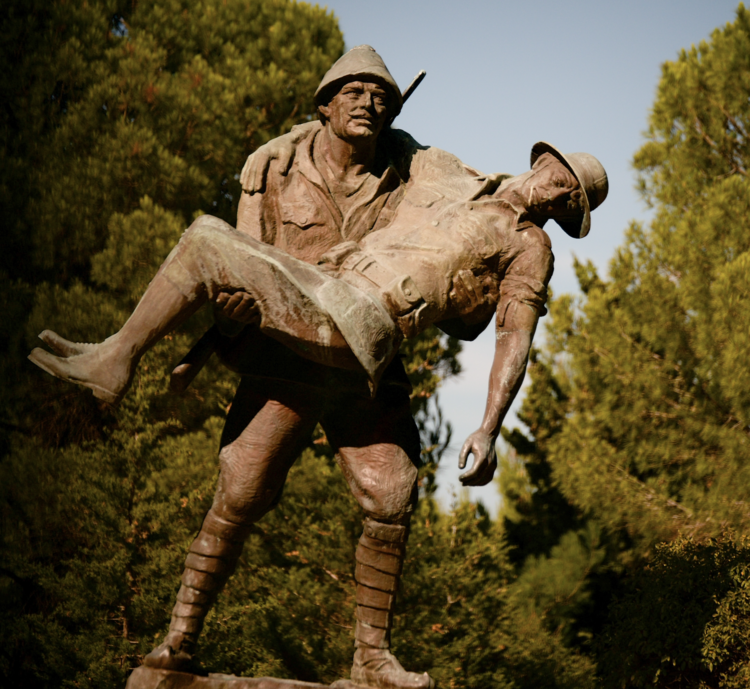
While the majority of the collections focus on geographic science, field research and exploration, they also contain details that bridge the gap between scientific discoveries and the people who made them. ‘We have records of members and fellows of the Society serving at Gallipoli, including Gerald Vere de Gaury,’ Owen notes. As a British military officer, de Gaury was severely wounded in battle. During his recovery, he mastered Arabic, launching a diplomatic career that made him one of the first Westerners permitted into Riyadh. ‘When you look through these archives, you discover the diverse, real-world experiences of these figures that fed back into the Society’s work. It adds a fascinating three-dimensionality to these characters, whom we might otherwise think of only as explorers traversing Mount Everest.’
Others include veteran Himalayan mountaineer Charles Granville Bruce, who later led the second and third British expeditions to Mount Everest in the 1920s; former RGS president David George Hogarth, who provided critical intelligence mapping for the Dardanelles and Gallipoli operations; and military geographer Charles Gwynn, who helped execute a highly complex evacuation of the peninsula that used dummy soldiers and automated guns to fake an ongoing battle – a masterclass in military deception to rival Odysseus’s Trojan Horse. The Gallipoli campaign was a failure for Allied forces, but is considered a founding moment in Türkiye’s history – one that laid the foundations for the modern republic.
Homer’s epic poems, written 500 years after the fall of Troy, held a similar importance in the founding of Greek identity. By 334 BCE, the stories of Agamemnon, Priam and Odysseus – which were read and performed across the ancient Greek world – had turned the site of Troy into a tourist attraction, complete with a temple museum and sacrificial altars. Alexander the Great, who, according to Greek essayist Plutarch, kept a copy of Homer’s Iliad by his bed, was one of several great military commanders to make the pilgrimage.
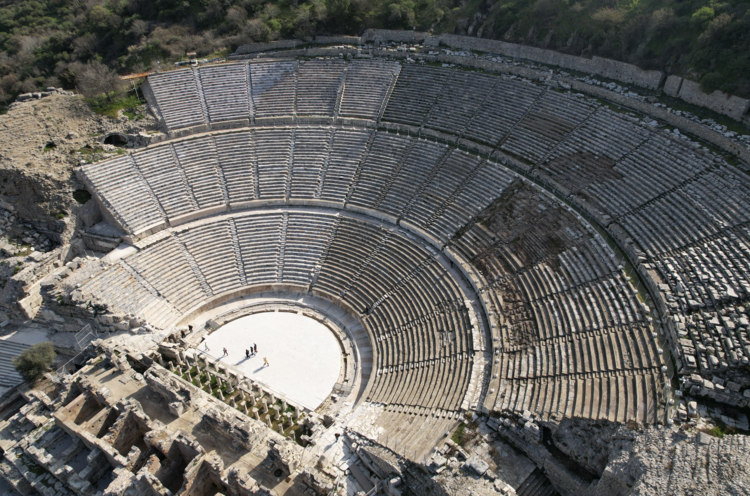
As the tour travels down the North Aegean coast, past the historical sites of Ayvalık, Pergamon and Bergama, it reaches Ephesus – an ancient metropolis best known for the monumental façade of its library and its colossal, 25,000-seat Great Theatre. Its acoustics, says Owen, are extraordinary. ‘If you’re in a group, get someone to run down to the stage while everyone else goes up to the top row. When they rub their hands together on the stage, you can still hear the sound clearly all the way up at the top.’

First built in the third century BCE and later expanded by the Romans, the theatre was always the place to watch the ancient world’s greatest shows, including dramatic recitals of Homer’s works. ‘This is where dramas by the great playwrights Euripides, Aeschylus and Sophocles would have been performed,’ says Owen. ‘Plays such as The Bacchae are still being adapted by the National Theatre for modern audiences today.’
From Ephesus, the tour crosses the Aegean Sea from modern-day Türkiye into Greece, tracking the myth of the Trojan War back to its roots. The route stops at Meteora, Delphi – the sacred mountain sanctuary where ancient Greeks sought prophecies from the Oracle – and Athens, where the Acropolis dominates the skyline.
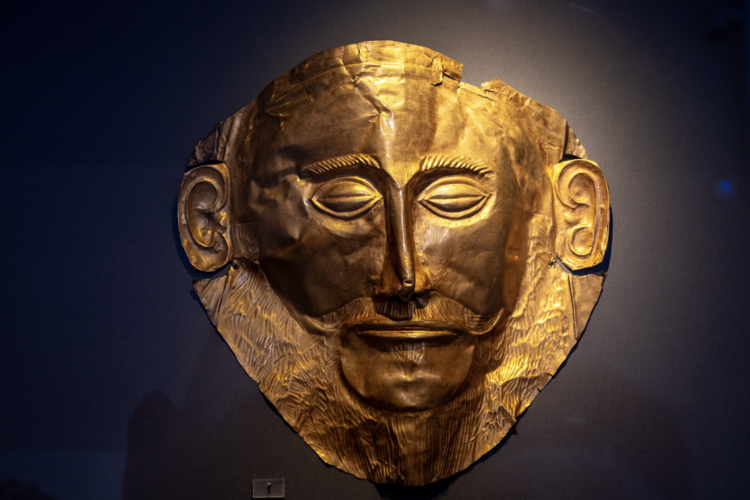
The last stop is Mycenae, citadel of King Agamemnon, who launched 1,000 ships against Troy. It was here, just a few years after digging at Hisarlık, that Heinrich Schliemann made his next headline-grabbing discovery: a spectacular gold burial mask. A confident Schliemann declared it to be the face of Agamemnon himself, but once again, modern archaeology later proved him wrong. The mask, which visitors can see at the National Archaeological Museum of Athens, pre-dates the Trojan War by 300–400 years. Like Priam, Agamemnon has never been proven to have existed. Yet at both Troy and Mycenae, archaeologists are still digging for answers.
Other Royal Geographical Society Tours
Tiger country
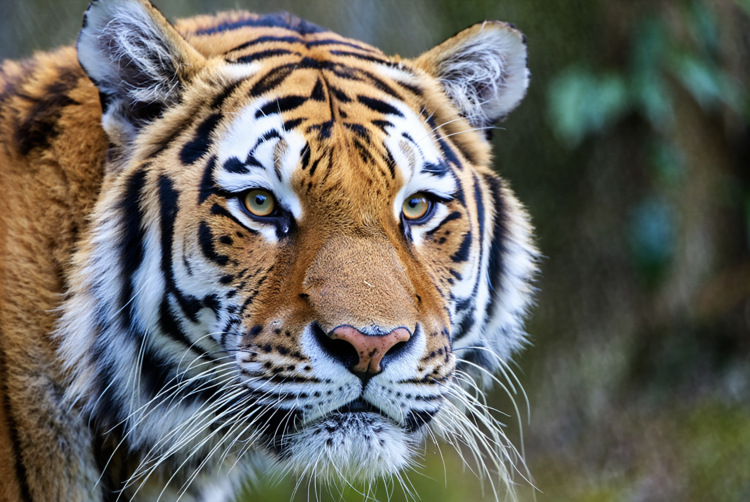
The tour starts in Mumbai before heading into Madhya Pradesh, long contested by local clans, Mughal forces and the British Raj. Khajuraho is a complex of medieval Hindu and Jain temples whose stone walls are carved with battle scenes and warrior figures. Moving north, travellers visit the Agra Fort, a red sandstone citadel that served as the fortified imperial seat of the Mughal Empire. Leaving the battlefields behind, a dawn viewing of the Taj Mahal on the Yamuna River introduces a brief golden age of peacetime stability, before the tour heads into the jungle that helped inspire Rudyard Kipling’s writing.
Desert kingdoms

Much like Greece and Türkiye, the landscapes of Jordan are defined by the footprints of passing empires. This tour charts a region shaped by Roman legions, Islamic armies and Crusaders – all of whom fought for control of these strategic desert corridors. The journey begins in Amman, the ideal base for exploring Jerash, one of the world’s best-preserved Roman provincial cities. From there, a stop at Mount Nebo offers the same panoramic view of the Holy Land that concluded Moses’s biblical journey. The ultimate highlight awaits at the end of a deep, winding sandstone gorge: the Treasury of Petra, the rose-red city carved directly into the cliffs by the Nabataeans. The trip concludes amid the towering dunes of Wadi Rum – the desert backdrop for the exploits of Lawrence of Arabia – before ending on the shores of the Dead Sea, the lowest land elevation on Earth.
Islands of fire
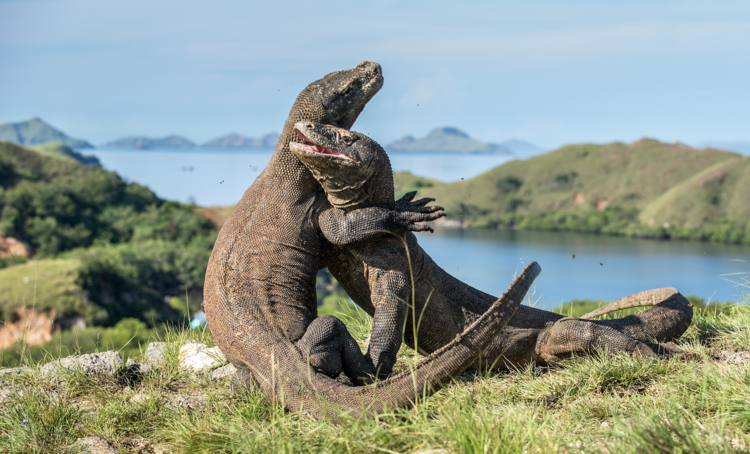
From the sprawling Indonesian capital of Jakarta the route heads into Yogyakarta, the cultural heart of Java. Here, travellers will explore a soaring complex of pointed Hindu temples, and the colossal stone layers of Borobudur, the world’s largest Buddhist monument. An early-morning ascent to Mount Bromo places travellers on the rim of an active caldera, looking out over a desolate Sea of Sand where locals still make offerings to appease the volcanic gods. The tour then takes to the sea, shifting to the island of Flores and the rugged coastline of Komodo National Park. On the volcanic slopes of Padar and Komodo islands, a trek through scorched, savannah-like wilderness brings travellers face-to-face with the prehistoric Komodo dragon.
Along the Zambezi
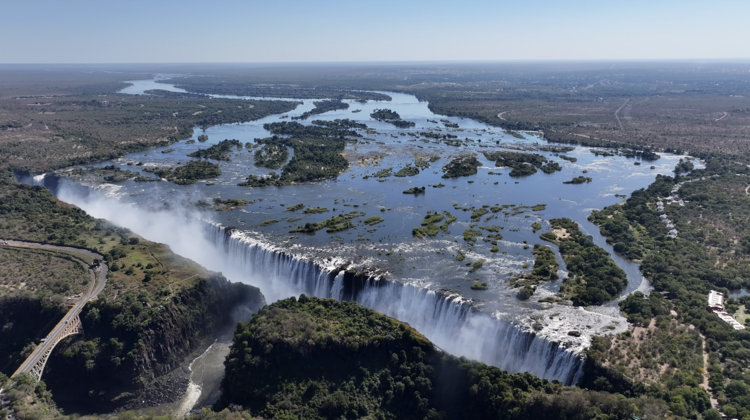
This tour traces the mid-19th-century route of explorer David Livingstone along the Zambezi River. The journey begins in Botswana along the Chobe River, a rich floodplain that forms a natural crossroads for roaming wildlife. Boarding safari vehicles and river boats, travellers will track Africa’s largest concentration of elephants. The definitive highlight lies on the border with Zimbabwe, where Livingstone – guided by local Makololo tribesmen – became the first European to view the spectacular cascades he renamed Victoria Falls.


