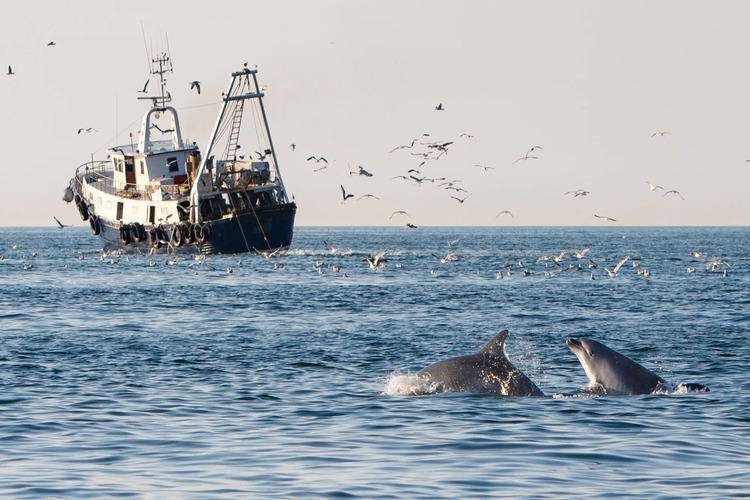
New study shows how bottlenose dolphins are struggling to hunt normally and forage close to trawl nets when fishing boats are nearby
By
Bottlenose dolphins in the Adriatic Sea are following trawlers for food, with baby dolphins learning this behaviour from their parents, a new study has revealed.
Dolphins have been found to be feeding on discarded fish and unwanted catch from trawlers, as natural prey is hard to find due to overfishing. Up to 76 per cent of the trawlers inspected by scientists off Marche, Italy – where the study was conducted across 148 days – were followed by dolphins.
Enjoying this article? Check out our related reads…
‘The Mediterranean Sea is one of the areas with the highest rates of fishing worldwide. The fishing pressure in the Mediterranean is twice the level considered sustainable by the FAO [UN Food and Agriculture Organization],’ said co-author of the study Giovanni Bearzi.
Bottom trawling – the process of dragging heavy nets across the seabed – has transformed the Adriatic, making it harder for bottlenose dolphins to feed. Sharks and rays have declined by more than 94 per cent between 1948 and 2005, with common dolphins – once abundant throughout the Adriatic – virtually disappearing. The bottlenose dolphin is now the only cetacean species regularly present in the central and northern parts of the Adriatic.
Dolphins have always followed fishing boats, but scientists think this behaviour has intensified over time. Just 10 per cent of trawlers were followed by dolphins in a previous study in the Adriatic back in the 1990s. Now, baby dolphins are following trawlers with their mothers, learning this behaviour and increasing its frequency.
‘When a large share of marine predators shift to feeding opportunistically around fishing gear, it’s a fairly safe bet that human influence has reached a tipping point,’ said senior author of the study Randall Reeves.
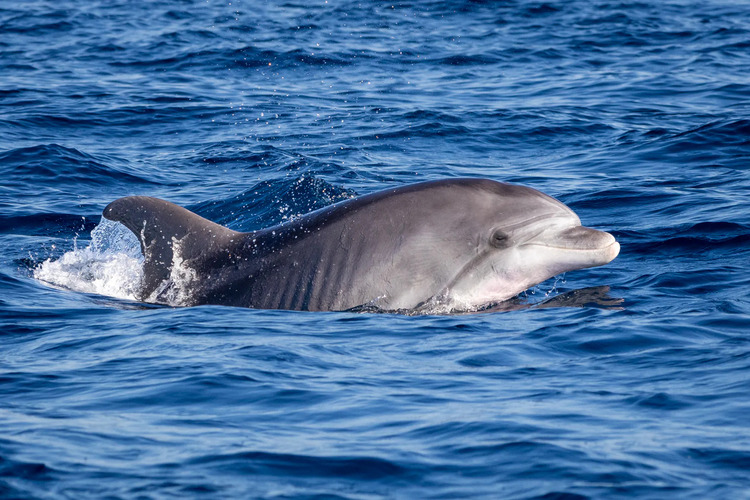
‘Trailing trawlers may boost an individual dolphin’s food intake in the short term, but any benefit of this opportunistic feeding is at least partly offset by the ecosystem devastation and depletion of prey stocks that trawl gear causes.’
The impact of following trawlers can be profound: dolphins can suffer hearing damage from noise exposure, yet may continue to follow them because finding sufficient prey remains difficult. In addition, they are exposed to threats like entanglement and vessel strikes. Long-term effects on dolphin health remain unknown and are continually being researched.
As such, scientists involved in the study are calling for action to protect a rich diversity of species and advise against the continued use of trawlers to protect both dolphins and broader marine biodiversity.
‘Fish less. Fish in less destructive ways. This is really the message,’ said Bearzi.