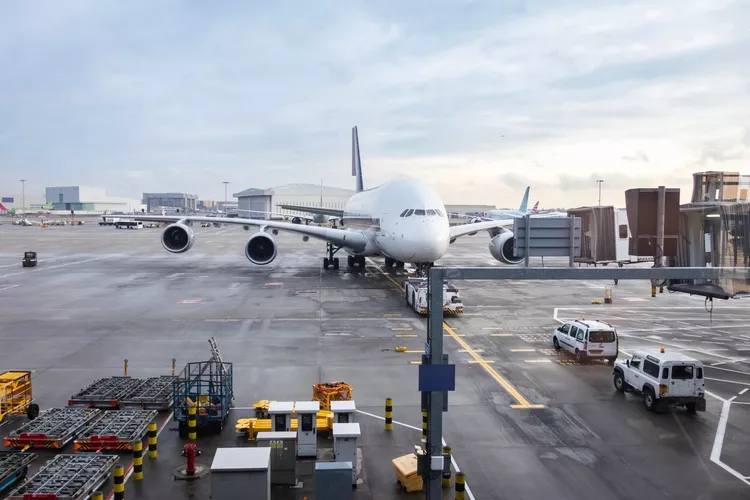
New analysis finds third runway at Heathrow would ‘blow a hole’ in UK’s ability to meet legally binding climate targets
By
Heathrow Airport expansion cannot credibly meet the UK’s climate targets, a new report commissioned by environmental justice organisation Friends of the Earth has found.
Published by the Tyndall Centre for Climate Change Research at The University of Manchester, the report uncovered three key findings highlighting how a third runway at Heathrow would go against climate targets.
Enjoying this article? Check out our related reads…
Firstly, recent approvals of airport expansion at Stansted, Luton and Gatwick – as well as other locations – mean that UK aviation is already projected to exceed its share of the Seventh Carbon Budget (the UK’s legally-binding carbon allowance between 2038 and 2042) by between 21 and 50 per cent. This is before any expansion at Heathrow goes ahead.
Secondly, the new report has also revealed that two technologies relied upon to fit airport expansion within carbon budgets – sustainable aviation fuels (SAF) and greenhouse gas removals – are not close to being on track to meet capacity before a third runway is built.
Sustainable aviation fuel production faces major constraints and competes with agriculture for land and water – just as farmers have experienced what could be the worst harvest on record. In addition, no engineered greenhouse gas removal plants are operating yet in the UK.
Furthermore, the report highlights how non-CO2 impacts are not accounted for in Heathrow’s expansion, such as impacts from nitrogen oxides and contrails, which both account for around two-thirds of aviation’s climate warming.
This year, the government completed a review of the Airports National Policy Statement (ANPS) – the planning policy that supports a third runway – and published a draft updated version for public consultation. Although the review did not reconsider the fundamental decision to expand Heathrow, it said that any expansion must be compatible with the UK’s ‘legally binding climate commitments’ – which the Tyndall Centre has now said is not possible. The government aim to reach a final planning decision on the project by 2029.
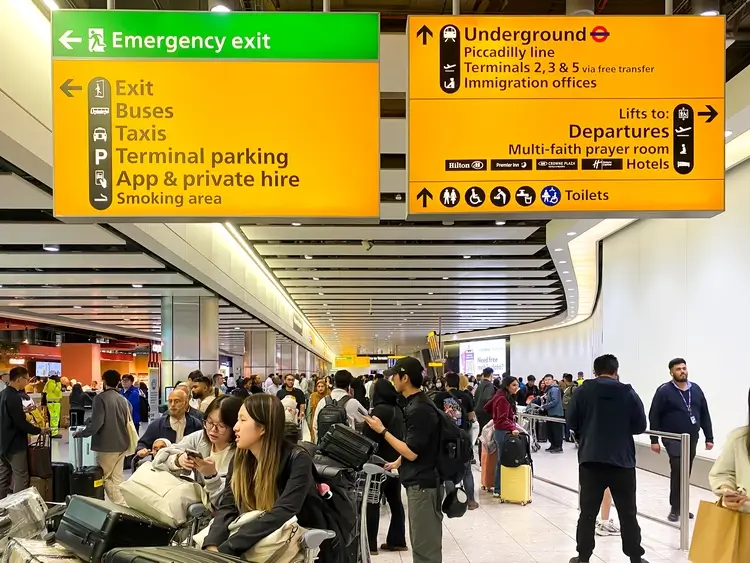
Lead researchers of the new report, Dr Lois Pennington, Professor Alice Larkin and Dr Chris Jones, recommend that decision-makers reject proposed expansions at Heathrow Airport.
‘After this summer of record-breaking heat and nearly 3,000 excess deaths, this third runway is the equivalent of pouring petrol on a raging wildfire,’ said head of policy, science and research at Friends of the Earth Mike Childs.
‘The evidence is clear: there is no route where expansion at Heathrow can be in line with our legally binding climate targets. Suggesting that sustainable aviation fuel and greenhouse gas removals can enable airport expansion is simply trying to pull the wool over people’s eyes,’ Childs continued.
‘The government has a choice: commit to taking action on the climate seriously, reject Heathrow expansion and constrain excessive flying, or abandon the UK’s climate targets and future generations by giving the third runway the go ahead.’
Last year, the UK Treasury backed the expansion of Heathrow, but even airlines – such as British Airways and Virgin Atlantic – have expressed concerns that the £49billion cost is too high and may lead to increased landing fees that make them less competitive.
According to Transport for London, by 2050, a Heathrow with a third runway would be responsible for around 30 per cent of all carbon emissions in the city, compared to 17 per cent if no new runway was constructed. As such, this would make Heathrow the single biggest source of carbon in the UK.