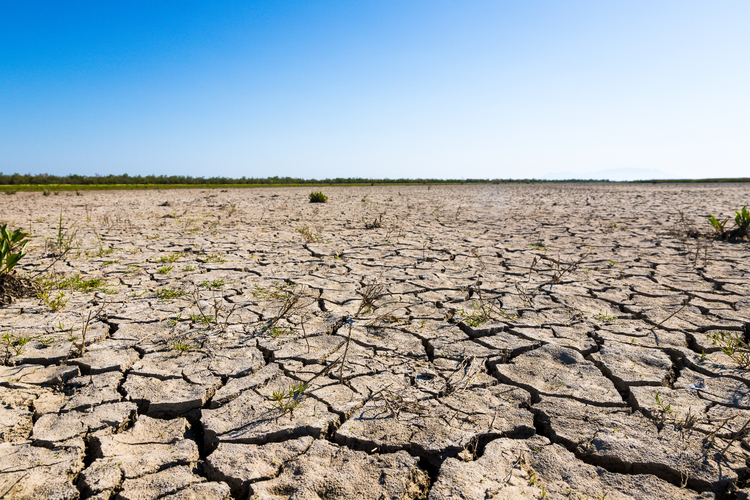
Meteorologists warn that we are to face the onset of a ‘super El Niño’, but what exactly is it and how could it affect countries worldwide?
By
Hitting headlines recently, there has been much speculation over the status of a ‘Super El Niño’ event set to occur in the coming months. A Super El Niño is when ocean surface temperatures rise more than two degrees Celsius above average.
How do El Niños occur?
El Niño is a naturally occurring warming phenomenon – abbreviated as ENSO – occurring under two conditions. El Niño is the oceanic component – the warming of sea surface temperatures in the central and eastern tropical Pacific. The Southern Oscillation (SO) is the atmospheric component: the seesaw in surface air pressure between the eastern and western tropical Pacific (often measured between Tahiti and Darwin, Australia).
Enjoying this article? Check out our related reads…
Only five Super El Niño events have been recorded since 1950, the most recent occurring in 2015. The 2015 El Niño was reportedly the strongest on record, affecting more than 60 million people by changing weather patterns. It triggered severe droughts, crop failures, and food insecurity in the tropics, while causing devastating floods and intense heatwaves in other regions.
An area’s physical geography and social factors influence how a space is affected and how people respond to El Niño events. Those living in the Pacific region – an estimated 4.1 million people – were previously the most at risk during an El Niño weather event. In Southern Asia, monsoon rainfall was significantly lower, leading to drought and reduced crop productivity. Extreme wet conditions then followed the El Niño peak, leading to increased cholera and malaria outbreaks in the region.
Similarly, droughts in the Atlantic following an El Niño event led to crop failure, particularly in maize, causing local food shortages in South Africa.
What impact is a super El Niño set to have?
The super El Niño predicted to arrive is thought to be the hottest ever, with the ocean warming a staggering 2.5 degrees Celsius above normal.
The most immediate and noticeable change of a Super El Niño event would be in the weather. The displacement of warm water in the eastern Pacific Ocean affects the amount of evaporation occurring. Consequently, increased evaporation supplies more water vapour to the atmosphere, resulting in greater precipitation on the neighbouring land.
Countries on the western side of South America would expect wetter-than-normal conditions, including severe storms, during an El Niño phase. Japan and western North America also could experience stormier and warmer weather than usual. Ultimately, ENSO-related storms and flooding can wreak havoc in areas where the climate is normally dry.
El Niño has always had a significant impact on agriculture, but in more recent times, its combination with climate change is proving devastating, as both raise global temperatures.
Trends indicate that the Pacific is set to be the most affected by a Super El Niño. Australia, which faces naturally occurring wildfires and drought, will have intensified effects. On the other side of the Pacific, countries in South America, such as Peru and Ecuador, are likely to experience much wetter weather, leading to devastating floods.
In the UK, we are likely to face a less dramatic immediate impact, with the Super El Niño’s effects lagging behind the event itself. While higher temperatures are more likely in summer, the impact on the UK’s weather may lead to colder spells in the later winter months.
Climate scientists at the Met Office state ‘El Niño years are one factor that can increase the risk of colder winters in the UK’. El Niño can make the UK colder by altering global wind patterns, specifically by weakening and shifting the Atlantic jet stream.
‘Ecosystems have evolved with El Niño for millions of years, and they need some of these extreme events in order to renew those ecosystems,’ Roundy said.
‘But it has a big human impact, a social impact, and an impact on life.’