Competition in the Arctic continues as global warming opens up new shipping routes, making access to region’s resources easier
By
European leaders gathered this Monday in Lapland to discuss the ever-changing region of the Arctic, amid new shipping routes opening up due to global warming, along with demand for the region’s resources.
Across two days, leaders – mainly from Nordic and Baltic countries – discussed issues such as economic opportunities and military vulnerabilities in the Arctic. They also spoke about raw mineral deposits and security threats from the US, China and Russia.
From China’s growing trade through the Arctic, along with conflict in the Strait of Hormuz making the Northeast Passage particularly appealing for shipping, the region is taking a spotlight as nations vie for its natural resources as the planet warms.
The European Commission said these latest talks would help to create its new Arctic strategy – a plan expected to be revealed across the next few weeks. The last strategy paper was released in 2021.
How is the Arctic faring under global warming?
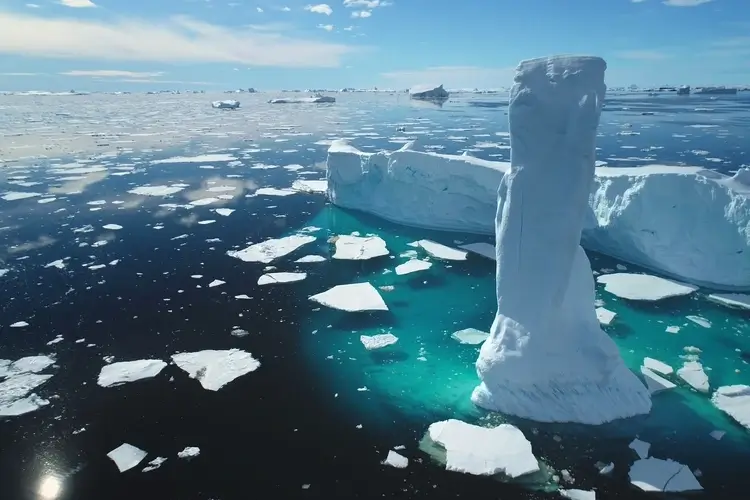
Arctic sea ice is shrinking, as the region warms up at four times the global average rate,a phenomenon known as Arctic amplification. Since satellite measurements began 40 years ago, approximately 50 per cent of the Arctic sea ice area has been lost.
Consequently, this fast-melting ice is opening new shipping routes across the Arctic that could cut the journey from western Europe to east Asia by almost half. Routes previously limited to just icebreakers – special-purpose ships designed to plough through thick ice – can now be navigated by commercial vessels.
Enjoying this article? Check out our related reads…
According to The Guardian, the most developed sea route is the Northern Sea route, which overlaps the Northeast Passage, running along Russia’s Arctic coast from Europe to Asia. AIn addition the Northwest Passage – which cuts through Canada’s Arctic – is a viable option, and a central Arctic route across the North Pole could be on the cards in the future.
In 2025, a shipping container vessel named Istanbul Bridge became the first to travel from China to Europe via the northern sea route, known as the ‘Polar Silk Road’, travelling from Ningbo in China to Felixstowe in the UK in approximately 20 days.

However, these routes come with risks, particularly of ships getting stuck in the ice – even in summer months.
The Arctic has also been of particular interest to President Donald Trump, who earlier this year made headlines after announcing Greenland was ‘vital to US national security’, and repeatedly expressing an interest in acquiring the country. Beyond national security, another reason may factor into the US’s interest in the country – its high volume of rare earth element deposits such as graphite and lithium. Rising temperatures are causing ice sheets to melt, making resources – used for electric vehicles, transmission lines and more – more readily available.
In response to Trump’s desire to acquire Greenland, Danish Prime Minister Mette Frederiksen rejected the US’s interest in buying the nation.
Clearly, countries around the world are becoming increasingly interested in the Arctic as global temperatures rise, making shipping routes more navigable and natural resources easier to exploit