Could controlling the weather and ‘rainmaking’ become one of our most powerful weapons against devastating wildfires?
By Robin Hanbury-Tenison
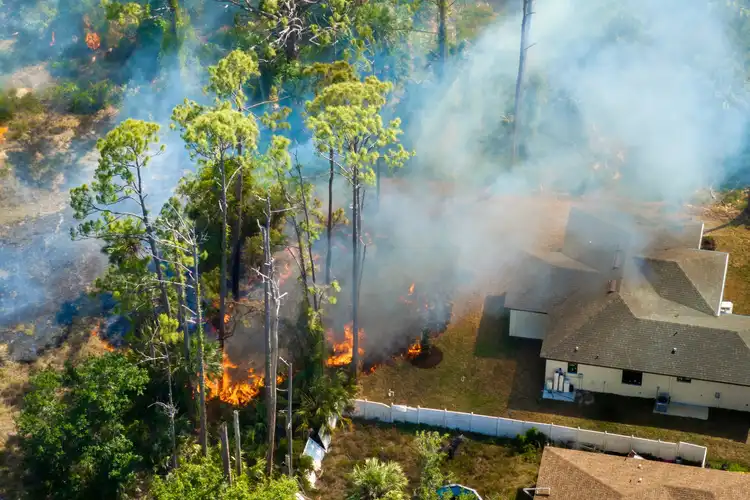
We have just witnessed a summer during which it seemed that half of southern Europe was on fire. Almost everyone accepts that this was due to climate change and that we now have to face the challenges ahead with new and innovative solutions. Conventional firefighting efforts were overwhelmed, and yet no one seemed prepared to attempt a solution invented more than 80 years ago: making it rain.
Enjoying this article? Check out our related reads…
A couple of years after the Enola Gay and Bockscar dropped the first atomic bombs on Hiroshima and Nagasaki, a sister B29 was dropping silver iodide crystals over the New Mexico desert to make rain. Many scientists thought this potentially more dangerous than nuclear energy, but research has continued, largely clandestinely and often by the military, ever since.
Modifying weather in one place may cause disasters elsewhere. One famous example occurred in the UK. In 1952, Operation Cumulus was seeding clouds from aircraft. On 15 August, one pilot later reported spraying clouds with salt and being told that heavy rain had resulted. The team toasted their success until they heard of the Lynmouth disaster, when ‘a stony silence fell on the company’. Nine inches of rain fell on the East and West Lyn rivers in 24 hours, bringing 90 million tonnes of water down the valley and taking 34 lives. The Met Office and Ministry of Defence denied any connection. Operation Cumulus was closed soon afterwards.
About 50 countries, including the USA, China, Russia, India and Thailand, have continued experimenting with cloud seeding, with some success.
During the Vietnam War, between 1967 and 1972, the USA spent $12million seeding clouds above the Ho Chi Minh trail to induce heavy rain, create landslides and disrupt Viet Cong supply lines. Thousands of missions were flown from Thailand without the Thai government’s knowledge. When information leaked out, it became known as the Watergate of weather warfare. The backlash helped lead to the UN Environmental Modification Convention, which banned the hostile use of weather modification technologies.
After the Chernobyl disaster in 1986, radioactive clouds began moving northwest towards Scandinavia. A massive Soviet cloud-seeding operation caused contaminated rain to fall over rural Belarus instead. The population was not warned, and the area suffered devastating consequences.
Weather modification has less sinister uses. The Russians claim to order clear skies for Moscow’s May Day parade. During the 2005 VE Day celebrations, aircraft dropped silver iodide, liquid nitrogen, dry ice and even cement outside Moscow. Rain that had been falling minutes before the parade cleared, allowing a flypast by Sukhoi and MiG fighters.
Thailand has a cloud-seeding bureau with 500 employees and a $60million budget. It uses its own technology to seed monsoon clouds and quell wildfires. Tactical rainmaking can target inaccessible hotspots and, during drought, trigger localised downpours where fires are likely to break out.
If Thailand can do it, why not everyone else? It deserves further research, although it is not as simple as it seems. Conventional cloud seeding requires moisture-filled clouds overhead, rarely the case when wildfires rage below. But other methods may produce rain from a clear blue sky. Laser-based rain triggering, for example, uses laser pulses to create plasma channels in the atmosphere that promote precipitation.
Wouldn’t it be wonderful if we could make it rain locally whenever wildfires broke out? Instead of firefighters struggling with hoses, fire flappers or buckets of water dropped from aircraft, a good shower would do the trick. To reuse the old cliché, if we can put a man on the moon, surely we can do this.