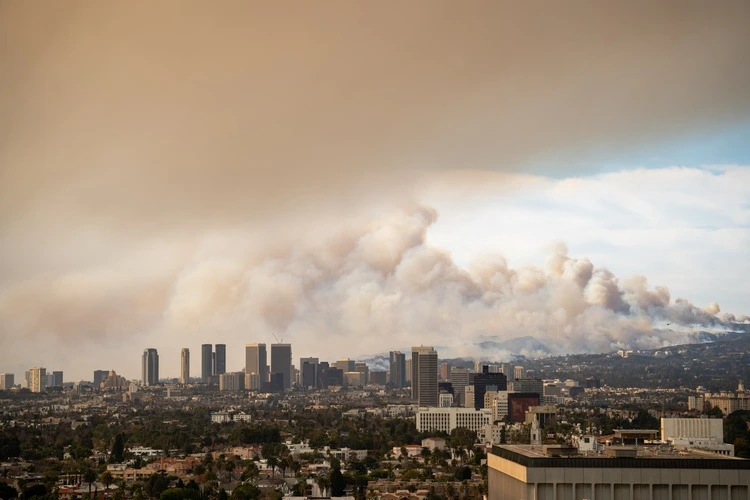
Climate disasters affect everyone, but wealth, race, housing and infrastructure can determine who recovers quickly and who remains vulnerable for years
By
Climate disasters may strike regardless of wealth or race, but recovery is rarely so even-handed. When floods, fires or storms pass, the aftermath can expose deep inequalities, with some communities facing a much harder path to recovery than others. As climate-related hazards become more frequent and severe, understanding what drives these disparities is increasingly important – and could help ensure that protection and support after disasters reach those who need them most.
Below, we look at several examples of climate disasters and inequality around the world, and how different communities have coped:
Unequal protection in moments of crisis
Hurricane Katrina happened more than 20 years ago, yet it still marks one of the most unequal disaster response incidents in history. Repercussions are still felt by communities living in New Orleans today.
Hurricane Katrina made landfall in Florida and Louisiana in August 2005 as a Category 3 storm. It caused catastrophic damage from central Florida to eastern Texas – particularly in the city of New Orleans, which experienced heavy rainfall reaching up to 12 inches in some areas, flash flooding, storm surges on the Louisiana bayou and coastal regions, as well as winds of up to 125mph. New Orleans lies 1.8 metres below sea level, atop loosely settled river sediments. Due to its physical geography, it was already a vulnerable target for the storm’s effects.
Enjoying this article? Check out our related reads…
The recovery period for the city’s inhabitants was arguably more severe than the initial damage, due to poor infrastructure and inadequate pre-disaster disaster recovery planning. It was also a city with a highly impoverished population, with 23-27 per cent of all individuals living below the federal poverty line – nearly double the national average at the time. This factor would ultimately shape both the way the government responded to the disaster and the impact the storm had on those who lived in the area.
More than 1.7 million people needed to be evacuated immediately from New Orleans. A large portion of New Orleans’ population was reliant on public transportation, walking or biking – leaving many behind as the storm actually hit.
Catastrophic levee failures rapidly flooded 80 per cent of New Orleans, and severe miscommunication and leadership breakdowns characterised the disaster response, to which communities felt discriminated against. Mayor of New Orleans at the time, Ray Nagin, faced widespread criticism for his poorly planned response, which led to many unnecessary casualties. Nagin delayed his emergency evacuation order until less than a day before landfall, leading to the deaths of hundreds of residents who were unable to evacuate the city prior to the disaster.
Many did not have a home to return to, especially communities of Black residents who still make up the largest portion of New Orleans residents post-disaster. A study from the National Institute of Health suggested that housing damage was the major factor slowing the return of displaced New Orleans residents, particularly among Black residents and those of low socioeconomic status. They found that the likelihood of having a home damaged or destroyed by Katrina was significantly higher for Black individuals.
Disproportionate rebuilding after disasters
The 2025 Los Angeles wildfires highlighted how recovery from climate disasters is often determined less by the severity of the hazard than by the resources available afterwards. Although the fires destroyed homes across communities of different income levels, the ability to recover varied dramatically depending on wealth, insurance coverage and access to private support.
In some of Los Angeles’ wealthiest neighbourhoods, homeowners were able to employ private firefighting crews to defend their properties as the fires spread, underscoring a growing reality in which protection from climate disasters can be purchased. Public figures such as Kim Kardashian West and billionaires such as Herb Simon, Mark Walter, and Geoffrey Palmer all suffered significant damage to their property but were still able to recover from the disaster faster than poor residents of LA.
Private fire teams that show up to protect homes sometimes neglect to coordinate with emergency agencies and hinder evacuation efforts, a consistent pattern as shown by the response to the Malibu fires in 2018, according to The Guardian.
‘From the standpoint of first responders, they are not viewed as assets to be deployed,’ communications director for the California Professional Firefighters, Carroll Wills, said in an interview with the newspaper. ‘[Responders] are viewed as a responsibility.’
Comprehensive insurance policies, legal representation and financial reserves enabled many wealthier families to begin rebuilding within months. Temporary accommodation in hotels or second homes also reduced the immediate disruption caused by displacement, allowing daily life to continue for higher-income families while reconstruction took place.
The experience was markedly different for lower-income households.
The LA wildfires in January of 2025 burned down over 40,000 acres. The Federal Emergency Management Agency (FEMA), a United States government agency under the Department of Homeland Security, provided grants of around $25,000 to businesses in recovery. This amount, however, only repaired a fraction of the damage caused to private property. In the long-term, this assistance was not enough for low-income residents to rebuild their properties.
Renters, on the other hand, were also disproportionately impacted. They often received far less assistance than homeowners, while those without adequate insurance faced lengthy delays or found rebuilding financially impossible.
Rising construction costs and contractor shortages further widened the gap between those who could afford to rebuild quickly and those left waiting. In many cases, families were forced to relocate permanently, not because the disaster itself made return impossible, but because recovery had become unaffordable.
The contrast with Hurricane Katrina is striking. While failures of government response dominated the situation in New Orleans, the Los Angeles fires demonstrate how market forces increasingly shape disaster recovery.
Wealth has become a form of climate resilience, determining not only who can protect their homes but also who can return to them. Research has consistently shown that the economic consequences of disasters are uneven, with white households often able to accumulate wealth through rebuilding and property appreciation, while Black, Asian and other ethnic households are more likely to experience long-term financial losses.
How infrastructure shapes disaster recovery responses
Recovery inequality does not begin after a disaster strikes. In some places, climate change is already reshaping communities years before floodwaters rise or hurricanes make landfall. Miami has become one of the clearest examples of this process through what researchers describe as climate gentrification.
For decades, many of Miami’s higher-elevation neighbourhoods were among the city’s more affordable areas, home to predominantly lower-income residents and communities of colour. As concerns over sea-level rise and tidal flooding have intensified, these same neighbourhoods have become increasingly attractive to developers and wealthier homebuyers seeking safer ground, driving climate gentrification. Higher elevation has become a valuable asset in a city facing an uncertain climate future.
The result has been rising property prices and increasing pressure on long-standing residents. As investment flows into these neighbourhoods, many families find themselves priced out of the communities they have lived in for generations. Those displaced by rising housing costs are often forced to move into lower-lying areas that face greater risks from flooding and storm surge.
Miami demonstrates that climate inequality is not confined to disaster recovery; it is also embedded within adaptation itself. Those with greater financial resources can relocate away from risk before disaster strikes, while those with the fewest resources become increasingly concentrated in the most vulnerable locations.
Climate change is therefore redrawing not only the physical geography of cities but also their social geography, where access to safety is increasingly determined by wealth.