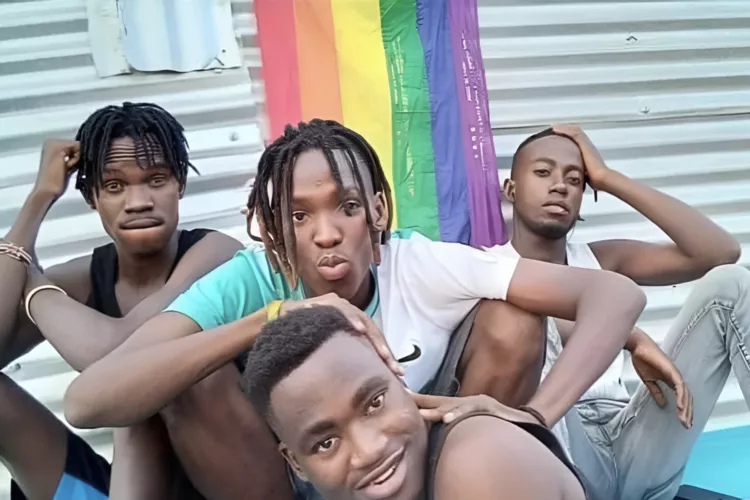
LGBTQ+ refugees have fled persecution across East Africa in search of safety. In South Sudan’s Gorom Refugee Settlement, many say that the violence and harassment have followed them
By Kate Plummer
When Amy arrived in South Sudan’s Gorom Refugee Settlement, she hoped she would finally be offered protection after three volatile years. The 31-year-old transgender woman had left Uganda in 2021, fearing persecution. She had questioned her sexual and gender identity from a young age but had grown up in a conservative religious family in a country with harsh anti-homosexuality laws. She felt muzzled. If you tell people about your sexuality, ‘your head is chopped off, anything can happen’, she said.
Amy’s growing fear about her future in Uganda came to a head when, aged 18, her family caught her with her male netball coach, whom she had started dating in secret. Scared, she ran away, eventually reaching a refugee camp in Kenya before moving to Gorom when proposed anti-LGBTQ+ legislation threatened to upend her life again.
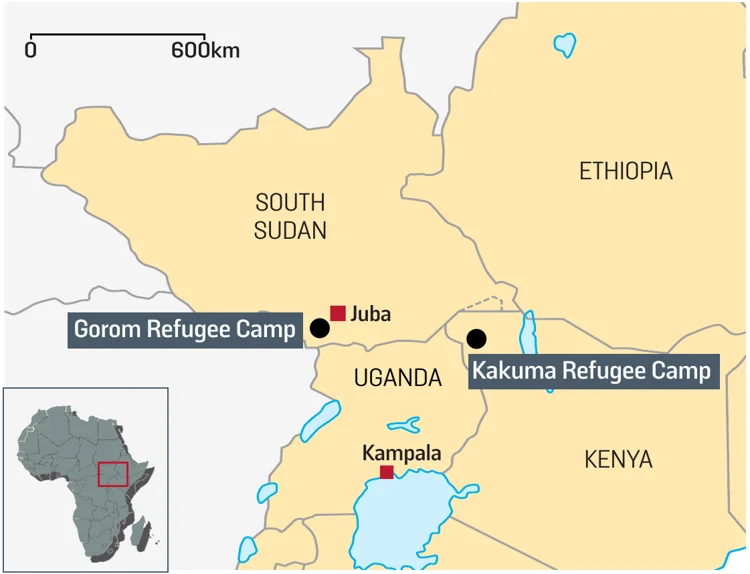
But for Amy and other LGBTQ+ people in Gorom, refuge has brought little security. Life remains a daily struggle against discrimination, hate speech, verbal harassment, intimidation and targeted attacks because of their sexualities and gender identities. Gorom Refugee Settlement lies 26 kilometres southwest of Juba, South Sudan’s capital. The camp, built in 2010, is under the authority of the South Sudanese government through its Commission for Refugee Affairs and is supported by several organisations, including UNHCR, the UN’s refugee agency, the Red Cross and Peace Winds.
It was originally intended to house 2,500 refugees fleeing conflict in Ethiopia, but it’s now overflowing. According to a UNHCR spokesperson, some 16,000 refugees live in the settlement and on 22 June this year, the camp stopped registering new arrivals. The spokesperson declined to say how many of the refugees are LGBTQ+, citing confidentiality. Amy estimated the number at around 600.
Amy is one of several LGBTQ+ refugees who told Geographical about being beaten at night, attacked at water collection points and harassed by other refugees because of their sexual and gender identities. Some of the refugees, whose names have been changed to protect their identities, also said their businesses had been burnt down and that neighbours had sent them letters demanding that they leave the camp.
Their experiences illustrate the extraordinary distances LGBTQ+ refugees are often forced to travel in search of safety, only to encounter persecution again in the places intended to protect them.
Uganda was in the midst of a dramatic restriction of LGBTQ+ rights that culminated in March 2023, two years after Amy left the country, with the passing of the Anti-Homosexuality Act — widely considered one of the world’s harshest anti-LGBTQ+ laws. Under the legislation, those convicted of certain homosexual acts can face life imprisonment. In cases defined by the law as ‘aggravated homosexuality’, the death penalty can be imposed. ‘I did not know where I would go or who would help me,’ Amy said of the time she left. ‘My only goal was to survive.’
Using human traffickers, Amy reached Kakuma Refugee Camp in Kenya in June 2021. But Kenya provided no sanctuary. Same-sex sexual activity is illegal there and punishable by up to 14 years in prison. In 2023, legislators introduced the Family Protection Bill, which seeks to increase punishments relating to homosexuality. It has yet to become law, but Amy said UN staff warned her and other LGBTQ+ refugees to keep a low profile.
Concerned for her safety, Amy once again enlisted the help of human traffickers. Hidden among luggage in the boot of a car, she was driven to South Sudan and reached Gorom in June 2024.
From the tent she shares with seven other people, Amy watches daily life in the camp. Shelters made from plastic sheets and mud pepper the ground. People walk to water points and buy goods from small market stalls run by refugees hoping to supplement their meagre incomes. They visit health clinics and children attend schools. Residents cook their limited supplies using charcoal. In the intense heat, refugees spend their days searching for scarce shade. During the rainy season, shelters leak and they struggle to keep their belongings dry.
As a transgender woman, Amy faces additional dangers. She said she has repeatedly been harassed by security officers while travelling to Juba to seek medical treatment. ‘On two occasions, they stopped me and demanded my passport. When I showed my refugee documents from Gorom, they insisted on knowing my country of origin. After learning I am from Uganda, they threatened to arrest me and send me back to Uganda,’ she said. ‘They also accused LGBTQI+ refugees from Gorom of coming to South Sudan to promote homosexuality.’
During one such incident in June, Amy said security officers took all the money she had with her — US$50.
The harassment reflects wider official attitudes. As in Uganda and Kenya, same-sex relations are illegal in South Sudan, where those convicted can face imprisonment or fines. The law also contains a provision criminalising a ‘male person’ who dresses as a woman in a public place, an offence punishable by up to a year in prison.
Peter, a 29-year-old non-binary person, has faced similar hostility. They left Uganda in February 2021 after being persecuted because of their sexuality and gender identity. ‘A mob wanted to kill me,’ they said. Like Amy, Peter travelled first to Kakuma in Kenya before reaching Gorom in June 2024, where life has proved to be overwhelming.
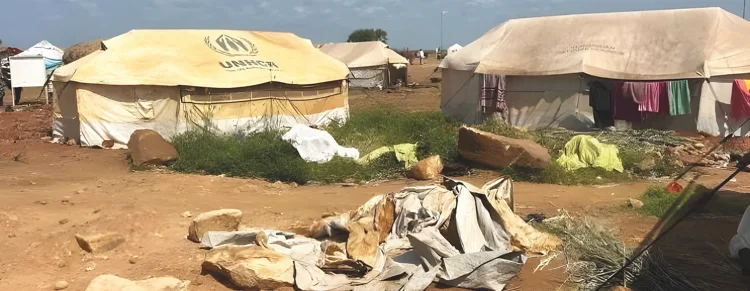
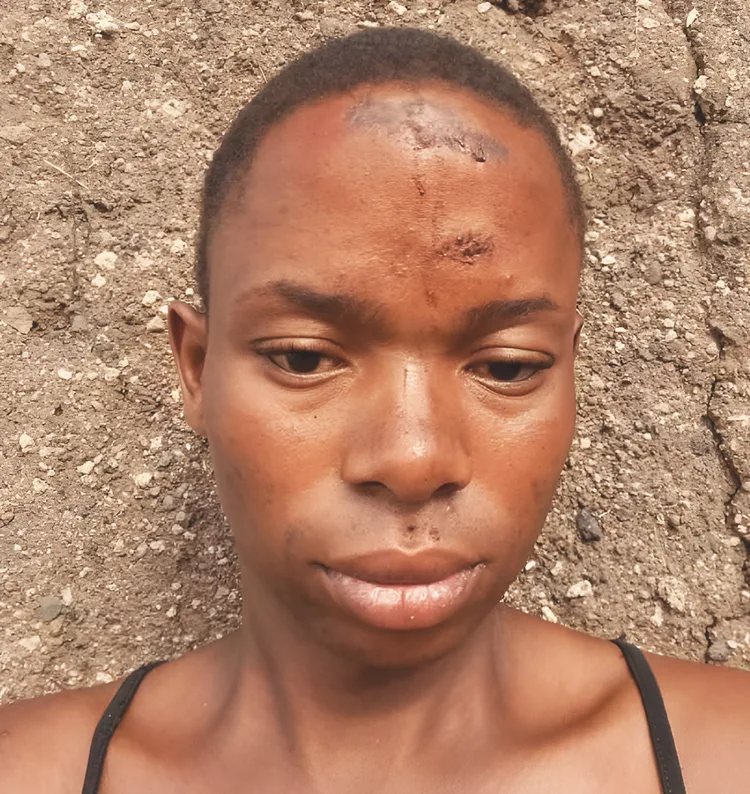
Peter’s tent was slashed in April after the refugee from whom they rented it for US$30 a month discovered that they were non-binary. The landlord told them to leave and threatened to burn the tent down before camp security intervened. On another evening in June, Peter was walking back to their shelter after charging their phone. It was dark when they felt something hit their forehead. Someone was throwing lumps of dry mud at them.
‘We sit here not knowing what will happen to us,’ they said. ‘It’s a scary time. The fear is made worse because of homophobia and not being able to access our basic needs.’
Kareem, a former human rights activist in Uganda, also fled to Kenya in 2021 ‘out of fear of being persecuted and prosecuted’. Facing continued pressure while carrying out human rights work there, they moved to South Sudan in January 2024.
‘Life is so horrible,’ they said. In Gorom, ‘they harass you in town’. Transgender people, they said, are ‘undressed in public’.
Faced with such conditions, LGBTQ+ refugees have sought help from organisations overseas. Rainbow Railroad, a North American non-profit that supports the resettlement of LGBTQ+ people at risk of persecution, has received 47 requests for help since 2020 from individuals who mention Gorom. Twenty-five of those requests came in 2025. Those seeking assistance reported discrimination, threats of violence and the threat of imprisonment within the camp.
Kareem contacted Rainbow Railroad for help in June 2023 and was resettled in Canada in January 2026. For most LGBTQ+ refugees in Gorom, however, such an escape remains elusive.
Those who remain say they struggle to obtain protection even after reporting abuse. Kareem said refugees report incidents of harassment to UNHCR but are told that evidence from the police is needed before cases can move forward. Many are frightened to approach the police, believing that officers may fail to document their complaints or could themselves subject them to further harassment. This leaves LGBTQ+ refugees caught in an acute predicament: dependent for protection on institutions operating within a country where same-sex relations themselves are criminalised.
A UNHCR spokesperson told Geographical: ‘The protection of LGBTQ+ asylum-seekers and refugees, who may face heightened risks of violence, discrimination and exclusion, remains a priority for UNHCR. We take all allegations of abuse, harassment, discrimination, or violence affecting refugees very seriously and follow up on reported incidents through established protection mechanisms.’
The agency said it had previously received reports of safety concerns involving LGBTQ+ refugees in Gorom and had responded through confidential reporting channels, protection monitoring, individual case management, psychosocial support and referrals to specialist medical, legal and protection services. It said it also works with the Commission for Refugee Affairs, law enforcement and humanitarian organisations to address specific protection risks.
‘UNHCR advocates for all refugees to access protection and assistance without discrimination,’ the spokesperson said, adding that it works to reduce stigma and promote peaceful coexistence in the camp.
Kareem is now safe in Canada, but remains worried about the people they left behind.
‘Life of refugees is hard,’ they said. Without help, they fear, those still in Gorom are ‘destined to die’.