More than 92,000 tonnes of microfibres are lost during production every year, with 63 per cent reaching the environment
By
The textile manufacturing industry generates 92,000 tonnes of microfibre pollution every year, with more than 58,000 tonnes – or 63 per cent – leaking into the environment, new research by Earth Action has revealed.
The report in which the research can be found, From Shedding to Solutions, is the first global system-level baseline of microfibre losses and leakage during textile manufacturing.
Enjoying this article? Check out our related reads…
Pieces of clothing shed microfibres when they are made, worn and laundered. Once these tiny particles are released into the environment, they are difficult to remove – so much so that they are increasingly recognised as one of the most common forms of microplastic pollution.
Such pollution can be tackled by improving wastewater treatment and sludge disposal, as well as deploying cleaner manufacturing processes. By implementing these measures, researchers state that microfibre leakage in textile production in the production phase could be reduced by approximately 95 per cent by 2032.
In particular, wastewater treatment is highly effective at cutting microfibre pollution in water – but it must be used in tandem with sludge disposal, otherwise particles are simply relocated from water to land rather than being eliminated.
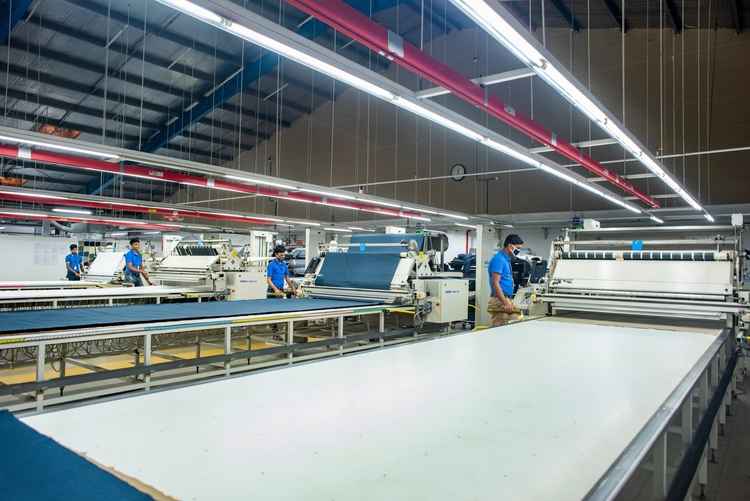
Global losses of microfibres are concentrated in major textile-producing countries, with 54 per cent occurring in Bangladesh, 17 per cent in Pakistan and 12 per cent in China.
When wastewater treatment and sludge management practices are factored in, China overtakes Pakistan as the second-biggest polluter at 15 per cent, compared with Pakistan’s 11 per cent. Still, Bangladesh remains the largest contributor to global microfibre leakage, accounting for 24 per cent of total annual emissions.
‘This is the first time the full system has been mapped at this scale, and it won’t be the last. Each new phase will sharpen the picture further. But the evidence is already strong enough to act on now,’ said co-founder of Earth Action Sarah Perreard.
‘Microfibres don’t stay where they’re shed. They travel through rivers and oceans, into the food we eat and, increasingly, into our own bodies. The longer we wait, the harder and more expensive this pollution becomes to undo. Brands and regulators don’t need to wait for a complete picture. They need the will to use what we already know.’