


For years, battery technology felt like a constraint rather than a solution. A string of recent innovations suggests that assumption may now be badly out of date

By
Archaeologists in Suffolk recently found evidence of deliberate fire-making dating back 400,000 years, eight times earlier than previously thought. For millennia upon millennia, the primary source of energy came from burning wood that had stored, via photosynthesis, the energy of the Sun. Later on, coal and then oil and gas, holding a much more compact form of that same stellar energy, were adopted. But what about now, when we’re directly harvesting our star’s radiation through photovoltaics? Or through wind, itself powered by the Sun?
The monumental effort of decarbonisation can’t help but require improved and perfected battery technologies, deployed on a very large scale. In 2025, there were more than six billion smartphones and 60–65 million electric vehicles in the world. Batteries rule everywhere, from pacemakers to rovers on Mars.
Enjoying this article? Check out our related reads…
However, in order to move away from climate-altering fossil fuels, we need cheaper, safer and lighter batteries. We need huge batteries to store energy for the grid, thus powering almost everything with the Sun, even when it’s not available. The sooner new breakthroughs land, the faster the decarbonisation process will be. It’s now clear that its fate depends more on science and technology than on politics and diplomacy.
Twenty years ago, the average energy density of a commercial lithium-ion battery hovered around 150 watt-hours per kilogram. Electric cars were prohibitively expensive – the 2008 Tesla Roadster, with its 385-kilometre range, cost nearly US$100,000. Today’s top-tier cells push 300 watt-hours per kilogram in mass-produced EVs. The cost per kilowatt-hour, which peaked at around US$1,400 in 2008, has plummeted to below US$100. This isn’t incremental improvement; it’s a paradigm shift.
A battery is generally composed of three main parts. The anode acts as a reservoir where ions (often lithium ions) are stored when the battery is charged. The cathode is the destination for those ions during discharge, enabling the electrochemical reactions that drive the electrical current. Between them lies an electrolyte, usually a liquid medium, that allows ions to move back and forth. Upgrades, or entirely new solutions, are emerging for all three components.
For the anode, batteries typically use graphite, which is reliable but bulky. Silicon can hold ten times more lithium ions, but it tends to expand the battery structure during charging. Companies such as Sionic and Group14 have commercialised ‘micron-sized assemblies’ of silicon nanoparticles. These structures act like a sponge, expanding internally without breaking the battery shell.
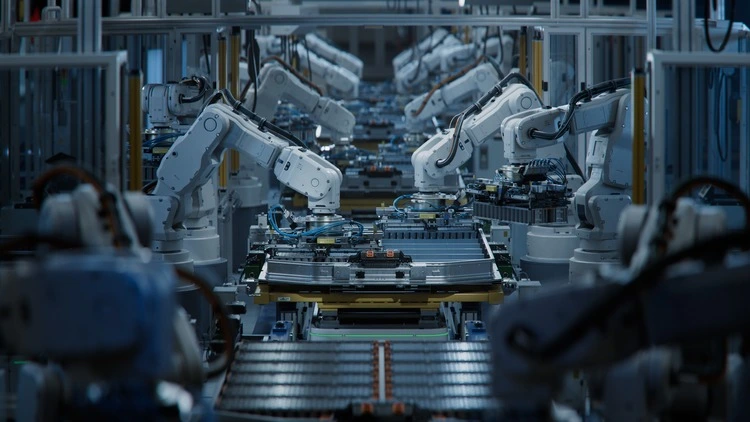
This technology is pushing energy densities towards 400 watt-hours per kilogram. Lithium is concentrated in just a few countries, and it’s environmentally taxing to mine. Sodium-ion batteries use salt, one of the most abundant materials on Earth. The Chinese company CATL and other players have now moved sodium-ion into mass production for budget EVs and grid storage. While these batteries tend to hold less energy than lithium, new designs and the adoption of nano-structured materials have pushed their density to compete with mid-tier lithium batteries. Notably, very few countries are short of salt.
Solid-state batteries replace the usual flammable liquid with a solid material, such as ceramics or sulfides. Last year, Mercedes-Benz successfully integrated lithium-metal solid-state batteries into a production vehicle platform. They are virtually fireproof, charge from zero to 80 per cent in under 15 minutes, and offer nearly double the energy density of current batteries.
Batteries are set to become cheaper, safer and less dependent on critical materials; perhaps a little more sustainable, too. This will further encourage the widespread adoption of solar and wind technologies – themselves getting cheaper and cheaper – at both home and grid scale. However, many more innovations are needed before the global economy is mostly powered by clean energy.
What’s new is that, instead of years of trial and error in a lab, AI models can now simulate millions of chemical compositions in weeks, identifying optimal structures for electrodes and electrolytes. Microsoft and the Pacific Northwest National Laboratory used an algorithm to screen 32 million materials, narrowing them down to 18 promising candidates. Despite the US administration’s nonsensical opposition to clean energy, the pace of innovation is destined to grow.
The battery’s quiet revolution is doing more than just extending the life of our gadgets. In five, ten or 15 years, it will redefine mobility, transform energy grids, and alter the geopolitical landscape, possibly ushering in a future powered by abundance, not scarcity. The sooner, the better.



