
More than three-quarters of famous waves in world’s surfing reserves were at high risk, new analysis has found
By
Climate change is predicted to threaten 89 per cent of the world’s famous surf breaks, with varied impacts across these iconic stretches of water.
A new study, published in Climatic Change, assessed 57 ‘internationally significant’ surf breaks – nearshore areas whose mix of coastal and seafloor characteristics create iconic waves – across eight countries. It found that dozens of famous waves in World Surfing Reserves are at high risk due to changing tide levels, shifting sands and hardened shores. These reserves are seen as a model standard for preserving wave breaks and their surrounding areas.
Enjoying this article? Check out our related reads…
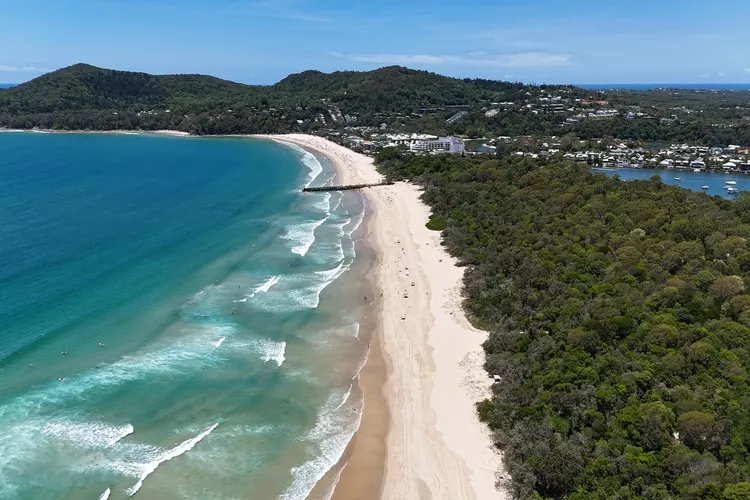
The most threatened locations include Australia’s Noosa, California’s Santa Cruz, the UK’s Croyde beach and El Salvador’s Oriente Salvaje.
‘While vulnerability profiles and variation within each risk factor are wide-ranging, high proportions of breaks are at risk due to their shoreline resilience (89 per cent are medium or high risk), sensitivity to sea level rise (79 per cent are medium or high risk), and seafloor composition (75 per cent are medium or high risk),’ the study found.
Worldwide, the surf tourism industry is valued at as much as $65billion. Surfing has an economic value of at least $194.7million in Santa Cruz alone, drawing 783,000 surf visitors to its shores each year.
‘Surf breaks are incredibly unique oceanographic phenomena – a confluence of all these factors that fit together just right to make the wave happen – and so those processes are really sensitive,’ said associate professor at California State University Channel Islands and co-author of the study Dan Reineman.
In previous studies, surf breaks have also been shown to mitigate climate change and help surrounding ecosystems. A study in 2024 found surf breasks are often found in or near ecosystems that are conservation priorities, such as coral reefs and mangrove forests.
Stocks of carbon – known as ‘irrecoverable carbon’ are located within surf breaks too. This type of carbon is carbon that, if lost, could not be replenished within 30 years. Such sequestration is key to mitigating the effects of climate change.
‘Climate change and coastal management both have significant negative implications for the future viability of multiple surf breaks of global significance and, therefore, the myriad distinct local communities, cultures and economies they support,’ the study concluded.