As heatwaves become more frequent, open-water swimming is more tempting than ever. Tristan Kennedy looks at how to enjoy it safely – and the kit that helps
By
It’s as sadly inevitable as the front-page images of ice creams, overcrowded beaches and seagulls stealing chips: as soon as the mercury rises above 25°C, British newspapers fill with stories of people losing their lives after venturing into open water.
At the tail end of the two-week heatwave that hit the UK this May, ITV published an article that kept a running tally: ‘At least 17 people have died after getting into trouble in open water during UK heatwave’, the headline read at the time of writing. Among them were 16-year-old Muhammed Secka, who’d gone swimming in Rother Valley Country Park, Yorkshire; an unnamed woman in her 70s, who was pulled unresponsive from the sea at a popular beach in Pembrokeshire; and Declan Sawyer, 15, who ‘loved his fishing and his football’, according to his parents, and drowned in Lincolnshire’s Swanholme Lakes.
Related reads…
Individually, each of these stories is tragic, but the overall picture is equally worrying. According to the Royal Life Saving Society (RLSS), there are three times as many accidental drownings in the UK during extreme heat as there are on a typical summer’s day. These deaths aren’t confined to coastal areas – 63 per cent of open-water drownings happen inland, in rivers and lakes. The society’s data show that more than 1,600 people have drowned in the UK and Ireland in the past five years, and nearly half (47 per cent) of these deaths occurred during the four hottest months of the year: May, June, July and August.
The relationships between cause and effect are complex, and it’s hard to prove what role the changing climate plays in all of this, but recent figures published by the National Child Mortality Database showed that death by drowning has doubled for under-18s in the past five years. It’s not a huge stretch to imagine that as global average temperatures continue to rise, and heatwaves become much more common, more and more people will die in and around our waters.
This is doubly tragic because, as the RLSS seeks to emphasise, accidental death by drowning is entirely preventable. With better education and water-safety awareness, there’s no reason why these upward trends shouldn’t be reversed. The society’s Water Safety Guidelines for summer, published on its website, are remarkably simple:
‘Stop and think’, they urge would-be swimmers. Could it be deeper or shallower than expected? Could there be unexpected rip tides, currents or hidden objects underwater? Might winds carry you away if you jumped on an inflatable?
Their second major point is ‘Stay together’. Try, wherever possible, to swim in areas supervised by a lifeguard, enter the water slowly, and make sure there’s always someone around to raise the alarm, they advise. There are lots of less immediately obvious tips on how to swim safely on the RLSS website, too, including a reminder that cold-water shock – the body’s involuntary, sometimes literally heart-stopping response to sudden immersion in water below 15°C – can affect even the most confident swimmers. But the proximate cause behind many drownings, the RLSS suggests, is simply a failure to accurately assess the risks.
If better education – and, crucially, knowing when you don’t know enough to go – is the most important piece of the puzzle when it comes to swimming more safely, then getting the right equipment has a role to play too. Even if there’s a heatwave on, a wetsuit that will keep you warm is a great idea if you’re planning on swimming in open water. Remember that large bodies of water take much longer to heat up than the air above them. During the May heatwave, the temperature briefly hit 35°C in parts of London, but average sea temperatures around Britain’s coasts were still well below 15°C – the point at which cold-water shock becomes a risk.
A tow float is also a great idea. It makes you more visible to boats and other water users, but also provides buoyancy, giving you something to cling to if you suddenly get cramp, feel tired or find yourself struggling. A smartwatch that can help you avoid losing track of time, and flag up your body’s warning signs, is also a good idea.
The thing is, when it’s practised correctly, with the right knowledge and good gear, open-water swimming is actually an incredibly safe sport. And it would be a shame if recent headlines were to put potential participants off – because going swimming in a lake, a river or the sea is surely one of life’s greatest pleasures.
It’s no surprise the discipline has soared in popularity in recent years. A report by Swim England, swimming’s governing body, showed that the number of people regularly venturing into open water more than doubled in the UK between 2017 and 2024 – from 266,000 to well over half a million.
Especially when it’s hot, there’s nothing like the feeling of full immersion in cool, lapping water. The sensation of weightlessness you feel as you float, the joy of propelling yourself forward with a few simple kicks and strokes, and, when you’re out in it, the delight of looking back towards the bank or the beach and feeling yourself entirely removed from the cares and pressures of life on shore? Well, that’s really hard to beat.
Wishlist: three items to make your swim safer
The essential: Dippy Swim 28l Drybag Tow Float – £33
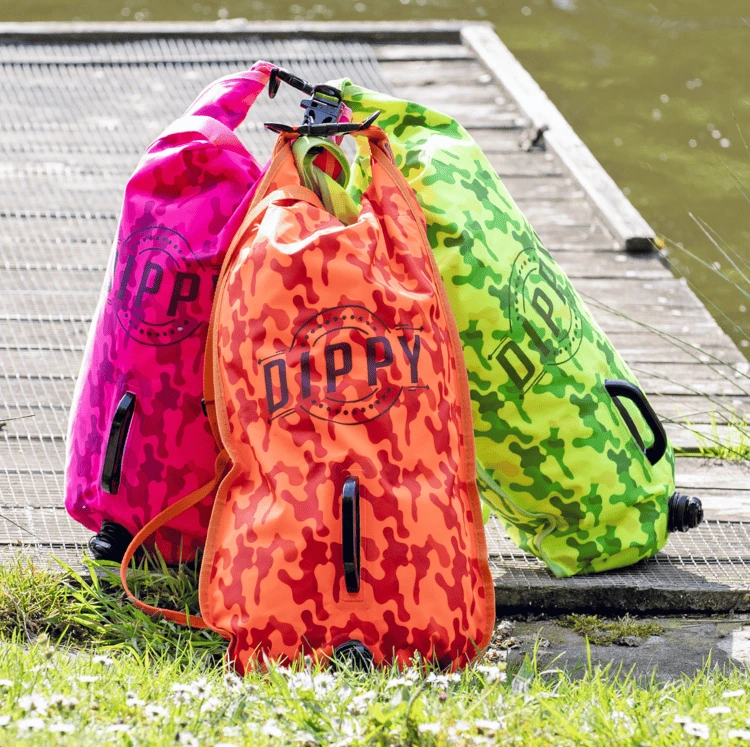
Tow floats not only make you more visible to boats, paddleboarders and fellow swimmers, but the latest generation double up as dry bags too.
Dippy’s 28-litre version is particularly well thought out. The bright inflatable float trails behind you, while the waterproof central compartment has enough room for essentials such as keys, a phone, spare layers and a post-swim snack. The dual air chambers provide extra buoyancy if you need a quick breather, and there’s even an integrated whistle for emergencies.
The luxury: Kospet Tank T4 Dive Watch – £210

The Kospet Tank T4 is aimed at adventurous types who love the water – whether that’s open-water swimming, diving or other outdoor pursuits. It’s packed with useful features and rated for scuba dives or freedives down to 45 metres. The rugged stainless-steel construction is paired with dual-band GPS, offline mapping and dedicated dive modes, while the bright AMOLED screen remains readable even in full sunlight. There are certainly more expensive dive computers and multisport watches on the market, but few offer quite so many features for the price.
The surprisingly useful: Rooster Changing Mat Bag – £35
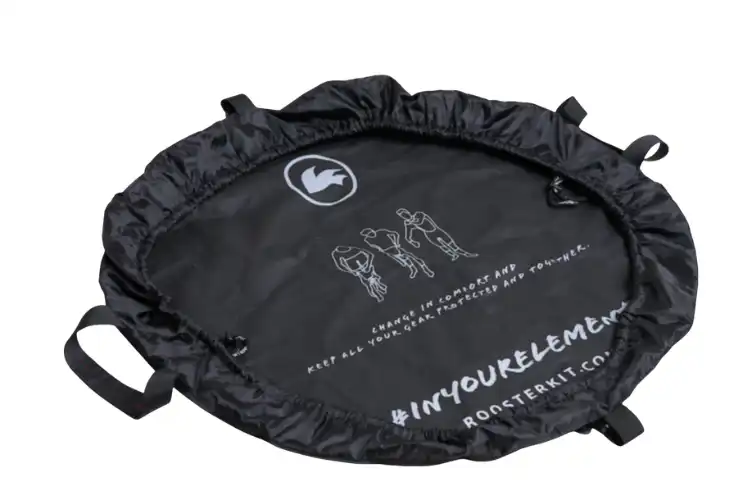
Often the worst thing about open-water swimming is the lack of changing facilities. But that’s less of a problem with Rooster’s deceptively simple – and surprisingly useful – Changing Mat Bag. Laid flat, it provides a clean, waterproof surface to stand on while wrestling your way out of a wetsuit. Once changed, simply pull the drawcord and the mat transforms into a bag that swallows up wet kit. Uncomfortable post-swim changes, hopping from foot to foot as you try to get a wetsuit off, have suddenly got a whole lot easier.