
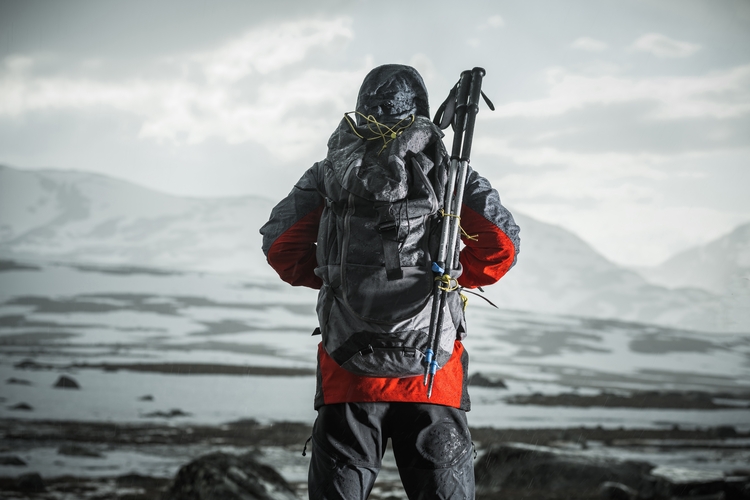
RGS grants officer Sarah Henton De Angelis gives her tips on expedition organising
Sarah’s expedition insights
– Choose your team carefully – good chemistry beats perfect plans
– Travel with purpose, not ego – curiosity always wins
– Read, plan and apply early – deadlines sneak up fast
When Robert Scott first arrived in Antarctica in 1902, marking the successful debut of the British National Antarctic Expedition, it was thanks in no small part to the support – and, crucially, the financial backing – of the Royal Geographical Society (RGS).
Since 1830, the RGS has helped to fund geographical research and expeditions around the globe, and while today’s grants look a little different (now supporting applicants from students to senior academics), their impact can be just as important.
‘We have one grant called Fieldwork Apprenticeships,’ says Sarah Henton De Angelis, grants officer at the RGS. ‘It’s for undergraduates who wouldn’t normally have the funds to do fieldwork – it’s just life-changing for some of these students.’
Enjoying this article? Check out our related reads…
As a volcanologist, Henton De Angelis is no stranger to fieldwork. As a student, she travelled to Kamchatka, the fiery, volcanic peninsula at Russia’s far eastern edge, and later stood on the slopes of Sabancaya, a 5,000-metre stratovolcano in Peru, as it erupted nearby. But the volcano closest to her heart is Augustine in Alaska.
‘It’s a perfect picture-postcard volcano on a tiny little island in the Cook Inlet.’ It was the focus of her thesis and a place she got to know very well (from every angle) over the four-year span of her PhD. Consequently, Henton De Angelis knows a thing or two about what makes a good field trip.
‘Of course you want to achieve the work that you set out to do, but for me, it’s more about the people,’ she says.
‘The best field trips have undoubtedly been the ones where the field team gelled really well, and the worst have been the ones where everything descended into arguments and egos. I don’t think I’ve ever been on a field trip that completely failed to get what it wanted, but they’ve certainly got there in different ways. And if everyone gets on the plane at the end feeling bruised and battered, I’m not sure it was worth it.’
Henton De Angelis says teamwork and collaboration, especially for fieldwork and expeditions abroad, are key to a successful grant application. She also looks for originality and purpose, whether it’s the gaining of new knowledge or sharing the stories of the people and places visited, particularly when it comes to expedition grants.
‘You don’t have to be a researcher or an academic to apply for an RGS Explore Grant. It can be a very personal journey – in fact, I think the best travel should be about personal growth. At the same time, we try to avoid vanity projects. We get plenty of applications from people who, as I often say, fall into the “first person to go backwards across Antarctica on a pogo stick” category. There’s got to be more to it than that.’
While grant applicants will need to prove that they have the skills and experience to complete their proposed journey or work, they don’t need to have taken part in an expedition or fieldwork before. Henton De Angelis’s advice is to ‘just go for it. The process of going through an application cycle, even if you don’t get funded, will make your applications and your project better in the end. Take any feedback into consideration and you never know what might happen if you apply again next year.’
To improve the chances of success, however, she adds that her number one piece of advice is to read the guidance available to all applicants on the RGS website, and to be mindful of deadlines. ‘That’s the biggest pitfall for our applicants by far,’ she says. ‘Make sure you get it in on time!’


