

From a psychedelic tarantula to wild tulips and a pangolin, here are the ten highly-threatened species to watch out for in 2026
At a time when biodiversity is under increasing pressure and the window for action is rapidly closing, international nature conservation charity, Fauna & Flora, has launched its 2026 Species to Watch list.
Bringing together science, field experience and frontline conservation action, the list spotlights some of the world’s most extraordinary – yet highly threatened – species and what must happen next to prevent their decline. From the magnificent to the misunderstood, and even the occasionally unloved, Fauna & Flora’s Species to Watch list reveals why the most unexpected species may matter more than we think.
Enjoying this article? Check out our related reads…
‘The species we share our planet with are truly extraordinary,’ said CEO of Fauna & Flora Kristian Teleki. ‘From the most peculiar of rays, to the majestic falcon, to the tulips we buy in our supermarkets each day, every plant and animal plays a unique and essential role in sustaining life on Earth.’
‘But time is running out. With less than five years to go until 2030, a guiding star for many global nature and climate goals, we can no longer afford to delay action to protect and restore our planet’s natural wonders. The pressures facing nature are severe, and species populations are declining at an alarming rate.’
Below are the top ten species to watch out for in 2026…
Saint Lucia fer de lance
The Saint Lucia fer de lance, meaning lancehead, is a highly venomous viper with a potentially deadly bite. The largest of these snakes measure close to two metres. Although widely feared, and often killed on sight, this reptile is not aggressive, bites only when threatened and is itself in danger of extinction.
Fauna & Flora is working to improve local understanding of the fer de lance, including how to avoid a snakebite and what to do if someone is bitten; changing perceptions of the snake from public enemy number one to a rare national treasure.
European eel
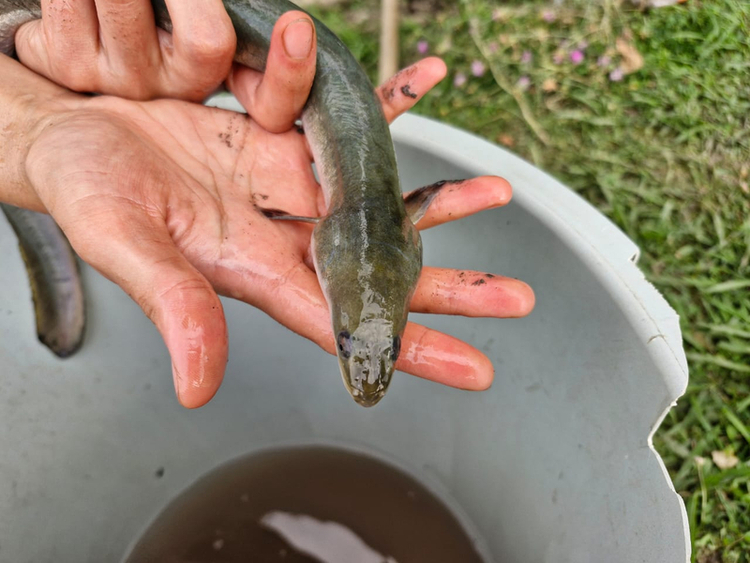
The European eel was once common throughout the continent but is now on the slippery slope towards extinction. In the past 25 years, its UK population alone has plummeted by 95 per cent. Overfishing, including for the once-popular jellied eel dish, pollution, habitat fragmentation and illegal trade have all taken a severe toll. European eels play a crucial role in freshwater and coastal ecosystems and are a vital high-energy food source for otters, bitterns and other fish-eaters, so their disappearance would have dire consequences.
Having recently detected European eel during freshwater monitoring in Georgia – where they haven’t been recorded for some time – Fauna & Flora will conduct further research into this enigmatic and critically endangered fish in 2026.
Psychedelic earth tiger (Indian rainbow tarantula)
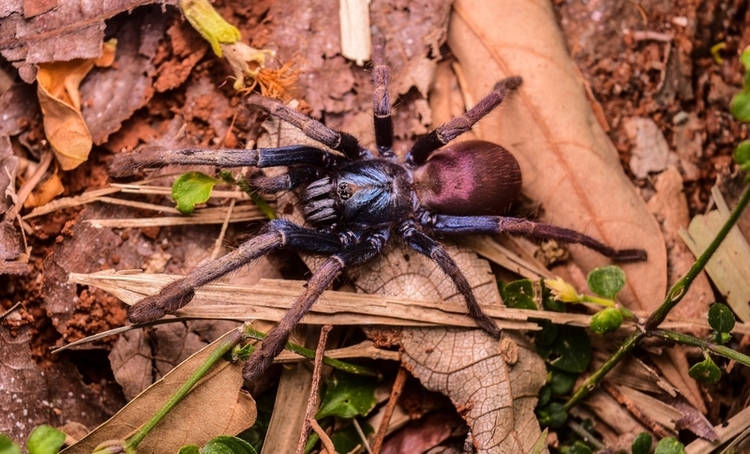
With the support of the Conservation Leadership Programme (CLP), a female-led team of spider experts is working to safeguard the future of the Indian rainbow tarantula, found only in the tropical forests of the southern Western Ghats in Kerala, India. Also known as the LSD earth tiger or the psychedelic earth tiger, this groovy spider is awash with colour and has a metallic iridescence.
But it faces significant threats, including habitat loss and degradation, and demand from the illegal pet trade. The CLP spider team is aiming to secure long-term protection for the tarantula through field surveys, community engagement and awareness initiatives.
Temminck’s pangolin

This compact, ground-dwelling pangolin is the only one of Africa’s four species found in relatively arid areas of East and Southern Africa and as far north as Chad and Sudan. It forages very slowly and deliberately, and often walks on its back legs, using its broad, relatively short tail as a counterweight. Like all pangolins, it is threatened by the illegal trade in its meat and scales, for local use in-country and to supply markets in Asia. Fauna & Flora is supporting the development of a crisis clinic to help the rehabilitation and re-release of rescued and injured pangolins in Mozambique.
Cao vit gibbon
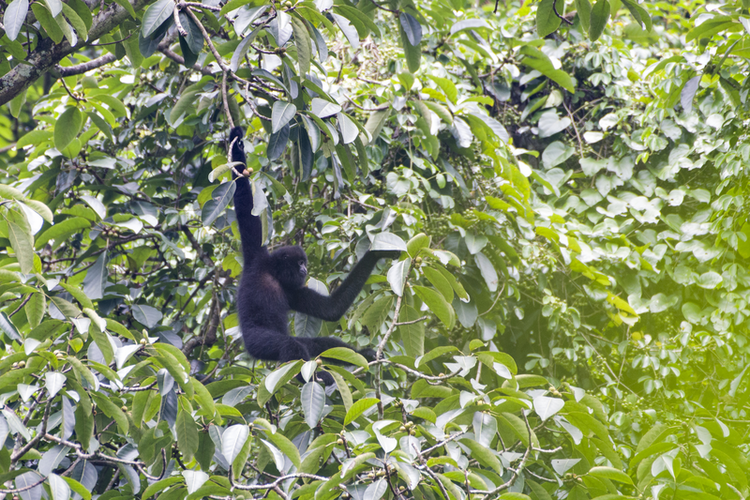
The cao vit gibbon, named after its call, is the world’s second rarest primate, thought to be extinct until its rediscovery by Fauna & Flora staff in 2002. Today, its estimated population is just 74.
The last census, in 2021, deployed advanced monitoring techniques, including acoustic recorders and drones mounted with thermal imaging cameras, and revealed that the cao vit gibbon’s global population is even lower than originally suspected. With such small numbers remaining and a limited range, the critically endangered primate is at extreme risk from loss of genetic diversity, inbreeding and unforeseen catastrophes. A 2026 census will help verify whether Fauna & Flora’s protection and habitat restoration efforts have led to a population increase in the intervening years.
Blackchin guitarfish

Anatomically, the weird and wonderful guitarfish appears to be in two minds about whether it’s a shark or a ray. With its flattened nose, broad, wing-like pectoral fins, and long, finned tail, it’s a fish of two halves, seemingly sewn together in a misguided scientific experiment. In reality, it’s a type of shovelnose ray.
The blackchin guitarfish is native to the Mediterranean Sea and the eastern Atlantic, including the waters of Cabo Verde, where Fauna & Flora is working with Biosfera, Projecto Vitó and Project Biodiversity to safeguard threatened sharks and rays. As a result of overfishing, habitat destruction and its slow reproductive rate, the blackchin guitarfish is critically endangered. Fauna & Flora and partners are aiming to halt its decline by strengthening marine protected area networks and reducing shark and ray mortality from fishing.
Utila spiny-tailed iguana
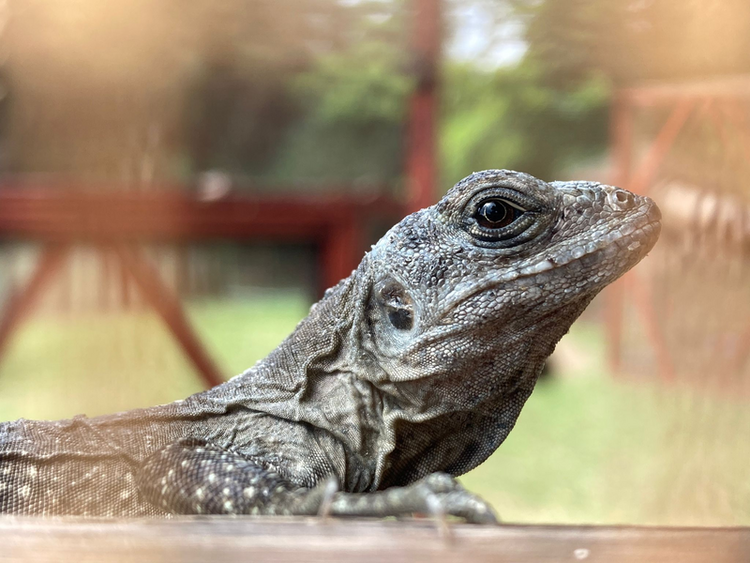
The Utila spiny-tailed iguana is named after a small island in Honduras, its one and only refuge. Known locally as wishiwilly del suampo, it is strictly confined to mangrove forests. Fauna & Flora is supporting its in-country partners to protect and restore the mangrove trees that the Utila spiny-tailed iguana and numerous other threatened species depend on.
While this lizard remains critically endangered, results from a recent survey suggest that the iguana’s population has increased from an estimated 3,000-6,000 to an encouraging 7,000-14,000.
Saker falcon

The lightning-fast and powerful saker falcon has been highly prized by falconers for millennia – particularly in the Middle East. Today, however, its continued popularity has seen the species plummet, with fewer than 30,000 now left in the wild. In 2026, Fauna & Flora will assess the impact of trade on the saker falcon in Central Asia, through targeted monitoring of falcon populations and data gathering on international trade chains and local use of raptors. This evidence will inform conservation strategies, community engagement and enforcement efforts.
Wild tulips

One of our most familiar flowers, tulips have been widely cultivated for centuries, but their wild ancestors are native to the mountainous regions of Central Asia. Altogether, Kazakhstan, Kyrgyzstan, Uzbekistan and Tajikistan harbour 63 unique species – over half of the world’s tulip population.
Many wild tulips are threatened with extinction, thanks to overgrazing and trampling by livestock, overharvesting of cut flowers, urbanisation and climate change. Fauna & Flora is engaging with global experts and local communities to help preserve local traditions, while protecting these threatened flowers and their fragile habitat.
Clouded leopard
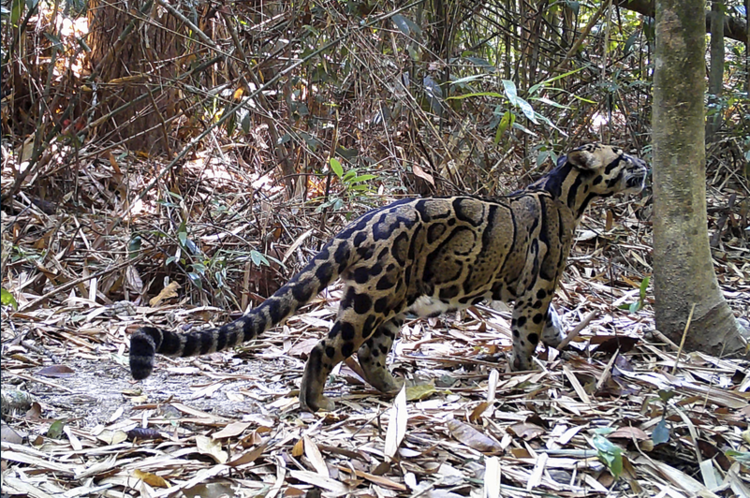
The beautiful markings of the clouded leopard are its most striking feature. Sadly, this exquisitely patterned coat makes the species a prime target for the illegal wildlife trade. They are trafficked alive as exotic pets and their pelts are sold illegally for decoration and luxury clothing.
It is thought that clouded leopards are also killed for their teeth, claws and bones, which are passed off as tiger parts. Fauna & Flora is supporting community-led patrols to protect this threatened feline in Cambodia’s Virachey National Park.


