
• Skip to main content
  • Skip to secondary menu
  • Skip to primary sidebar
  • Skip to footer
Geographical

Geographical

Official magazine of the Royal Geographical Society (with IBG)

  • Home
  • Briefing
  • Science & Environment
  • Climate
    • Climatewatch
  • Wildlife
  • Culture
  • Geopolitics
    • Geopolitical hotspots
  • Study Geography
    • University directory
    • Masters courses
    • Course guides
      • Climate change
      • Environmental science
      • Human geography
      • Physical geography
    • University pages
      • Aberystwyth University
      • Brunel University
      • Cardiff University
      • University of Chester
      • Edge Hill University
      • The University of Edinburgh
      • Newcastle University
      • Nottingham Trent University
      • Oxford Brookes University
      • The University of Plymouth
      • Queen Mary University of London
    • Geography careers
      • Charity/non-profit
      • Education & research
      • Environment
      • Finance & consulting
      • Government and Local Government
    • Applications and advice
  • Quizzes
  • Magazine
    • Issue previews
    • Subscribe
    • Manage My Subscription
    • Special Editions
    • Podcasts
    • Geographical Archive
    • Book reviews
    • Crosswords
    • Advertise with us
  • Subscribe
    • Direct Debit Changes

Scientists discover more than 1,100 new marine species in a single year

19 May 2026
3 minutes

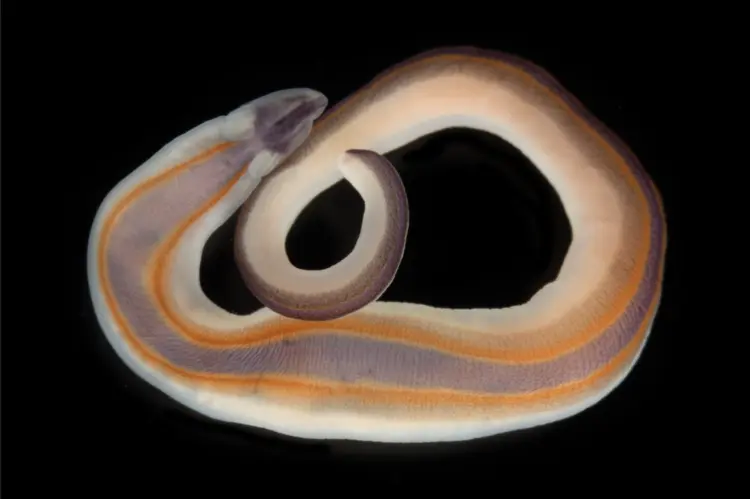
ribbon worm
A ribbon worm. Image: The Nippon Foundation–Nexton Ocean Census/Gustav Paulay

From ‘ghost sharks’ to worms on volcanic seamounts, scientists have discovered a complex array of life beneath the ocean surface


By Victoria Heath

Scientists have discovered 1,121 previously unknown marine species in a single year, marking a significant step in the race to understand and protect the planet’s oceans. The findings represent a 54 per cent jump in annual identification numbers thanks to Ocean Census NOVA – a new open access data platform transforming the way new marine species are recorded globally.

Led by The Nippon Foundation–Nexton Ocean Census, the global effort included 13 expeditions and nine species discovery workshops with leading scientists from across the world.


Enjoying this article? Check out our related reads…

  • Eight fascinating new ocean discoveries made in 2024
  • Ghost gear is polluting our world’s oceans – but what exactly is it?
  • Sharks’ slow evolution explains low cancer rates
  • Anti-finning laws have failed, demand for shark meat is on the rise
  • Massive ocean mission discovers more than 800 new species

Discoveries from depths of up to 6,575 metres include a new species of deep-sea ghost shark, a symbiotic bristle worm living within a ‘glass castle’, as well as corals, crabs, shrimps, sea urchins, and anemones.

90 per cent of ocean species remain undiscovered, so such findings highlight both the sheer scale of life yet to be documented and the importance of building scientific data that policymakers and marine managers need to protect the ocean.

‘With many species at risk of disappearing before they are even documented, we are in a race against time to understand and protect ocean life,’ said head of science at Ocean Census, Dr Michelle Taylor.

‘For too long, thousands of species have remained in a scientific ‘limbo’ because the pace of discovery couldn’t keep up. We are now breaking that bottleneck. By accelerating discovery and sharing data globally, we are not just finding new life, but generating the evidence needed to drive global science and policy at a critical moment.’

Below, find out more about some of the species discovered by scientists…

The ‘ghost shark’ chimaera

Chimaera shark
Image: The Nippon Foundation-Nekton Ocean Census/CSIRO

The species was discovered by taxonomist Dr William White during a CSIRO expedition to the Coral Sea Marine Park, off the Queensland coast.

Often called ‘ghost sharks’, chimaeras are among the most mysterious inhabitants of the deep ocean. Distant relatives of sharks and rays, they diverged into a distinct evolutionary lineage nearly 400 million years ago – predating the dinosaurs.

Symbiotic worm

Glass castle worm
Image: The Nippon Foundation-Nekton Ocean Census/Nato Jimi

Discovered on a volcanic seamount during the 2025 Ocean Census JAMSTEC-Shinkai Japan expedition, this polychaete worm makes its home inside a ‘glass castle’: the intricate chambers of a glass sponge, a creature with a skeleton made of crystalline silica.

Ribbon worm

ribbon worm
Image: The Nippon Foundation–Nexton Ocean Census/Gustav Paulay

The striking pigmentation of this ribbon worm may serve as a visual warning to predators; a signal of the potent chemical defences common to the phylum Nemertea. Beyond their ecological role as predators, these worms may have biomedical significance; some of their unique toxins have been investigated as potential treatments for Alzheimer’s and schizophrenia.

Mediterranean shrimp

Mediterranean shrimp
Image: The Nippon Foundation–Nexton Ocean Census/Hossein Ashrafi

A striking new species of shrimp found in a sea cave off Marseille proves that major marine discoveries are still being made right on Europe’s Mediterranean coast. Defined by its vivid orange banding and intricate appendages, the specimen was identified by taxonomist Dr Hossein Ashrafi, building critical data for effective conservation in the pressured Mediterranean region.
Themes Wildlife Marine wildlife Oceans

Protected by Copyscape

Primary Sidebar

SPRING SALE

GEOGRAPHICAL WEEKLY LOGO FREE - Sign up to get context, clarity and perspective in a noisy world, every Friday

Popular Now

June 2026 Geographical crossword

June 2026 Geographical crossword

The Great Rift Valley runs through Ethiopia

Country profile: Ethiopia

Antarctic peninsula

Out now: June 2026’s Geographical Magazine

Modern interior server room data center.

More than 100 data centres in UK to use gas for electricity

HAJJAH, YEMEN – March 12, 2021: Violent battles between government forces and Houthi rebels in the north of Hajjah Governorate, bordering Saudi Arabia

The missing piece in conflict resolution

Footer

  • Facebook
  • Instagram
  • LinkedIn
  • Reddit
  • TikTok
  • Twitter
  • YouTube

Geographical print magazine cover

Published in the UK since 1935, Geographical is the official magazine of the Royal Geographical Society (with IBG).

Informative, authoritative and educational, this site’s content covers a wide range of subject areas, including geography, culture, wildlife and exploration, illustrated with superb photography.

Click Here for SUBSCRIPTION details

Want to access Geographical on your tablet or smartphone? Press the Apple, Android or PC/Mac image below to download the app for your device

Footer Apple Footer Android Footer Mac-PC

More from Geographical

  • Subscriptions
  • Get our Newsletter
  • About Us
  • Contact Us
  • Advertise with us
  • Privacy policy
  • Terms & Conditions

Copyright © 2026 · Site by Syon Media