
Israel’s vote on 27 October is unlikely to be decided by fraud at the ballot box, but four years of pressure on the institutions that oversee it have made a credible result harder to secure

By
When Israelis vote on 27 October, they will mark paper ballots counted in front of observers from rival parties. Wholesale fraud in such a system is difficult, and Israel has largely been free of it. That is precisely why the democratic danger in this election is so easily misdescribed. The threat is not that the count will be rigged, but that the government has spent four years testing the institutions responsible for holding it to account, and has carried that approach into the campaign itself.
The record of the outgoing Knesset – the Israeli parliament – makes that charge difficult to dismiss. In March 2025, it passed a law giving elected politicians a veto over Supreme Court appointments. The law was timed to take effect only when the next parliament convenes, meaning whoever wins this election will be the first to shape the court under the new rules.
The government also dismissed the head of Shin Bet – Israel’s internal security and counterintelligence service – a decision the High Court found unlawful and compromised by a conflict of interest, given that the agency was investigating aides to Prime Minister Benjamin Netanyahu. Netanyahu named a successor the following day, against the attorney general’s instructions. When the cabinet later voted to remove the attorney general herself, the court unanimously annulled the decision, and several ministers responded by urging that the ruling be ignored.
In its final weeks, the Knesset passed a broadcasting law, despite objections from its own legal adviser. The law gives a regulator, largely appointed by the communications minister, wide powers over commercial news, although the court has frozen its immediate provisions.
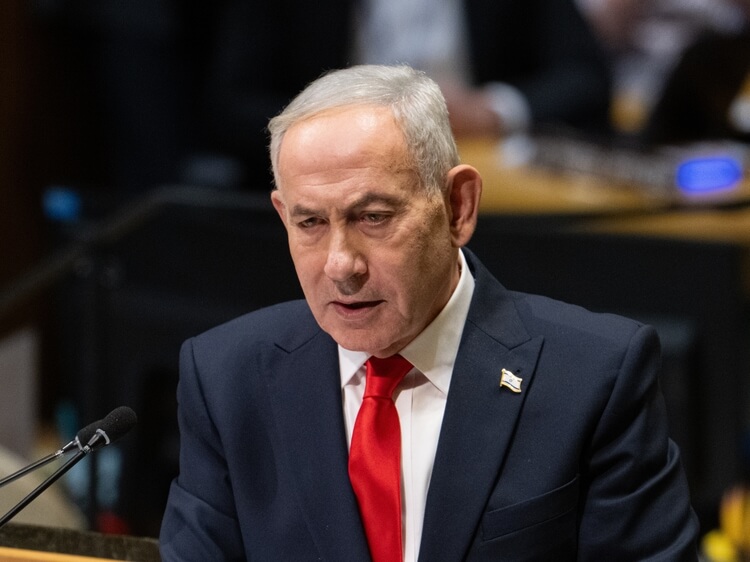
None of these measures affects the mechanics of voting, yet each bears on the conditions under which an election can be regarded as fair, from the independence of those who adjudicate disputes to the freedom of those who report on them.
The campaign has carried the same pattern into the electoral process itself. Most notably, in September, the Central Elections Committee, whose voting members are nominated by political parties, barred both main Arab-majority lists from standing. In doing so, it removed the chosen representatives of a fifth of the population at a stroke, before allowing far-right Jewish parties to remain on the ballot the following day.
The Supreme Court unanimously reversed the bans on the Arab parties, as it has done before, but the episode showed what a coalition majority will attempt when it can rely on the courts to absorb the blame for stopping it. Likud and Religious Zionism have since announced plans to deploy nearly 2,000 activists to polling stations in Arab communities, citing fraud claims that the committee’s own director general has rejected.
The committee’s chairman has repeatedly ordered Netanyahu and Itamar Ben-Gvir to remove campaign videos produced using state resources. In the closing days of the campaign, he also ordered Likud to take down billboards linking Gadi Eisenkot with Arab party leaders.
These actions have been accompanied by persistent attacks on the committee’s credibility. Senior Likud figures have described its officials as politically biased and predicted that votes will be falsified in Arab towns and on kibbutzim, while Netanyahu has accused civil society groups working on election integrity of preparing to steal the vote.
Legal scholars have suggested that this could prepare the ground for rejecting an unfavourable result, noting that Likud’s representatives abstained from certifying the 2020 outcome. Others warn that intimidation could depress Arab turnout, with the loss of ten votes at each polling station amounting to roughly three seats, or that a security crisis might be used to argue for postponement. Likud denies any such plan and describes its hostility towards the committee as long-standing. Netanyahu has always ultimately accepted election results, and pollsters expect Arab turnout to rise rather than fall.
Check out our related reads…
The conclusion is less dramatic than claims of a stolen election, though in some respects more troubling. Every safeguard has so far held, but almost all have depended on the judiciary, the very institution the coalition has already legislated to reshape after this vote. It was the courts that reinstated the Arab parties, kept the attorney general in office and froze the broadcasting law. This week, they also prevented party officials from relaying live turnout figures to their headquarters. A democracy that survives because one court keeps saying no is not functioning normally. It is being tested.
For that reason, the vote on 27 October concerns more than the contest between Netanyahu and Eisenkot. It will also determine whether the institutions that oversee Israeli elections are strengthened or reshaped by those they are meant to constrain. After months in which the government has encouraged its supporters to distrust those institutions, the most consequential moment may come not when the polls close, but when the losing side decides whether to accept the count.