Biodiversity loss comprises the largest part of the global damage bill, according to latest study by Oxford University
By
Environmental damage caused by the world’s highest-consuming 10 per cent of people is worth $1.7trillion to $5.7trillion a year, a new study by Oxford University has found. At mid- to upper estimates, this figure is several times more than the international community has committed to spend on climate action and biodiversity conservation combined.
The study investigated six countries: Brazil, China, Egypt, Germany, India and the US, representing some of the world’s largest economies of each continent. Within this, the top 10 per cent of consumers are those who spend more than $27,000 a year after tax.
The most destructive forms of consumption were linked to food – particularly red meat – and energy, such as flights and heating and cooling homes, processes that often rely on burning fossil fuels.
In their study, researchers found that the average annual damage bill for a person in the global top 10 per cent ranges from $2,300 to $7,500. However, the US is responsible for the highest proportion of environmental damage by far. The top 10 per cent of American consumers – earning around $250,000 a year or more – have a per-person environmental bill of $19,000 to $63,000 – equivalent to six to 20 per cent of their income.
Researchers note that these figures are conservative, covering only four of nine planetary boundaries – climate change, biodiversity loss, nutrient pollution, and freshwater use. In reality, per-person environmental damage bills are likely higher.
Enjoying this article? Check out our related reads…
Putting a monetary figure on environmental damage allows scientists to compare different types of environmental harm on a common scale. However, researchers stress that this does not mean treating nature as a ‘tradable commodity’, with monetary figures capturing only part of what rich and vast ecosystems are worth.
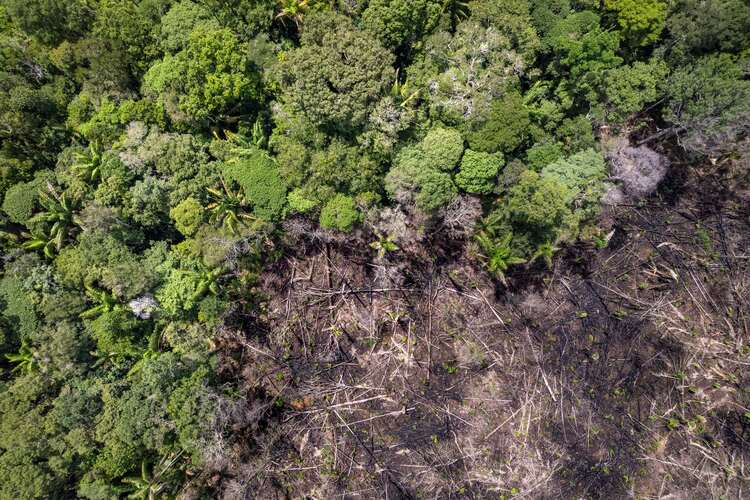
Biodiversity loss is the single largest contributor to the global damage bill, accounting for 47 to 56 per cent of the total. Meanwhile, climate change accounts for 36–45 per cent.
Such findings underline recent calls to tackle biodiversity and climate crises in tandem rather than treating them as separate policy challenges.
‘The top 10 per cent are important not only because they cause the most damage but also because they hold the most leverage to reduce it,’ said professor at Oxford University and co-author of the study, Paul Behrens.
‘The capital they invest, from pensions to infrastructure, decides which industries expand, the firms they run set the choices for everyone else, and the lifestyles they pursue shape what people consider as normal. They often have outsized agency, not only individually as consumers, but also as investors, employers, trend-makers, and market-shapers. Their power to cut emissions is even larger than their share of them.’
Clearly, wealthier nations are causing disproportionate damage to the planet. This is a disparity that has been attempted to address through the Loss and Damage Fund led by the UN. It was meant to provide financial assistance to developing nations disproportionately impacted by climate change. However, the fund has come under growing financial strain – despite not yet paying out any money – and could face ‘liquidity issues’ by the end of 2027.
Some critics of the fund argue that nations’ pledges of millions remain nowhere near the vast sums required to address loss and damage in the Global South. The Loss and Damages strategy will be discussed further at a board meeting in the Philippines in July.