
From Monaco to Albania, discover the nations that have more tourists than residents – and how exactly such a difference is impacting life there
By
Around the world, approximately 1.5 billion tourists travelled internationally in 2025. Europe remained the world’s most visited region, with 800 million arrivals, yet other destinations ranked higher for recording the fastest growth. These include Brazil, which saw arrivals surge by 37 per cent, Bhutan (30 per cent), Egypt (20 per cent) and Ethiopia (15 per cent).
In some regions, though, tourism is growing so rapidly that the number of visitors is rapidly outpacing locals. Overtourism like this can cause a range of issues, from high inflation to degraded landscapes and tensions between tourists and residents.
So, where in the world are tourists outnumbering locals? Below, we rank the top ten nations where there are more tourists than residents, according to the number of international tourist arrivals per resident.
The rankings have been compiled using data from UN Tourism and Our World in Data.
10) Antigua and Barbuda – 3.5
Home to 365 beaches, the twin island nation of Antigua and Barbuda draws tourists in from all across the world for its pristine waters and idyllic vistas. According to official tourism data, the US accounts for 46 per cent of all international tourists, with the UK also recording a strong tourism sector for Antigua and Barbuda – growing 14 per cent year-on-year.
9) Croatia – 4.0
In 2025 alone, Croatia recorded more than 21.8 million tourist arrivals, according to data published by the Croatian National Tourist Board. Popular destinations include Dubrovnik, Split, Rovinj, Opatija and Zagreb.
Tourists from Germany generated the highest number of overnight stays in Croatia in 2025, with other major nations visiting Croatia including Slovenia, Austria, Poland, Czechia and the UK.
In particular, Dubrovnik has borne the brunt of overtourism in the country. Budget flights make it easy to fly to the city, with many visitors choosing to stay in guest houses and apartments that would have once housed residents. In Dubrovnik’s Old Town, the permanent population has dropped from 5,000 in 1991 to just 1,500 today as residents are driven out by high property prices.
Cruise ships docking in Dubrovnik’s port also congest the city’s streets with tourists, with intense crowding for several hours each day.
8) Bahrain – 4.2
With a population of around 1.6 million, Bahrain is one of the world’s hotspots with more tourists than locals. Saudi Arabia dominates Bahrain’s visitor mix, largely thanks to a straight connection between the two nations via the King Fahd Causeway – a 25-kilometre series of bridges and causeways.

7) Bahamas – 4.7
In 2025, the Bahamas welcomed 12.5 million visitors to the island, the highest total ever recorded. Visitor records grew 11.4 per cent year-on-year, surpassing 2024’s record and exceeding pre-pandemic levels by more than 70 per cent. The majority of tourists visiting the Bahamas come from the US, with Canada and Europe following suit.

In particular, cruise tourism remains the island’s primary driver of growth, accounting for 86.5 per cent of total arrivals – but it also poses a real threat to the Bahamas’ ecosystems, bringing pollution to its waters. Mangrove destruction also takes place in the Bahamas as developments are being constructed on pristine beaches.
6) Albania – 4.8
In recent years, Albania has experienced a huge tourism boom, thanks to its affordability and Mediterranean coastlines and mountain ranges. The number of tourists to the nation increased by 82 per cent between 2019 and 2024 – from 6.4 million to 11.7 million. Now, one in five jobs in Albania are linked to tourism.
Tourists from southern Europe comprise the largest group of visitors to Albania, but such overtourism is having sizeable impacts on the nation’s ecosystems. As beaches get expanded to create more space for tourists, marine biodiversity is disrupted. In addition, some construction projects have been carried out without proper planning, with incidences of construction waste being dumped directly into the sea.
5) Palau – 5.3
With a huge range of reefs, clear waters and islands, the remote nation of Palau is an attractive destination for many tourists to visit. Home to around 18,000 inhabitants, the archipelago of 340 islands – mostly untouched by humans – is largely visited by Taiwanese tourists, as well as European, Canadian, American, Chinese and Japanese visitors.
Tourism accounts for around 40 per cent of Palau’s economy.
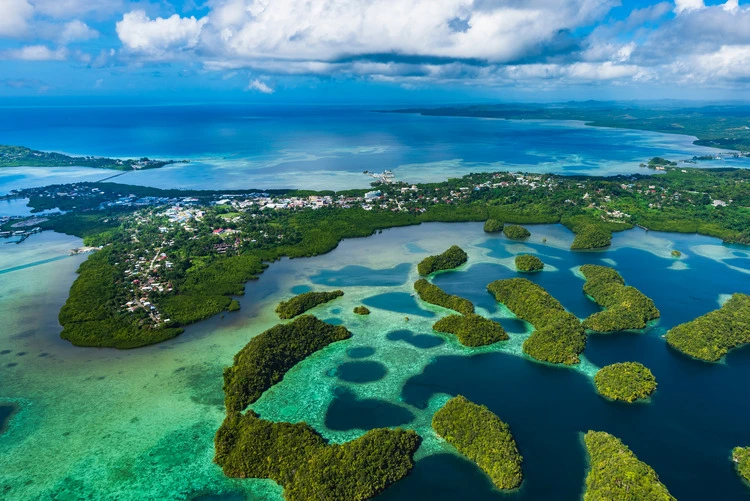
Overtourism in the nation has historically led to huge inflation, as well as the country’s water, power and sewage systems struggling to cope with the number of people visiting. Back in 2015, Palau’s president announced a reduction in the number of charter flights between China and Palau due to environmental and social concerns, and passengers now have to sign a stamped pledge in their passports to be good environmental stewards throughout their stay.
4) Iceland – 5.6
Annual visitor numbers to Iceland now reach millions, but the country’s population sits at less than 400,000. The majority of tourists to Iceland are from the US, as well as the UK.
Overtourism in Iceland has stemmed from long periods of trying to entice budget travellers. As well as this, Icelandair – a major airline carrier to the nation – have a long-standing policy of encouraging passengers to make stopovers in the country for up to seven nights on any flight across the Atlantic at no additional cost.
Cruise ships also dock at Reykjavik harbour, with thousands of passengers disembarking at once – all adding to the number of tourists often crowding the nation’s capital.
3) Malta –6.3
A recent report by the Times of Malta has highlighted how residents’ quality of life in tourist-heavy hotspots in the nation is ‘going down the drain’. Littering, noise and vandalism, according to the Nationalist Party leader Alex Borg, have been persisting for months and even years.
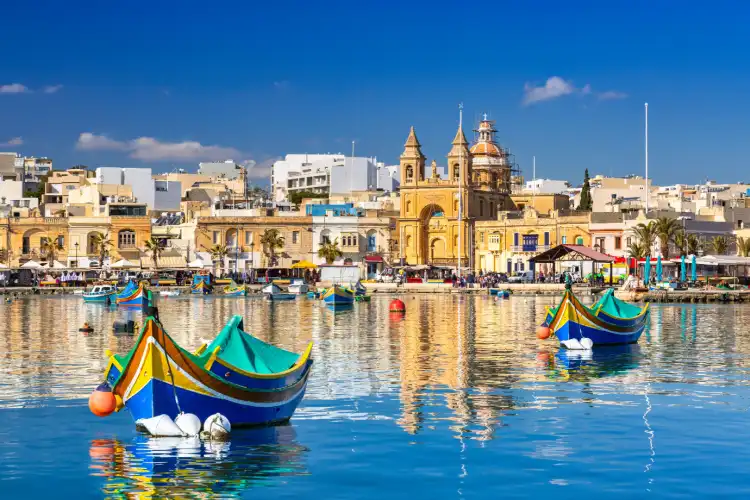
In particular, the island of Comino has experienced the damaging impacts of overtourism.
In response to curb mass tourism, Maltese authorities have introduced a daily visitor cap to the Blue Lagoon – a natural pool – on Comino from 10,000 visitors a day to 4,000. However, critics have argued that a more widespread plan is needed to protect Malta’s ecosystems from the impacts of overtourism.
2) Monaco – 9.0
At number two is Monaco, one of the world’s most overcrowded and smallest microstates. It gets around 340,000 tourists per year, with a population of just 39,000.
France, the United States and the United Kingdom contribute significantly to tourism in the nation. As well as this, there has been a surge in non-European visitors, particularly from the Middle East.
1) Andorra – 51.0
Andorra ranks at the top, with more international visitors compared to its population than anywhere on the planet. Located in the Pyrenees between France and Spain, it has a population of just under 82,000 but welcomes more than 9.6 million visitors annually.

The landlocked nation primarily receives visitors from Spain and France, and is popular with Portuguese, British and Irish tourists.
Tourism accounts for 80 per cent of Andorra’s GDP.


