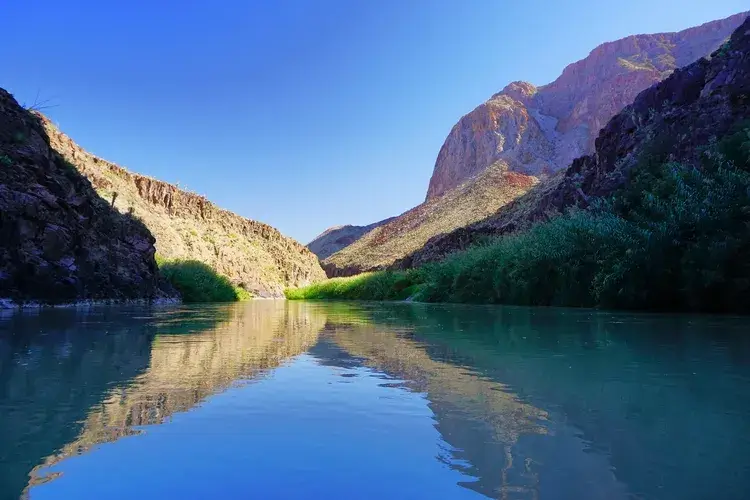
The project has faced backlash from critics in Big Bend who argue construction could impact Texan landscapes and ecosystems
By
This week, the Trump administration has asked the Supreme Court if it can resume building an 800-kilometre border wall through a remote area of West Texas, including Big Bend National Park.
The administration has urged the Supreme Court to lift an injunction that temporarily bans the Department of Homeland Security from building the border wall, which stretches more than 800 kilometres (500 miles) along the US-Mexico border. The injunction took effect after multiple lawsuits challenged construction in the region.
The Justice Department said that a 482-kilometre gap in the Big Bend sector – which covers around a quarter of the US-Mexico border – would ‘act as a dangerous magnet for cartels and other bad actors.’
Enjoying this article? Check out our related reads…
Ranchers, residents, and business owners of Big Bend, as well as environmentalists, argue the project could ruin the region’s vast landscapes by building walls, vehicle barriers, and surveillance technology. According to AP News, they also argue the project is a ‘waste of money’ in an area of low illegal immigration, with opponents citing that it accounts for around one per cent of migrant arrests.
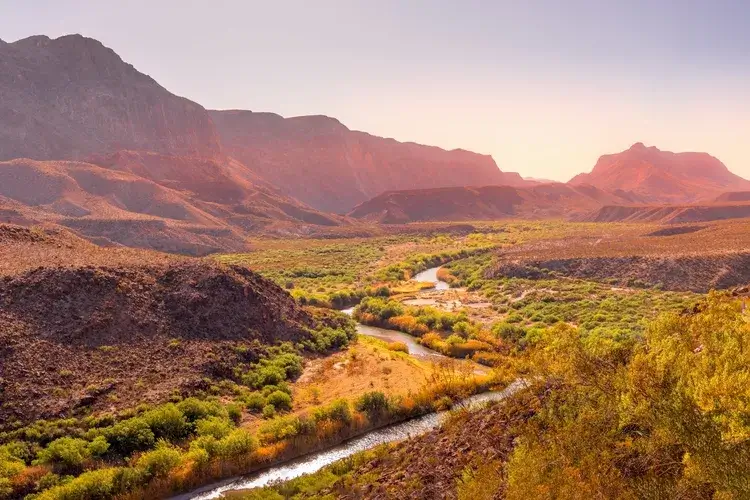
In contrast, the US Government has argued that a section of the $1.7billion project across the Big Bend is an area of high illegal entry. It said that more than 89,000 people tried to cross into the US illegally in the Big Bend sector between 2021 and 2025.
‘The district court’s injunction significantly frustrates the government’s ability to stop the flow of illegal aliens and drugs across the southern border,’ said Solicitor General D. John Sauer. ‘The Secretary identified the Big Bend project areas at issue because of the high rates of illegal-alien crossings and drug smuggling in the region over the past several years.’
The Big Bend region encompasses two protected landscapes in Texas: Big Bend National Park and Big Bend Ranch State Park.
‘We’re deeply disappointed that the Trump administration is asking the Supreme Court for a green light to bulldoze one of America’s wildest, most extraordinary landscapes,’ said senior attorney at the Center for Biological Diversity Zeynep Graves.
‘Once Big Bend’s canyons, cultural treasures and wild ecosystems are destroyed, they’ll be lost forever. We’re confident the law is on our side and that only Congress can authorise something as consequential as walling off the entire U.S.-Mexico border. We won’t stop fighting for Big Bend until it’s protected forever.’