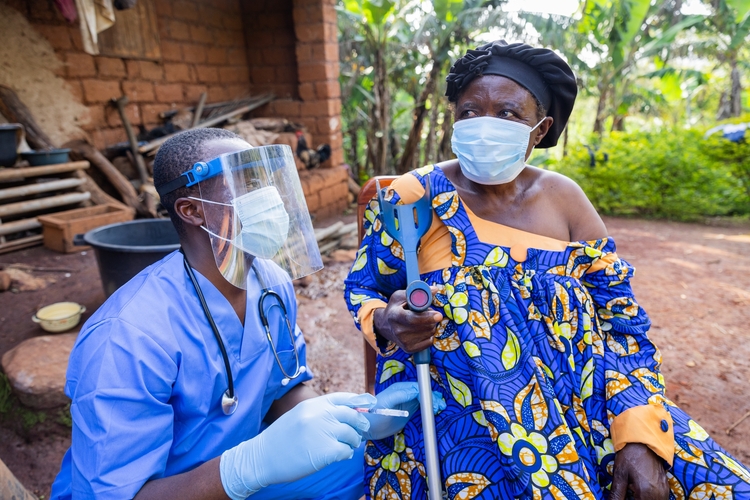
When survivors of Ebola attempt to return home, stigma, trauma and myths complicate reintegration back into communities
By
During the Ebola epidemic of 2014-2016, more than 28,600 people were infected – marking the largest outbreak of the virus since its discovery in 1976. Of these cases, around 11,325 people were killed. Now, a new outbreak is beginning in the Democratic Republic of the Congo, and at the time of writing, 130 people are suspected to have died.
But for those who survive Ebola, life often does not return to normal. In fact, stigma, trauma and myths surrounding the disease mean that many struggle to return and integrate back into their communities. Landlords issue eviction notices to Ebola survivors; taxi cabs refuse to pick them up; market sellers refuse to serve them. Survivors have even returned home to find their possessions burned to prevent the spread of the virus, including their own tools used for farming and vital savings left under mattresses.
Check out our related reads…
Many survivors have also lost family members and friends to Ebola, and continue to experience continual pain even after being discharged from treatment. They have reported varying persistent health effects, including impaired vision, diabetes, hypertension, pneumonia and general body weakness. This only complicates the difficulties they face in returning to ordinary life.
Even when individuals arrive back with a document verifying they no longer pose a risk to their community, the majority are confronted with discrimination, stigmatisation and rejection. Some survivors have even created copies of their documents and posted them in public places in their communities to prove their Ebola-free status. Still, residents remained sceptical and continue to stigmatise them.
For one anonymised Ebola survivor and healthcare worker, the stigma lingers long after the disease has disappeared. ‘The stigma spans from all the way from when they just suspect you have the disease. And then after when you go back to the community … Even if you get better, still, it’s not the same.’
‘When I came out of the [Ebola treatment unit], I think it took me almost six months for customers to start turning up like before … For a week I was just opening, and I couldn’t get anyone buying anything,’ said another Ebola survivor.
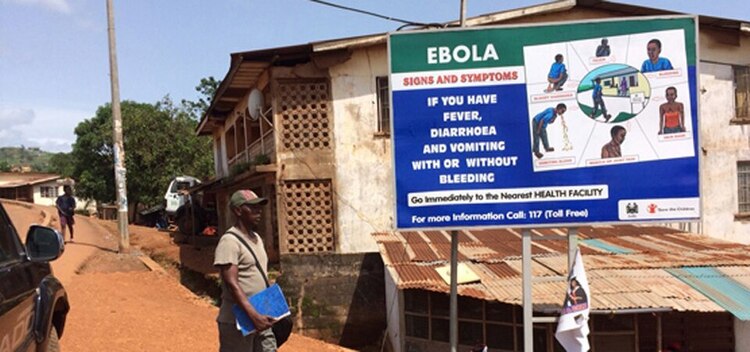
In an August 2014 survey, 78 per cent of respondents said they would not welcome an Ebola survivor back into the community after recovering from the disease. As well, a national sample of Guineans in August 2014 found 17 per cent of respondents incorrectly believed Ebola survivors may continue to spread the disease through casual contact, such as shaking hands or hugging.
‘Stigma often arrives with the spread of deadly, poorly understood diseases,’ said health and nutrition adviser for Catholic Relief Services in West Africa, Meredith Stakem, adding that the initial reaction to Ebola back in 2014–2016 is similar to the beginning of the HIV epidemic.
In particular, female Ebola survivors face high barriers to resuming their normal lives. As they have less access to jobs and education, women and girls are more vulnerable socially and economically. For wives and children of people killed by Ebola, there is an added pressure of financial hardship and stigma.
Overall, Ebola stigma has been shown to significantly impact affected individuals’ mental health, contributing to depression, anxiety, post-traumatic stress disorder and suicide.
Similar to Ebola survivors, healthcare workers who took care of patients with Ebola were reportedly stigmatised in previous outbreaks.
Myths also surrounded communities impacted by Ebola, with people speculating the origins of how an unusual and new disease spread. ‘Our communities have a lot of myths and everything, they believe these people [who were infected], they were bewitched. Maybe they stole someone’s goats,’ said one Ebola survivor.
While the medical response of previous outbreaks may have been well-orchestrated, with vaccines given out to an estimated 25,000 to 30,000 people during the 2014–2016 epidemic, the social response – encompassing issues such as providing sustainable livelihoods, supporting orphans and integrating survivors into their communities – had less of an emphasis placed on it by policymakers. That’s why it remains so vital to consider the social response for current and future outbreaks.
In one study, which looked at the 2022 outbreak of Ebola in central Uganda, several measures were suggested as ways to mitigate the stigma of Ebola. These include the early involvement of psychosocial support teams, the establishment of survivor support groups from the outbreak’s onset, and the facilitation of safe contact between inpatients and families, such as through the use of mobile phones.
In addition, outbreak control measures could prioritise preserving patients’ dignity without compromising public health. To do this, measures could ensure privacy in contact tracing and safe and dignified burials to encourage participation without fear of judgment.
While the last Ebola epidemic ended years ago, the effects of it still cascade out into communities today. If work is not done to quash myths and stigmatisation, such strongly held beliefs may persist into the next epidemic.
Ultimately, policymakers must place equal importance on medical and social issues when responding to future epidemics, ensuring that the lives of Ebola survivors can be improved long after the end of the epidemics.