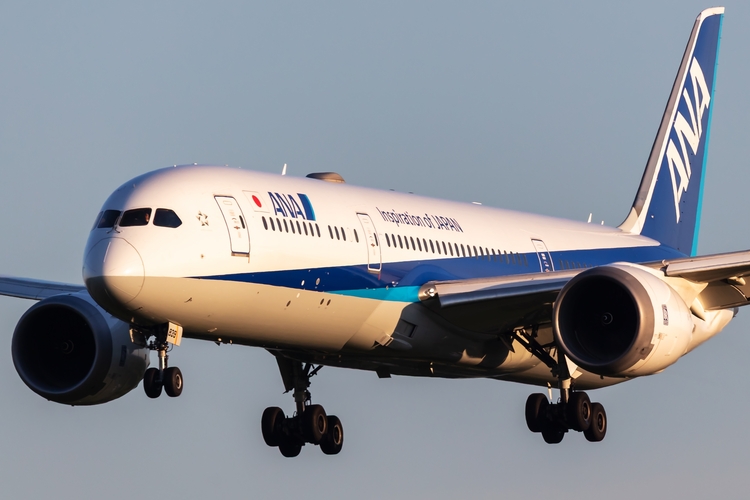
From removing premium-class seating to raising passenger loads, discover the ways that airplane emissions can be tackled
By
In 2023, each paying passenger flying on planes around the world emitted 84.4 grams of CO₂ per kilometre. A study, however, co-led by the University of Oxford, has found three ways of mitigating such emissions and potentially reducing them by up to 75 per cent. These include operating only the most fuel-efficient aircraft, removing premium-class seating to carry more passengers, and raising passenger loads to 95 per cent. In addition, the study shows that an immediate reduction of 11 per cent could be achieved simply by using the most efficient aircraft.
The Boeing 787-9, used for long-haul flights, and the Airbus A321neo, used for short and medium-haul flights, are the most carbon-effective planes. Replacing all aircraft with these would result in fuel savings of 25–28 per cent, according to the study.
Enjoying this article? Check out our related reads:
Business and first-class seating are five times more CO2-intensive than economy class. By increasing passenger capacity to maximum for the most efficient aircraft, emissions would further reduce by 22-57 per cent. The average aircraft passenger occupancy in 2023 was 79 per cent. By increasing this to 95 per cent, emissions would reduce by 16 per cent.
The study was published in Nature Communications Earth & Environment and involved analysing more than 27 million commercial flights in 2023, covering 26,000 city pairs and nearly 3.5 billion passengers. Some routes were found to be producing nearly 900 grams of CO2 per kilometre for each passenger – which is almost 30 times higher than the most efficient (around 30 grams of CO₂ per kilometre).

The study was based on data from Airline Data, the International Civil Aviation Organisation, and the International Air Transport Association. The regions with the most inefficient flights were Africa, Oceania, the Middle East, Central Asia, and North America. However, the most effective regions were Brazil, India and Southeast Asia.
The researchers suggest efficiency improvements could be promoted using marketing tools, similar to those used for household appliances and vehicles. For example, emissions ratings, adjusted landing fees and carbon intensity caps.
Lead author and Professor at Linnaeus University, Stefan Gössling, said: ‘Efficiency-based policies have a great potential to curb aviation emissions, and can be in airlines’ own economic interest. But the reality is that many airlines continue to fly with old aircraft, low passenger occupancies, and growing proportions of premium-class seating.’

Co-author and Department of Physics, University of Oxford, Dr Milan Klöwer said: ‘While economically and practically unfeasible to replace all older aircraft short term, this analysis shows the potential more efficient aircraft have in comparison to other efficiency gains. Realistically, this would be a long-term transition – one that could be promoted by policies that reward efficiency, so that the most efficient aircraft are favoured whenever replacement decisions are made.’
How to choose low-carbon flights
While airlines themselves may not make the changes needed to reduce global aviation emissions, there are some things that passengers can be conscious of to reduce their own carbon footprint when flying.
Different models of aircraft determine engine type and fuel efficiency. Age is also a factor, as newer models have better fuel economy. The carbon footprint of a flight is worked out per person. This means the more people on a flight, the more people share that flight’s total carbon footprint.
The route taken can also make a difference. Direct flights rather than layovers reduce carbon emissions, as take-off and landing use much more fuel than cruising at altitude – as well as the fact that the route will take longer if it stops off. Also, ensuring the airline you’re flying with is using sustainable aviation fuel (SAF) is another way to choose a low-carbon flight. SAF is thought to reduce the lifecycle emissions of aviation fuel by 70-80 per cent.