If a ban goes ahead, it will leave just Norway and Japan as the sole countries in the world to continue commercial whaling
By
Iceland’s government will submit a bill to permanently ban whaling in February next year – a decision that would leave just two countries, Norway and Japan, as nations permitting commercial whaling.
Related reads…
‘There is considerable political and public support for this bill to ban commercial whaling, and compelling ethical, veterinary, legal and conservation reasons to hope it succeeds,’ said Humane World for Animals spokeswoman Wendy Higgins.
‘Every whale killed by an exploding harpoon in Icelandic waters is a tragic loss of life needlessly taken for an industry that has no purpose. A law to stop the killing can’t come soon enough.’
Already in this year’s hunting season in Iceland, 80 fin whales – the second-largest animal living on Earth – have been caught (as of 9 September). The current quota allows 150 fin whales to be killed in 2026, even though the species is classified by the IUCN as ‘vulnerable’. Almost all of the fin whale meat and products are exported to Japan.
An additional 168 minke whales can be hunted, although no minkes have been killed in recent years.
Back in 2023, a commissioned report found that some harpooned whales took up to two hours to die in Iceland, in contravention of Iceland’s Animal Welfare Act. This finding drew considerable scrutiny toward the practice of whaling in the country. Following the report, the whale hunt was temporarily suspended that year.
Between 2006 and 2022, 1,000 fin whales were killed in Iceland. For years, the majority of the nation’s commercial whaling activity has been carried out by one whaling company, Hvalur hf.
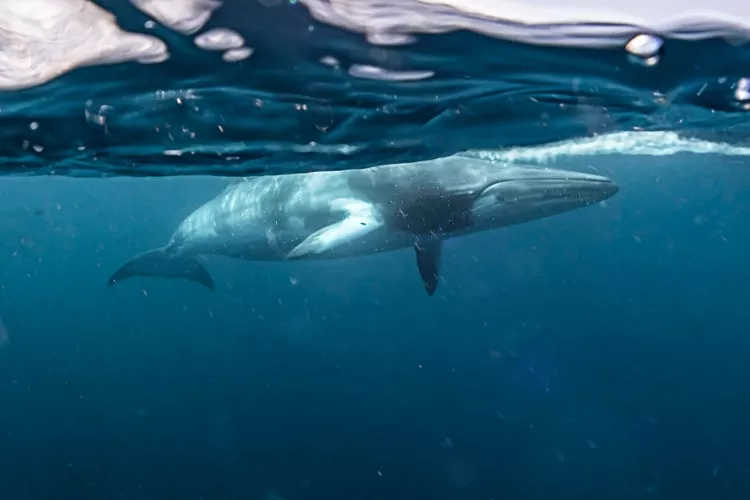
The majority of people in Iceland do not eat whale meat, with surveys indicating that fewer than two per cent of Icelanders consume it. Tourists consume most whale meat in Iceland, often after it is misleadingly marketed to them as an Icelandic delicacy.
According to a 2025 poll, 51 per cent of Icelanders are dissatisfied with the whale-hunting permits issue, and 44 per cent support a legislative ban on whale hunting.
Iceland began commercial whaling again in 2006, even after an international moratorium – which excludes Indigenous peoples in certain parts of the world who use whales for nutritional and cultural reasons – took effect in 1986 to protect whale populations. Norway resumed the practice in 1993.
In 2019, Japan withdrew from the International Whaling Commission and resumed commercial whaling.