As climate change outpaces nature, a continent-wide failure in seed banking leaves Europe’s most vulnerable plants without a safety net
By
In the last few months, researchers revealed that, across Europe, forests and grasslands are transitioning to plants that are better adapted to warmer climates, while cold-adapted mountain flora is disappearing at a strikingly rapid pace. This shift has ‘profound consequences for biodiversity conservation in Europe’, according to Ghent University’s Pieter De Frenne.
Around the same time, a paper published in Plants, People Planet, highlighted seed banking as ‘one of the most important strategies to preserve plant diversity’. In practice, however, Europe’s efforts to protect its most at-risk flora are falling dangerously short.
Surveying 44 European countries, the authors found that not a single nation had met the 2010 Global Strategy for Plant Conservation targets, which called for 75 per cent of threatened species to be preserved ex-situ (in seed banks) by 2020. Instead, the average was just 21 per cent, with many countries – including Denmark, Sweden and Croatia – failing to reach five per cent.
Enjoying this article? Check out our related reads…
One of the few countries to approach the 2020 target was the UK. Charlotte Lusty, Head of Seed Collections at the Millennium Seed Bank, explains that since 2020, the UK actually has managed to bank 85 per cent of all its threatened plant species.
While the UK has some notable advantages when it comes to seed collection, including a relatively small flora compared to countries with warmer climates, Ted Chapman, the UK native seed hub coordinator, says that collaboration and determination have been key to success. ‘Most of the collections we hold weren’t actually made by Kew staff. They were made by partners who were trained and supported by Kew.’
Countries with a larger flora shouldn’t necessarily find that a barrier, he adds, pointing to Spain – a diverse country by European standards – which has made similar progress to the UK. ‘Achieving these targets doesn’t happen by chance. It happens because a decision was made, and because there’s the technical capacity, expertise and political will to do it.’
However, the latest global plant strategy – adopted by the Convention on Biological Diversity in December 2022 – has removed the quantitative targets that countries were previously expected to meet for ex situ conservation. ‘It’s a shame,’ says Lusty, ‘because it is feasible if you invest in it.’
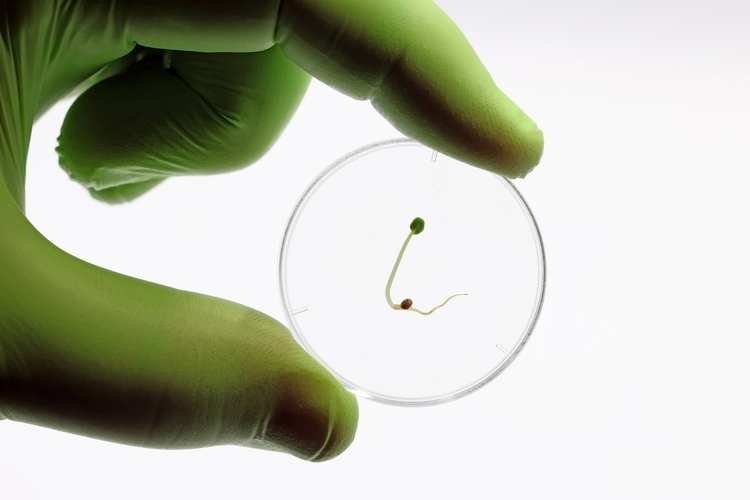
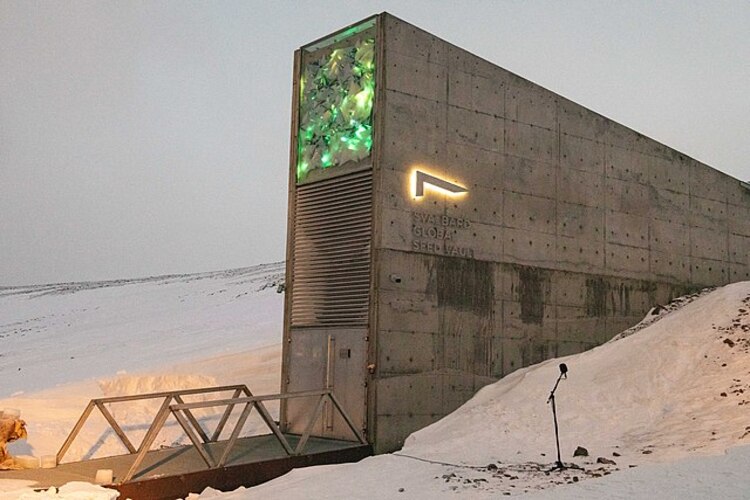
While collecting seeds – which are then dried and frozen at around –20°C – offers a way to preserve endangered plants, seed banks serve a much broader purpose. ‘The goal isn’t just to put something in frozen storage forever,’ says Lusty. ‘Easily half the material in the Millennium Seed Bank is formally categorised as economically important, and there’s a vast range of research that can be done on species of plants.’
Researchers are increasingly hunting for new chemical compounds that could be used for new medical treatments, such as next-generation antibiotics, and green innovations. There’s also a more immediate need to breed specific traits into our food supply by cross-breeding crops with their wild relatives, which have developed natural resistance to pests and diseases. ‘As we’ve domesticated plants, we’ve removed a lot of their genetic diversity,’ says Lusty. ‘So we’re constantly needing to add it back in to create more resilient crops.’ On average, Chapman adds, roughly 280 specimens from the UK collection alone are dispatched to researchers working on a range of issues.
Still, bridging the remaining gap to achieve a complete 100 per cent collection is no simple task. Some species only seed intermittently, making seeds from plants that are also rare a challenge to find. There’s also a subset of plant species which don’t produce seeds, or which are very difficult to store because they cannot tolerate desiccation or short temperatures. ‘The oak is a classic example,’ says Chapman. ‘We can’t dry and freeze an acorn, it will die.’
To overcome these hurdles, Kew is pioneering new methods, such as cryopreservation, that expand the limits of how we can store and protect vulnerable plants. At the same time, Chapman is focused on expanding the breadth of species samples, which is nearly as important as the total number of seeds banked. ‘Multi-population collections allow researchers to study variation within populations and also between populations, which is crucial for understanding plant resilience and genetic diversity.’ Despite these advancements, the window for action is narrowing.
‘We have these incredible collections, but there’s still a significant amount of work ahead for the UK, which is a deeply nature-depleted country.’ He points to the 2025 IUCN Red List update, where a significant portion of species saw their threat status elevated. Plants that were previously considered common are now being reclassified as vulnerable or threatened. ‘The goal posts are shifting, and that adds urgency to what we’re trying to do.’