This extreme polar region holds roughly 20 per cent of the world’s freshwater, drives global weather patterns and safeguards the future of our food supply
By
The Arctic is a region located at the northernmost point of Earth, comprising the northernmost territories of eight countries — Denmark (Greenland), Norway, Sweden, Finland, Russia, Canada, Iceland, and the USA (Alaska). Home to around four million people, the Arctic hosts a mixed population of scientists, immigrants from surrounding countries, and Indigenous groups who have lived there for thousands of years.
Beyond its immediate importance to its inhabitants, it is vital that global action is taken to protect the Arctic, especially from the effects of climate change. As it stands, the Arctic is warming faster than any other region on Earth, at a rate of three times the global average. It is a region that is unique, biodiverse and holds great geopolitical significance.
Physical geography
At a latitude of 66.5° north of the equator, the Arctic receives less than ten inches of precipitation annually. This marks it as a polar desert, even considered drier than the Sahara. Determined by the Earth’s tilt, the Arctic experiences extreme seasonal variations — long, bitterly cold winters and short, cool summers. Unlike regions at mid-latitudes, the Arctic shifts between two states, with brief periods of twilight in between. These states are the ‘polar night’ (months of darkness, where it is illuminated only by northern lights) and the ‘midnight sun’, months of endless daylight.

The Arctic supports a tundra biome, characterised by extremely frigid temperatures and swathes of treeless land covered in permafrost – sediment that remains completely frozen at or below zero degrees Celsius. Surface temperatures in this zone often range between -12°C and -6°C across all its regions.
Interestingly, most Arctic animals do not hibernate during the polar night, as food availability remains relatively secure. The female polar bear is an exception, denning during the colder months before emerging with her cubs in spring. For many species, winter is, in fact, the most important hunting season. Polar bears, for example, rely on sea ice as a platform from which to hunt seals.
The Arctic Ocean
Many organisms and people living in the Arctic have a shared reliance on the sea. The Arctic Ocean covers approximately 14.09 million square kilometres, standing as the smallest and shallowest of the world’s five oceans. Its surface area is mainly covered by sea ice, which expands dramatically during winter and contracts during summer. This sea ice forms from frozen seawater, regulating the Earth’s climate by reflecting incoming solar radiation back into space: an effect known as the ice-albedo effect.
The Arctic Ocean is also central to the region’s ecosystems. Beneath the ice, nutrient-rich waters support plankton blooms that form the foundation of a food web extending from fish and seabirds to seals, whales and polar bears. As climate change accelerates the loss of sea ice, these interconnected ecosystems are undergoing rapid transformation, with consequences that extend far beyond the Arctic itself.
Climate change and the Arctic
The Arctic, like many icy regions across the world, remains under threat from the effects of climate change. Climate scientist at the National Centre for Atmospheric Science and the University of Reading, Ed Hawkins, said, ‘Arctic sea ice decline over the past 40 years is one of the most obvious signs that the Earth’s climate is warming.’

According to the National Snow and Ice Data Centre, the Arctic may see ice-free summers well within this century, potentially as early as 2030. This is due to the effect that climate change is producing in the Arctic sea ice, where older ice is being lost and newer ‘younger’ ice is being formed. Old ice, in the long term, stabilises the Arctic environment by regulating ocean temperatures, supporting wildlife habitats, and reflecting solar energy back into space.
As the global climate warms, rising air and ocean temperatures more readily destroy first-year ice, weaken the remaining multiyear ice, and perpetuate the cycle of decreasing sea ice extent. This positive feedback loop will accelerate Arctic amplification, a phenomenon in which the Arctic region is warming at roughly two to four times the global average.
Geopolitical significance
As the Arctic Circle is shared by three different continents — Asia, Europe and North America – it is central to global relations. Each country with Arctic territory expresses differing interests in the landscape.
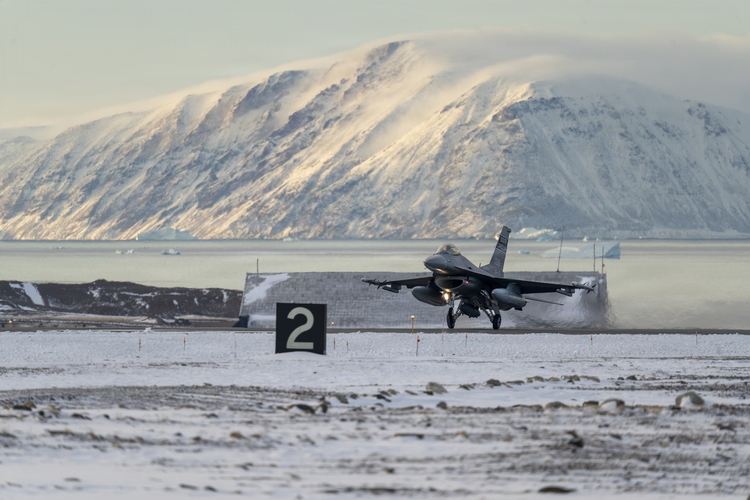
Approximately 15 per cent of the Arctic region lies within US territory (Alaska). The US has maintained a military presence in the region since the Second World War, most notably at Pituffik Space Base in Greenland (formerly Thule Air Base), which supports missile-warning and space-surveillance systems. President Trump views the territory as a potential ‘staging ground’ for high-latitude missile and space defence. Greenland also has a vast mineral resource potential, including rare earth elements.
Russia has also expanded its military infrastructure along its northern coastline in recent years. Russia’s Arctic coastline (which extends over 24,150km) represents 53 per cent of the Arctic Ocean coastline.
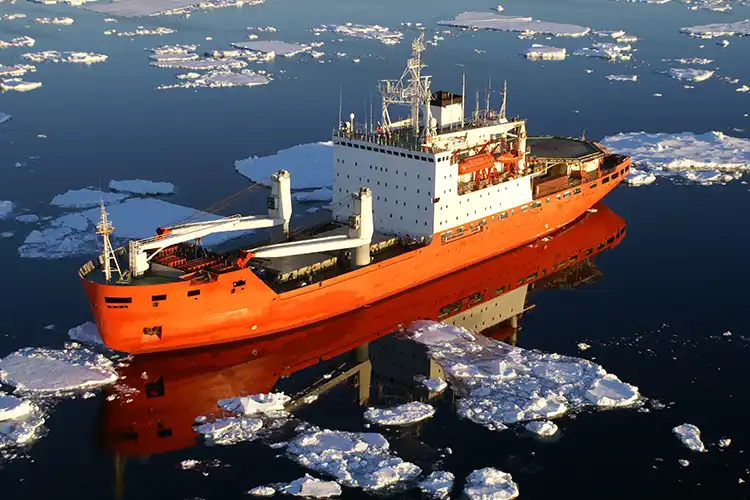
In addition, The Economist noted that China had celebrated a ‘banner year’ in the Arctic in 2025, after a Chinese icebreaker ship had completed the country’s largest Arctic expedition and a Chinese-operated container ship made what Chinese media described as the ‘fastest delivery in the history of container shipping’. This makes the Arctic an ideal location for trade, though it remains susceptible to the military interests of its sovereign occupants.

The Arctic has also been used to safeguard the future of the global food supply. Svalbard, located between Norway and the North Pole, has an established seed vault for global contributors. As a global backup for genebanks, the Seed Vault helps secure the future of the world’s food supply against disasters, conflict, or mismanagement. Commonly referred to as the ‘Doomsday Vault’, the site houses nearly 900,000 seeds for research, breeding and educational purposes. This facility is buried in permafrost to protect the precious seed samples stored there.
Protecting the Arctic
As a hub of biodiversity, the Arctic Council has become an essential forum for Indigenous Peoples’ advocacy in the Arctic, harnessing Indigenous knowledge for scientific research, environmental protection efforts, and sustainable development initiatives. Indigenous leaders have formal advisory status (Permanent Participants) on the Arctic Council, where they ensure environmental policies respect both the ecosystem and the people who depend on it.
Currently, local Indigenous groups are campaigning to create large protected areas that restrict harmful industrial activity while allowing traditional, sustainable harvesting to continue in the Arctic. An example is the proposed protection of Pikialasorsuaq (the North Water Polynya) in Canada and Greenland.
In addition, Greenpeace continue to petition for a Global Ocean Treaty under a vision for Arctic Sanctuary. Though it hasn’t been achieved yet, if it were successful, it would be pivotal to the protection of the region on a global scale.
Overall, the Arctic is a complex and biodiverse space, but it is also very sensitive. It is incredibly significant to our global stability, so efforts to protect and mitigate both physical and human pressures must be planned efficiently.