
• Skip to main content
  • Skip to secondary menu
  • Skip to primary sidebar
  • Skip to footer
Geographical

Geographical

Official magazine of the Royal Geographical Society (with IBG)

  • Geographical Home
  • News
  • Features
  • Opinion
    • Climatewatch
    • Front Lines
  • Podcast
  • Travel
    • Discovering Britain
    • Passport
  • Culture
    • Book reviews
  • Quizzes
    • Crosswords
  • Choose Geography
    • University directory
    • Masters courses
    • Course guides
      • Climate change
      • Environmental science
      • Human geography
      • Physical geography
    • University pages
      • Aberystwyth University
      • Brunel University
      • Cardiff University
      • University of Chester
      • Edge Hill University
      • The University of Edinburgh
      • Newcastle University
      • Nottingham Trent University
      • Oxford Brookes University
      • The University of Plymouth
      • Queen Mary University of London
    • Geography careers
      • Charity/non-profit
      • Education & research
      • Environment
      • Finance & consulting
      • Government and Local Government
    • Applications and advice
  • Magazine
    • Issue previews
    • Subscribe
    • Manage My Subscription
    • Special Editions
    • Geographical Archive
    • Advertise with us
  • Subscribe
    • Direct Debit Changes

Britain’s fish stocks are heading for collapse – report states

13 September 2023
2 minutes

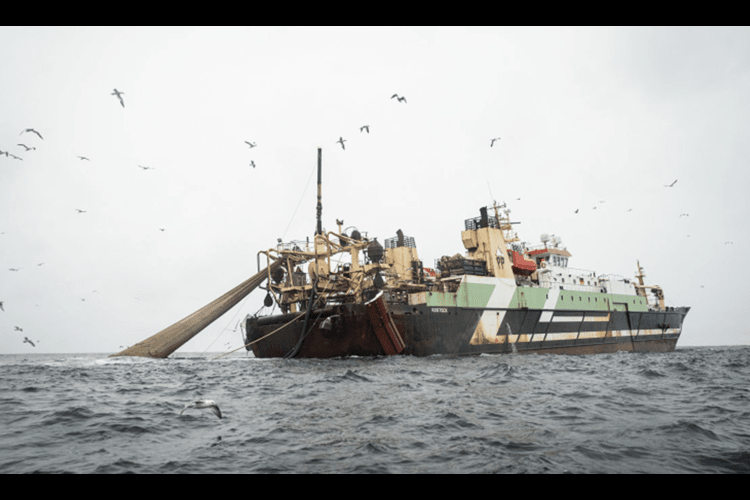
Super trawler in the North Sea. Photo Suzanne Plunkett / Oceana

By Stuart Butler

A report published in September 2023 by Oceana, a conservation NGO focused on restoring the world’s oceans through influencing government policy decisions, states that half of the UK’s key fish populations are overfished or in a critical state.

The report, entitled Taking Stock, goes on to claim that cod populations in UK waters are at a crisis level and that government-set catch limits exceed scientific advice and are pushing fish populations into decline.

Of the 104 different fish stocks that were analysed in the report, 34 per cent are being over-fished while 25 per cent of UK fish stocks are in a critical condition. The report goes on to state that only 41 per cent of UK fish populations are of a healthy size. But even here, six fish stocks that were a healthy size in 2020 have now declined to a critical state, and, since 2020, only three stocks have moved from being critically low to healthy.

  • Salt marshes could disappear by the end of the century
  • The fight for fish in Cameroon’s disputed waters
  • Restoring oyster reefs to protect English waters
  • 10 endangered species to watch in 2023
  • Protecting Orkney Islands seagrass

Of the ten marine species landed in greatest volumes by UK vessels, five species (North East Atlantic mackerel, North East Atlantic blue whiting, North Sea anglerfish, North Sea cod and Eastern English Channel king scallops) are being overfished or their population size is critically low. This means that only half (North Sea herring, haddock, whiting, saithe and Nephrops) of the main marine species on which the UK fishing industry is reliant are both of a healthy size and sustainably fished.

Trawlers tied up at Shoreham, East Sussex. Photo: Shutterstock

The report recommends that there should be a total ban on the fishing of the most at threat populations, which include Celtic Sea cod, West of Scotland cod and Irish Sea whiting, all three of which are frequently caught as bycatch to other commercial species. 

Hugo Tagholm, Director of Oceana in the UK, says that the UK government: ‘Claims to be striving for a gold standard in fisheries management. Yet they continue to ignore the science and rubber-stamp the rampant exploitation of our seas. This not only puts fish populations at risk, but also everything that relies on them, including marine wildlife and the fishing industry itself. It is time for the UK to show political leadership and commit to catch limits in line with the science and a clear and ambitious strategy to end overfishing.” 

The report can be read in full here.
Themes Science & Environment Food

Protected by Copyscape

Primary Sidebar

SUMMER SALE

GEOGRAPHICAL WEEKLY LOGO FREE - Sign up to get context, clarity and perspective in a noisy world, every Friday

Popular Now

August 2026 Geographical crossword

August 2026 Geographical crossword

The new study led by the University of Cambridge has revealed that as our springs and summers get hotter and drier, the UK wildfire season is being stretched and intensified.

Geo explainer: The growing problem of UK wildfires

Firefighters tackling wildfires

Geo explainer: What are fire clouds?

Underwater cables

The new geopolitics of undersea data cables

Matthew Hollingham

Travel tips with endurance fundraiser Matthew Hollingham

Footer

  • Facebook
  • Instagram
  • LinkedIn
  • Reddit
  • TikTok
  • Twitter
  • YouTube

Geographical print magazine cover

Published in the UK since 1935, Geographical is the official magazine of the Royal Geographical Society (with IBG).

Informative, authoritative and educational, this site’s content covers a wide range of subject areas, including geography, culture, wildlife and exploration, illustrated with superb photography.

Click Here for SUBSCRIPTION details

Want to access Geographical on your tablet or smartphone? Press the Apple, Android or PC/Mac image below to download the app for your device

Footer Apple Footer Android Footer Mac-PC

More from Geographical

  • Subscriptions
  • Get our Newsletter
  • About Us
  • Contact Us
  • Advertise with us
  • Privacy policy
  • Terms & Conditions

Copyright © 2026 · Site by Syon Media