
• Skip to main content
  • Skip to secondary menu
  • Skip to primary sidebar
  • Skip to footer
Geographical

Geographical

Official magazine of the Royal Geographical Society (with IBG)

  • Geographical Home
  • News
  • Features
  • Opinion
    • Climatewatch
    • Front Lines
  • Podcast
  • Travel
    • Discovering Britain
    • Passport
  • Culture
    • Book reviews
  • Quizzes
    • Crosswords
  • Choose Geography
    • University directory
    • Masters courses
    • Course guides
      • Climate change
      • Environmental science
      • Human geography
      • Physical geography
    • University pages
      • Aberystwyth University
      • Brunel University
      • Cardiff University
      • University of Chester
      • Edge Hill University
      • The University of Edinburgh
      • Newcastle University
      • Nottingham Trent University
      • Oxford Brookes University
      • The University of Plymouth
      • Queen Mary University of London
    • Geography careers
      • Charity/non-profit
      • Education & research
      • Environment
      • Finance & consulting
      • Government and Local Government
    • Applications and advice
  • Magazine
    • Issue previews
    • Subscribe
    • Manage My Subscription
    • Special Editions
    • Geographical Archive
    • Advertise with us
  • Subscribe
    • Direct Debit Changes

Amazon rainforest now releases more carbon than it absorbs, study finds

29 October 2026
3 minutes

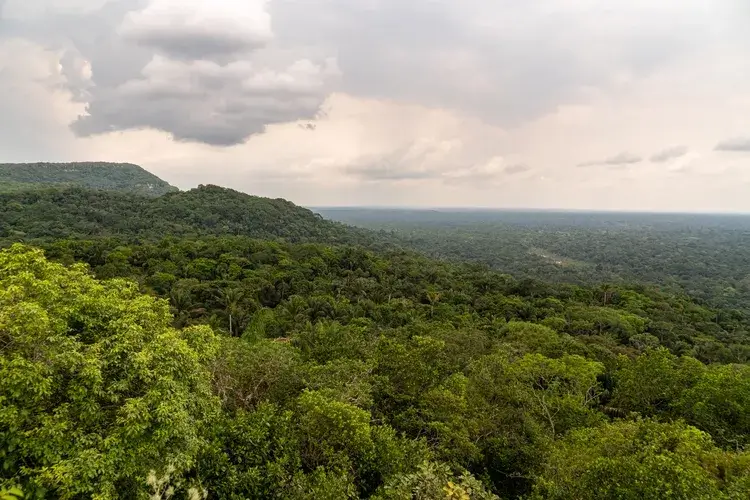
Views of the river in the Colombian Amazon area from the hill, cloudy river
The Amazon rainforest is roughly 29 times larger than the UK. Image: Jordi Romo/Shutterstock

The ‘lungs of the planet’ have been degraded by deforestation, drought and fires, making them a net source of global carbon emissions


By Victoria Heath

A study by a team of international researchers found that the Amazon rainforest is now a net source of global carbon emissions. Through deforestation, drought, and fires, the rainforest has degraded, hindering its ability to absorb vast amounts of carbon dioxide from the Earth’s atmosphere.

The study, led by Brazil’s National Institute for Space Research, draws upon 15 years of airborne measurements of atmospheric carbon. Researchers collected these data using research planes that sampled air at different altitudes above the rainforest.

Their findings painted a clear picture of how the Amazon is changing. In relatively wet years with little deforestation or wildfire activity, the Amazon was still a small net source of carbon to the atmosphere. When the climate was relatively mild, but deforestation and wildfire activity were high, net carbon emissions jumped dramatically.

Researchers also found that 2024 was the most severe year for carbon emissions from the Amazon.
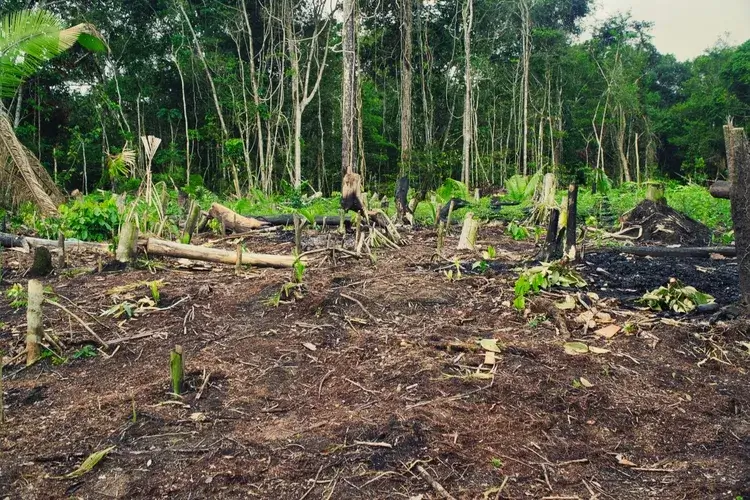
Photo of a deforested area in the Amazon rainforest. Amazon, Brazil 18.03.2025
Between 1978 and 2017, more than 750,000 square kilometres of the Amazon was destroyed. Image: Hans Elmo/Shutterstock

‘That year fell into our Group 3 category, where we had the coincidence of really warm temperatures, very low precipitation and high rates of fire-driven deforestation,’ Johnson said. ‘That cocktail of events led to massive carbon emissions into the atmosphere. Looking back at our time series, that was the year with the single highest annual emissions.’

Despite covering just one per cent of the world’s surface (around seven million square kilometres), the Amazon is home to 10 per cent of all known terrestrial wildlife species. On average, researchers discover one ‘new’ species in the Amazon every other day.

The Amazon stores between 150-200 billion tonnes of carbon, and its 400 billion individual trees release 20 billion tonnes of water into the atmosphere every day. This vast rainforest is also home to around 47 million people, including nearly 2.2 million Indigenous peoples.


Enjoying this article? Check out our related reads…

  • Decrease in Amazon deforestation rate under President Lula
  • What would happen if oceans stopped absorbing carbon?
  • Deforestation declines in Brazilian Amazon
  • Geo Explainer: Why are temperate rainforests so important?
  • Deforestation falls in Brazil while the world burns

It faces extensive deforestation. From 1978 to 2017, more than 750,000 square kilometres of the rainforest were destroyed.

Many worldwide impacts would follow if the Amazon collapsed. One study found that if the rainforest experienced reduced rainfall, its temperature would rise, causing dry air to move in with wet, cool air from the south. In turn, this would dry out the USA’s northwest regions and the Sierra Nevada snowpack. This snowpack is vital to California’s water supply and directly affects the state’s ability to produce agricultural goods. 

Losing the Amazon would also mean depleting global levels of biodiversity, as well as the cultural extinction of the 385 Indigenous communities who reside there.
Themes News Deforestation Forests

Protected by Copyscape

Primary Sidebar

SUBSCRIBE

GEOGRAPHICAL WEEKLY LOGO FREE - Sign up to get context, clarity and perspective in a noisy world, every Friday

Popular Now

On The Ground: The Aberfan Tribunal

On The Ground: The Aberfan Tribunal

Shompen band traversing a river on Great Nicobar Island.

UN urges India to suspend controversial mega-project on Great Nicobar Island

3d globe inside digital scanning frame.

AI or climate change – which poses the greater threat to humanity?

A priest beside health workers in protective equipment outside a metal-walled building in Mongbwalu

Why war is making the DRC’s Ebola outbreak harder to stop

Copernicus Marine Service visualisations show the impact of Super Typhoon Champi on the Philippine Sea on 21 October 2026. With winds reaching 296 km/h, the Category 5 storm was the strongest tropical cyclone recorded in 2026. The images show the anticlockwise movement of wind-generated waves (left) and significant wave heights reaching 10 metres near the storm’s centre (right).

Typhoon Champi hits Taiwan

Footer

  • Facebook
  • Instagram
  • LinkedIn
  • Reddit
  • TikTok
  • Twitter
  • YouTube

Geographical print magazine cover

Published in the UK since 1935, Geographical is the official magazine of the Royal Geographical Society (with IBG).

Informative, authoritative and educational, this site’s content covers a wide range of subject areas, including geography, culture, wildlife and exploration, illustrated with superb photography.

Click Here for SUBSCRIPTION details

Want to access Geographical on your tablet or smartphone? Press the Apple, Android or PC/Mac image below to download the app for your device

Footer Apple Footer Android Footer Mac-PC

More from Geographical

  • Subscriptions
  • Get our Newsletter
  • About Us
  • Contact Us
  • Advertise with us
  • Privacy policy
  • Terms & Conditions

Copyright © 2026 · Site by Syon Media