Tristan Kennedy tackles the legendary Monte Bondone, where one of cycling’s most brutal battles unfolded during a June blizzard
By
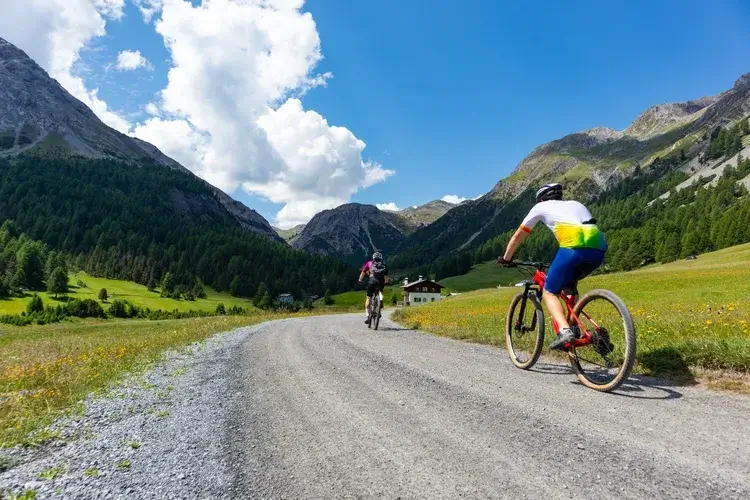
Rising precipitously from the Adige Valley west of the Italian city of Trento, Monte Bondone isn’t particularly high — just 2,180 metres above sea level. But try riding a bike up any one of the three approach roads that converge near the summit and it quickly becomes apparent why this mountain has attained a legendary place in the history of cycling. Each of the three has featured in the Giro d’Italia over the years, and each represents its own particular flavour of pain.
The climb up the western side from Valle di Laghi is the longest — 34.4 kilometres, with 1,650 metres of elevation gain and an average gradient of 4.8 per cent — but technically this is the easy route (although it hardly feels that way as you struggle up the seemingly never-ending straight through the village of Lagolo). From the east, there are two options. The 21.4-kilometre climb from Aldeno has an average gradient of 6.7 per cent, which is punishing, but the route offers some respite as it crosses the relatively flat Torbiera delle Viote, a peat bog, shortly before the final push.
Enjoying this article? Check out our related reads…
And then there’s the route straight up from the city of Trento itself: it’s just 17.3 kilometres long but has an average gradient of 8.2 per cent, reaching a maximum of 15 per cent in some sections. The real killer, however, is the stretch between the pretty village of Sardagna, which sits on a cliff overlooking Trento, and Vaneze, where the ski lifts start: ten kilometres of brutal switchbacks, with the gradient holding steady at between eight and ten per cent and giving your legs no chance to recover.
The climb is difficult enough as a standalone challenge when the weather is good. But the first time Monte Bondone featured in the Giro d’Italia, exactly 70 years ago, this toughest of approaches was chosen as the finish of a 242-kilometre looping stage through the mountains from the city of Merano — and the conditions couldn’t have been worse. Unfortunately, the shaky newsreel footage from that day in 1956 that’s available on YouTube does little justice to the epic struggle the riders faced — but the excitable Italian commentary does fill in some of the blanks.
‘On the climb up Passo Rolle, the peloton was flagellated by insistent rain,’ the commentator says. From there, with 140 kilometres still to go, the weather steadily worsened. A thick fog descended and, as they climbed into the higher reaches, rain turned to snow. By the time they reached the base of Bondone, there was ‘an apocalyptic atmosphere’, according to the newsreel commentator, who compares the final, torturous climb up the mountain to Christ’s road to Calvary.
Heading into this stage, the third-to-last in the race, the Italian rider Pasquale Fornara was wearing the maglia rosa, or pink jersey, of the overall race leader. But as more and more riders crashed on the slippery roads, his team’s sporting director persuaded him to cut his losses and withdraw rather than risk a serious, career-ending injury. In any case, he was already off the pace, which was being set by a young rider from Luxembourg called Charly Gaul. Seemingly impervious to the punishing cold, the 23-year-old led a solo breakaway through the snow to the summit, finishing seven minutes and 44 seconds ahead of Alessandro Fantini in second place. When he crossed the line, however, the physical toll became obvious — the frostbitten Gaul had to be lifted off his bike and promptly fainted, only coming round after soaking in a hotel bath for an hour.
Gaul went on to win the Giro, and his feat quickly became legend. But arguably the most remarkable performance of the day was that of Fiorenzo Magni, who finished third, 12 minutes behind Gaul, and went on to finish second overall. Magni had fallen badly and broken his collarbone on stage 12 of the race. Because he couldn’t brake properly with his left hand, he fell again on stage 16, fracturing his arm. Finding himself unable to steer, he wrapped a piece of inner tube around his handlebars, gripping the other end with his teeth to hold them straight. Photos show him grimacing as he bites down hard, trying to push through the pain.
Incredibly, the battle of the blizzard on Monte Bondone took place on 8 June — a date on which it would now be almost unthinkable to see snow, given the way the climate has changed over the past seven decades. These days, Monte Bondone is best ridden in autumn, when the summer crowds and sweltering heat have gone and the larches are beginning to turn, speckling the forest with yellow.
On a recent gravel ride up the mountain, I found myself thinking of Gaul, Magni and company as I sweated over my pedals. I thanked my lucky stars for the modern technology that has made this sort of thing infinitely easier: from my lightweight carbon-fibre gravel bike and the moisture-wicking material of my shirt to the frame bag that held my water bottle, a waterproof jacket (in case I got ‘flagellated by insistent rain’), a puncture-repair kit and my mobile phone. If I were to break my collarbone, I thought, I’d be calling for help straight away — not biting down on a bit of inner tube and pushing through! But this just gave me all the more respect for what those pioneers of cycling endured — and for the enormous scale of their achievement in dragging themselves up this mountain through the snow.
Three items that will make cycling trips more comfortable:
The surprisingly useful: Osprey Escapist Frame Bag (small) — £80
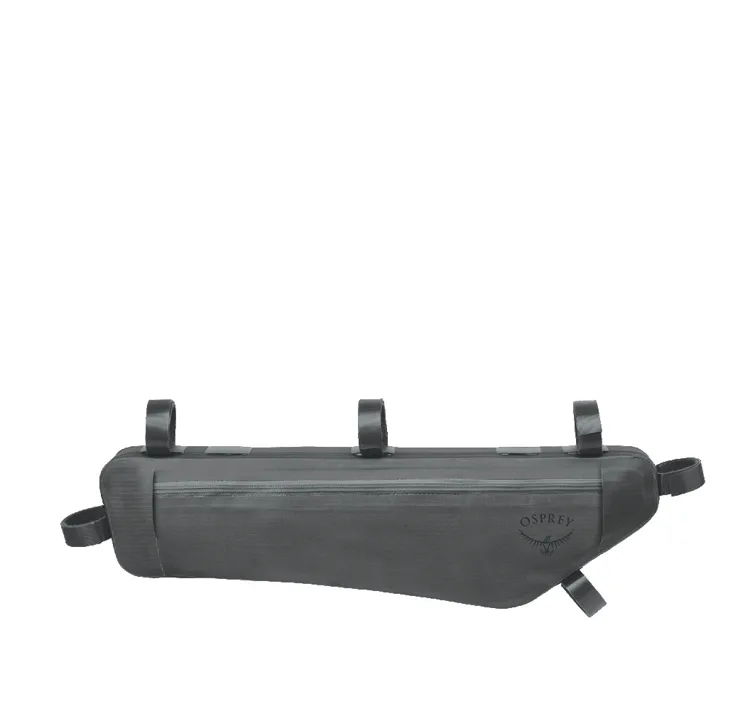
Frame bags aren’t the most glamorous pieces of cycling kit, but they’re among the most practical. Mounted neatly inside the bike’s main triangle, the Escapist makes use of space that would otherwise go unused, keeping heavier items low and central so that the bike still handles naturally. Made from 100 per cent recycled nylon and treated with a durable water-repellent coating, it will keep your kit safe and dry, whatever the weather. The 2.5-litre capacity isn’t enormous, but it provides extra room that can prove useful if you’re heading out for a long day. Once you’ve spent a day riding with everything organised and easily accessible, it’s surprisingly difficult to go back to stuffing everything into your pockets. osprey.com
The luxury: Exposure Lights Toro 16 Light — £355
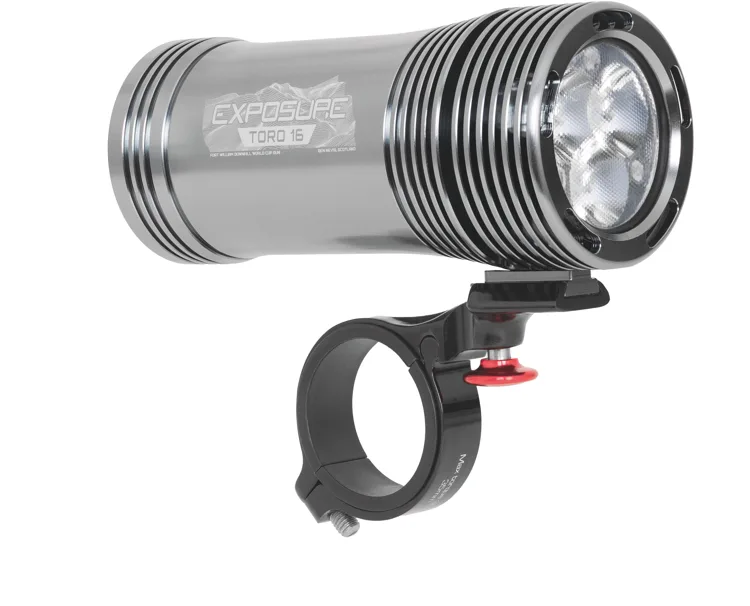
A bike light that’s this powerful might seem like an indulgence. But if you’ve ever found a ride taking longer than planned and risked being out after dark unexpectedly, you’ll appreciate it. As the story of the 1956 Giro shows, it’s impossible to know what the weather will throw at you, and it’s always better to be prepared for anything. Designed for gravel and road riders, Exposure’s Toro 16 produces up to 3,850 lumens, which is more than enough to illuminate fast descents or unlit country lanes. The CNC-machined aluminium body is robust enough to shrug off foul weather, while the self-contained rechargeable battery avoids the faff of external packs and trailing cables. Yes, there are cheaper lights available, but the performance and build quality of this one are hard to beat. exposurelights.com
The essential: Osprey Savu 5 Bike Hydration Lumbar Pack — £70

If you’re embarking on a serious climb — whether on a road bike or a gravel bike — you need something to carry a jacket, snack bars, tools and phone. While it’s not really the done thing for road cyclists to wear bumbags, they’re generally accepted among gravel riders as one of the best ways to carry kit: more capacious than a pocket and less sweaty than a backpack. The Savu 5 bumbag is an excellent model. It has two angled bottle sleeves that let you grab a drink without dismounting, while the central compartment has ample room for tyre levers, food and an extra layer. It’s a comfortable compromise that keeps everything you need within easy reach. osprey.com