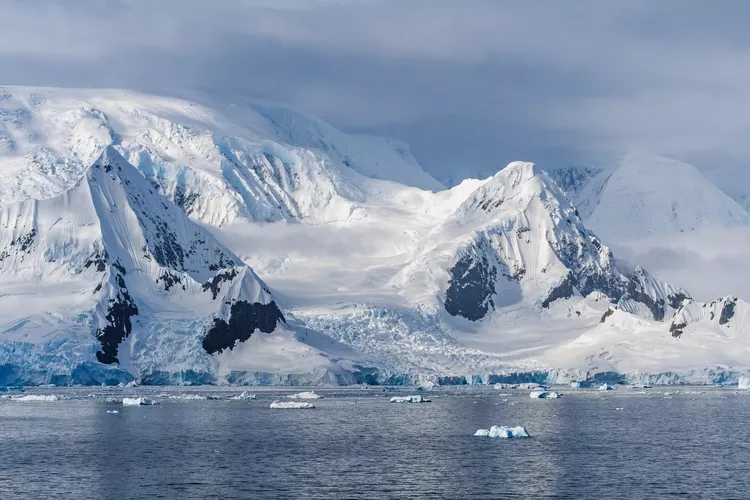
Even in scenarios where global warming remains at 1.5°C, ice loss will continue for millennia
By
A report has revealed the many ways the cryosphere, all parts of the Earth where water is in solid form, will be damaged as temperatures rise across the planet.
Reviewed and supported by more than 50 leading cryosphere scientists, the report concluded much of the damage to the world’s cryosphere would be ‘large-scale, and in many cases irreversible’ if the planet overshoots the 1.5°C Paris Agreement target. It also detailed how a truly ‘safe’ temperature target for Earth’s ice is now thought to be closer to 1.0°C or even below.
If temperatures stabilise at 1.5°C, the report found that occasional ice-free summers in the Arctic would still occur before sea ice at both poles would stabilise. In a scenario with a brief overshoot of 1.7°C, the Arctic would experience frequent ice-free summers for around two decades. If temperatures dropped to well below 1.5°C by 2100, sea ice at both poles would begin to recover relatively quickly.
The report also found how the world’s oceans would be impacted in a warming world. In a scenario of overshooting to 3°C – the level of overshoot projected under the world’s current emissions pathway and policies – the world’s ocean currents could experience ‘severe and possibly abrupt circulation disruptions’, as well as widespread ocean acidification.
Even if ambitious measures were taken now, peak temperatures around 1.7°C would still occur for about two decades. This would allow surface waters to recover from acidification, but acidifying conditions would spread deeper and continue to negatively affect marine life. Fully rebalancing ocean chemistry would take tens of thousands of years.
The report also cites a study finding that the AMOC could decline by around 50 per cent under intermediate emissions scenarios.
More than half of the world’s glaciers would also be threatened with extinction, even if global warming does not surpass the 1.5°C target. In some regions, such as Scandinavia, Iceland and the North American Rockies, up to 35 per cent of the ice that existed in 2020 would remain after several centuries at 1.5°C. In the Hindu Kush Himalaya and Central Asia, around one-third of glacier ice would disappear at that temperature level.
Under a 3°C overshoot scenario, nearly all mid-latitude glaciers outside the highest altitudes (6,000 metres and above) would disappear, with even the Hindu Kush Himalaya seeing a loss of at least two-thirds of its glacier ice.
The report also details how melting permafrost, perennially frozen ground in the Arctic, releases greenhouse gases annually at a scale comparable to a large industrialised nation. Under a high overshoot scenario of 3°C, nearly all near-surface permafrost would thaw, leading to more frequent, intense, and severe wildfires.
Warming temperatures are already being felt across the world. In 2025, rapid ice loss and glacier retreat triggered a landslide in an Alaskan fjord, causing the second-largest landslide tsunami runup recorded since 1958. The report also notes that 2025 wildfires in southern California may have been fuelled by low snow cover in Eurasia, which may have affected atmospheric currents.
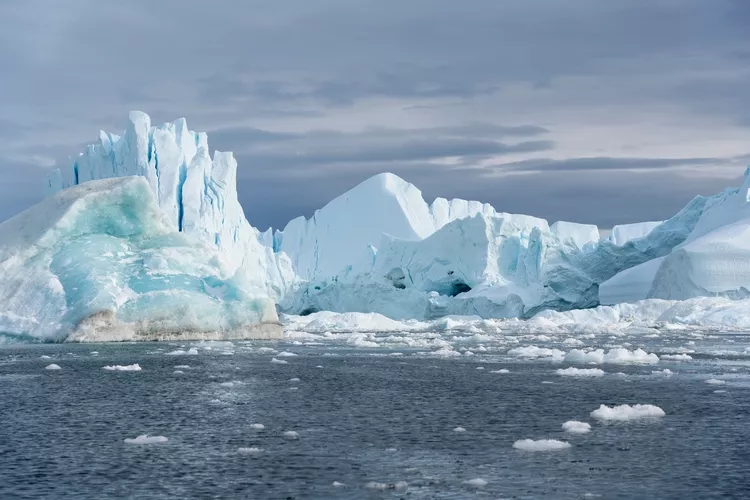
Ice loss from both ice sheets has accelerated in recent decades, with recent observations showing that the Greenland Ice Sheet is currently losing ice five times faster than in the 1990s. In addition, Antarctica’s contribution to sea-level rise is now six times greater than it was 30 years ago.
Extreme environmental events in Antarctica are also growing in frequency and severity, making fieldwork in remote locations harder to carry out. This could have cascading impacts on scientific research, hindering researchers’ ability to prepare for the global impacts of Antarctic Ice Sheet melt.
Enjoying this article? Check out our related reads…
Ultimately, the report calls for an urgent response to protect the cryosphere: rapidly decreasing greenhouse gas emissions, which largely originate from fossil fuel use. Still, despite current policies, emissions continue to rise. Average CO2 concentrations in the atmosphere for 2026 are expected to be nearly 430 ppm, the highest in three million years and much greater than the 280 ppm pre-industrial level.
‘Coming in the week before this year’s UN climate summit, this has to be a wake-up call. We know how to minimise overshoot and return global warming back well below 1.5°C by the end of the century: cutting fossil fuel use is front and centre of the solution, and so the central job of the twin COP31 Presidencies, Türkiye and Australia, is to make sure the summit meaningfully accelerates the transition away from fossil fuels,’ said CEO of Climate Analytics Bill Hare.