For centuries, the men of Ness have sailed to Sula Sgeir to harvest young gannets. Now, after avian flu and mounting animal-welfare pressure, one of Britain’s most controversial traditions faces an uncertain future. This year, for the first time in recorded history, the annual hunting licence has been denied – but the door remains open for the hunt to return again next year
By
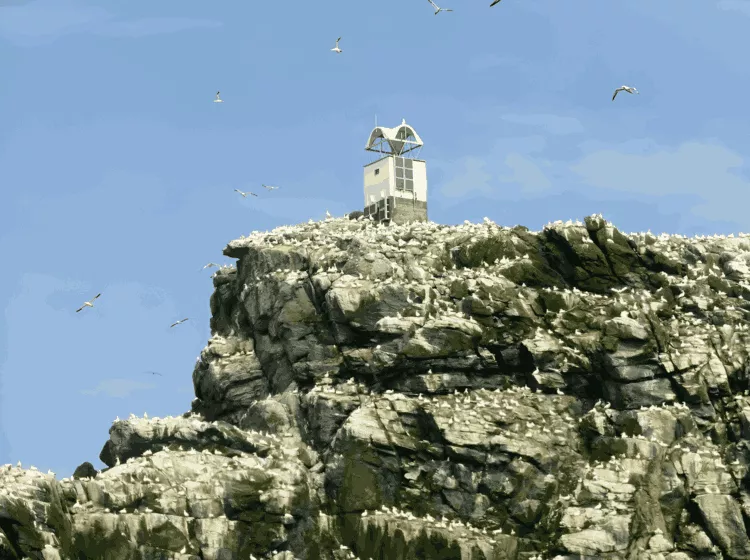
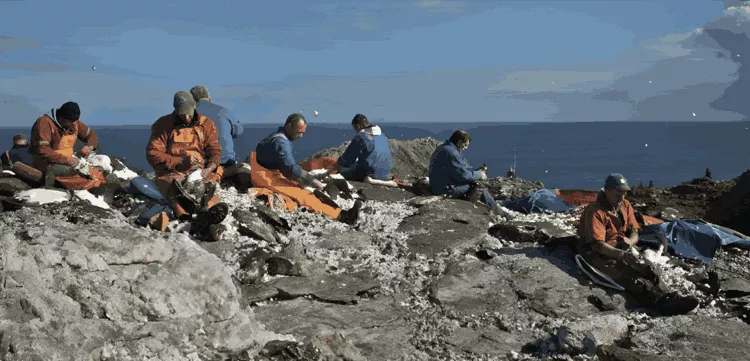
Almost every August for at least 500 years, the men of Ness have set sail across rough seas from the northernmost tip of the island of Lewis in the Outer Hebrides, their destination a rocky, uninhabited pinprick in the Atlantic Ocean. It’s a long, tough sail of some 40 nautical miles and most of the men are horrendously seasick. The landing at Sula Sgeir is tricky, for there is no natural harbour and invariably a one-metre swell runs up against the base of the cliffs. Once they’ve scrambled ashore and negotiated the precarious climb to the cliff top, they set about the task for which they came – the culling of thousands of guga, the Gaelic name for a young gannet.
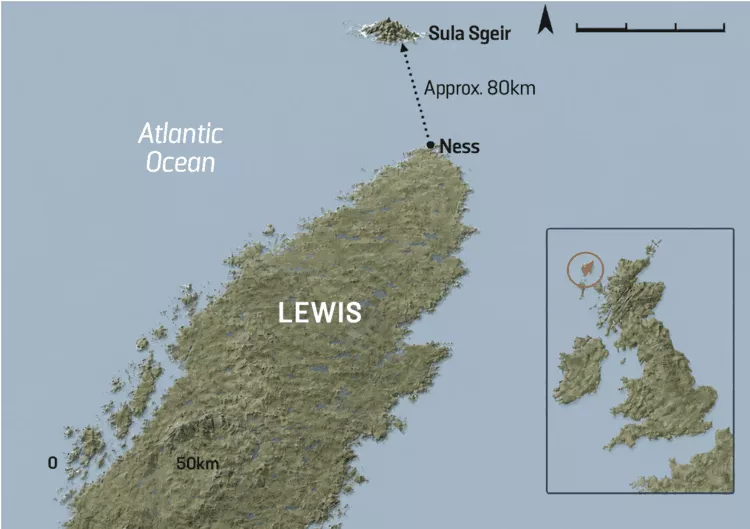
For the community of Ness and the nearby townships of Europie and Lionel, the annual guga hunt is as ingrained a tradition as kilt wearing, done not for sport but because they celebrate it and are proud of it and its connections to a past when the bird provided an essential source of protein. The guga, plump and unable to fly, are easy to pick off, caught by hand or by long poles and nooses and then clubbed to death. The men spend two weeks on the island, catching, killing, plucking and scorching the skin off the birds before gutting and salting them for the journey home. The men work around the clock, except for Sunday, the day of rest observed across much of the Presbyterian north of the Outer Hebrides, sleeping and sheltering in the same stone dwellings that their ancestors did.
Enjoying this article? Check out our related reads…
All this activity is entirely legal: while the hunting of seabirds in the UK was outlawed in 1954, an exemption was made for Ness on the grounds of heritage and cultural tradition. Around 2,000 birds are usually harvested, although in the wake of avian flu, which forced a suspension of the hunt for three years, the quota has been reduced to 500 out of a colony of around 10,200 birds. Once back at Ness, most of the birds are eaten locally; some are pre-ordered for export by the Hebridean diaspora around the world. They taste, reportedly, like fishy geese. ‘It’s a taste that is best acquired while young,’ says author Donald S Murray, who grew up in the area and wrote The Guga Hunters, the definitive book of the tradition.
But the hunt takes place in a world that is slowly disappearing. Depopulation in the Outer Hebrides means that as the years pass, there are fewer local men to take on the hunt and recruitment has spread to townships further south along Lewis’s A857 spinal road. At the same time, a vocal campaign is demanding that the hunt be banned, with pressure being heaped upon NatureScot, which is responsible for issuing each year’s licence for the hunt. The argument that the hunt protects a way of life for the hundreds of people who love guga meat appears increasingly out of step with modern times.

The Scottish Society for the Prevention of Cruelty to Animals has long criticised the hunt as ‘barbaric’. More recently, an online petition calling on the Scottish government to outlaw the practice has attracted more than 100,000 signatures. ‘The annual Guga Hunt is no longer tradition – it is blood sport,’ says wildlife photographer Rachel Bigsby, who instigated the petition. ‘This abhorrent cruelty dates back centuries, when island communities relied on seabirds for food, but today it is not a necessity.’
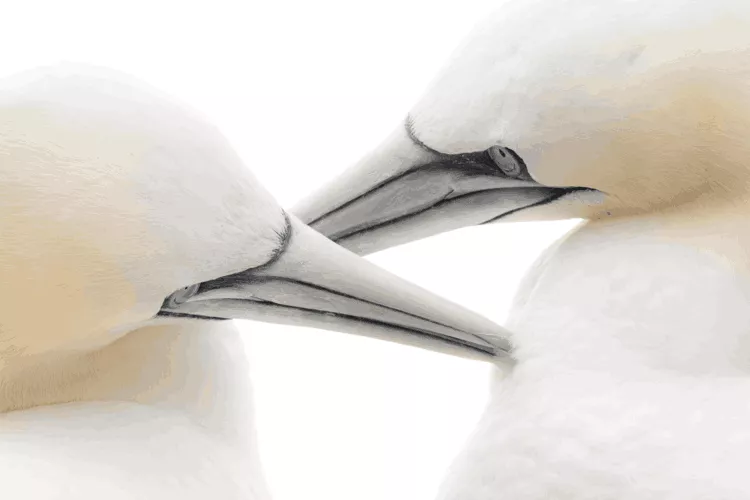
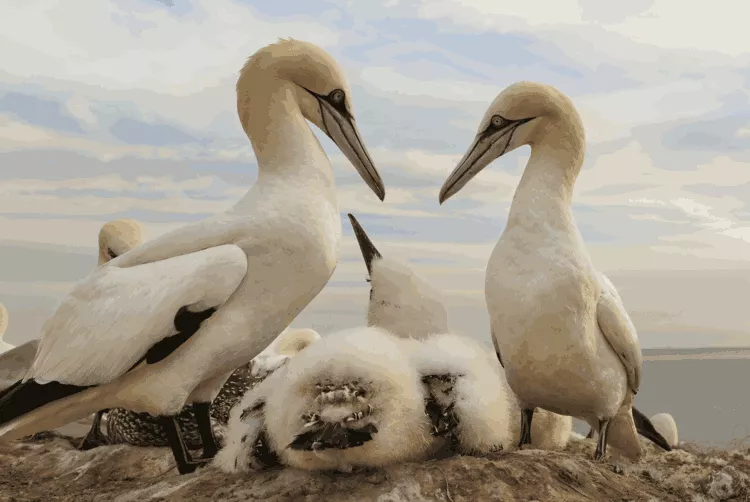
Photographing gannets is central to Bigsby’s work and she openly admits that she is drawn to a creature that competes with red squirrels and koalas in the pantheon of animal magnetism. She argues that while she is respectful of the tradition of guga hunting, she feels the practice has had its day. ‘My work has allowed me to witness the beauty and fragility of the life of the gannet, which came to a height with avian flu,’ she says. ‘My argument is more grounded in empathy – my favourite bird was reduced by avian flu from big, bold and bolshie to quivering wrecks. Despite catastrophic losses from avian influenza, the hunt continues. The chicks are killed when they are so young; these birds are long-lived, so it’s a long life lost in a species that is already struggling.’
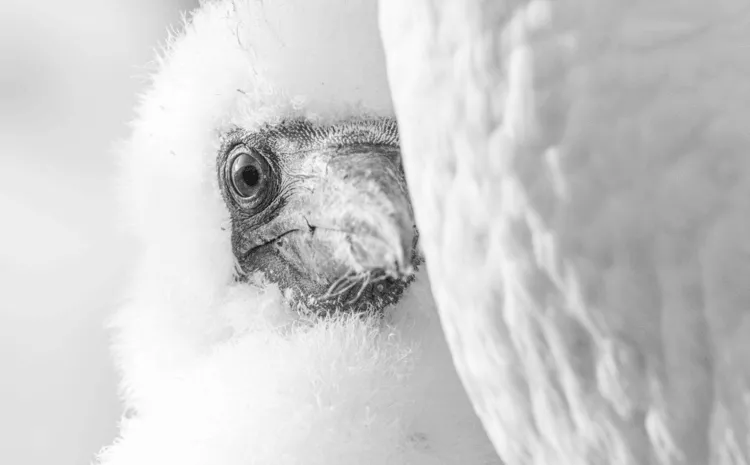
The method of killing also belongs to another era, she argues. ‘You can’t make a justifiable environmental case for it in modern-day conditions. Modern-day food supplies fundamentally change gannet to a delicacy rather than a necessity. The level of awareness of these issues nowadays is significant; people are engaging with the ethics of such practices in ways they didn’t before,’ she says. ‘The birds are bludgeoned to death before they have fledged, that is to say before they are able to move away and try to escape the hunters.’ NatureScot, which issues the licence on the condition that killing is done humanely – death must be instantaneous – acknowledges it has to take the word of the hunters. ‘The licences are issued in good faith, that the hunters are taking only the quota and killing quickly and humanely, but there is no independent verification,’ says Bigsby. ‘It’s self-reporting; there is no transparency.’
Inevitably, the online petition has attracted more direct protests. A campaigning group, Protect the Wild, stood a candidate in the Scottish elections earlier this year, dressed as a gannet (they attracted 41 votes). Another group, Abolish the Guga Hunt, scaled NatureScot’s headquarters in Inverness and unfurled a banner demanding an end to the cull. NatureScot staff have reported threats and their offices have been sprayed with graffiti.
Residents in Ness have also been targeted. Earlier this year, Ness resident Murdo Macritchie wrote to the Scottish parliament’s petitions committee to warn that local community views were ‘getting drowned out by eco-terrorists’ and that the anti-hunt campaign had got out of hand. ‘The supporters of the petition are undertaking a horrific campaign of abuse online, vilifying our community,’ he wrote. ‘The language used to describe us has been horrendous – being called barbaric and baby bashers. It’s very emotive language and we are just astonished by it. It’s like we’ve been turned into something evil in the eyes of people who’ve never even been here. It’s probably one of the most toxic things that’s ever happened to our community in the modern era. We feel completely overwhelmed – drowned out, silenced, shouted at.’
The scale of protest has also left Bigsby uncomfortable. ‘I don’t hate the people of Ness, I’ve never mocked the hunt. I just want to stop it,’ she says. ‘I was so upset about the stunt of standing as a gannet for election; it made a mockery of an animal welfare issue. I have never intended to erase cultural history or attack an island community. In an ideal world, the dust could settle and we could have a reasonable discussion about ending the hunt.’
Beyond the threats, there is a feeling among the Ness community that the outside world simply does not understand them. The guga hunters no longer speak publicly and what the outside world knows of the hunt mainly comes from two films, the first, Adventure Sulisgeir, a 1962 black-and-white production by James McGeoch, a policeman and naturalist; and a 2010 documentary, The Guga Hunters of Ness, filmed and produced by Mike Day. Both documentaries provided unfettered and often graphic footage.
Murray, who interviewed the guga hunters at length for his book, understands their wariness. ‘It’s understandable that people feel they are being got at,’ he says. ‘They have suffered an awful lot of abuse; they have been physically threatened. The rhetoric from urban critics has added to that. The language has been so emotive, far beyond any kind of reasonable debate.’ Murray draws similarities with Greenpeace’s 1970s campaign to ban Canada’s seal hunt. ‘There has been a habit throughout history of urban people imposing their will on rural communities. The seal campaign backfired; it led to economic and social impacts on coastal and indigenous communities. Greenpeace ended up issuing an apology [in 1985].’
In Ness, the same principles apply, he argues. ‘This is an issue of cultural erosion. Rural communities are in a more perilous position than ever and we have a duty to preserve rural life. The hunt makes the area distinctive.’ The hunt, he argues, involves a combination of nerve, skill, seafaring and mutual reliance that bind those who take part and their community together. ‘Those qualities are essential for rural areas to survive,’ he says.
‘If you live in a rural area, there is a precarious element to agricultural life, there is a danger that the market fails, so who is to say we won’t need these skills in the future? Campaigners say [villagers] can just drive to Tesco and pick up a chicken. But it’s an 80-mile [129-kilometre] round trip from Ness, and who is to say that a supermarket chicken has a happier life than a guga?’
NatureScot says it must consider the annual licence application to hunt guga purely on environmental criteria. ‘Our role is to make licensing decisions based on the most recent scientific evidence and we do not consider the cultural importance of the activity,’ says a spokesperson. This is no longer acceptable for campaigners such as Bigsby, who feels time and culture have moved on. ‘Society continually reassesses these practices,’ she argues. ‘The hunt was once a necessity – seabirds sustained human life all around the UK – but it is no longer necessary from a food-security point of view. I think it should be banned but it should also be celebrated and honoured, documented as an important part of historical life and as a celebration of the community of Ness.’
The Scottish Seabird Centre has also called on NatureScot to withhold licences. ‘We acknowledge the deep cultural heritage of the guga hunt,’ says a spokesperson, ‘but in light of the significant challenges facing seabird populations – including climate change, unsustainable fishing, offshore development, invasive species and the devastating impact of avian influenza – we believe it is time to reconsider this practice.’ The centre says the scale of the avian pandemic has also shifted the argument further in favour of a ban. ‘The outbreak has resulted in mass fatalities for tens of thousands of northern gannets. Given these concerning declines, we do not consider it appropriate to be licensing this practice. The conservation of our incredible, globally important seabird populations should be prioritised instead.’
Further pressure is being heaped on NatureScot after it confirmed that the cull almost certainly causes incidental disturbance to European storm petrels and Leach’s petrels, which share the island with the gannets. In a freedom of information request instigated by Protect the Wild, it conceded that ‘human presence could cause stress to adults and chicks, causing adults to return to nest sites less frequently’. While mitigation measures were mandatory, ‘the activities would still be expected to cause disturbance due to the sensitivity and breeding distribution of these species,’ it wrote.
The Scottish parliament is expected to debate the issue and Murray senses which way they might lean. ‘There are no Gaelic speakers among the MSPs and I’ve no confidence that Holyrood will listen to the Ness community,’ he says. ‘I’m wary about what may happen, there is a danger that [the hunt] may be banned but I hope I’m wrong.’
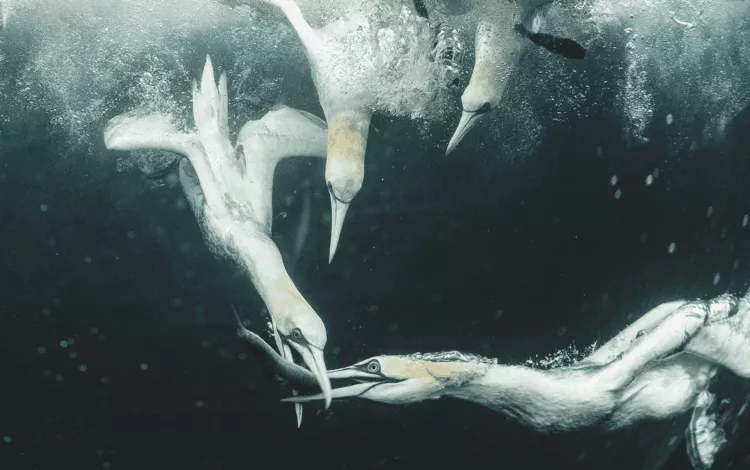
The tenor of the campaign leaves Murray feeling uncomfortable, for he sees it reflecting two very different, polarised worlds. ‘People in Ness don’t shout and push back. That’s a feature of tight-knit communities – they are too small for that not to be the case. You keep thoughts to yourself, stay polite. In contrast, urban communities can just be echo chambers. Climbing up on rooftops, damaging buildings is not a legitimate way of making an argument. Rather than having the decency to come up to Ness and speak to local people, they decided to stage protests in Edinburgh. It just smells like urban bullying.’