From the Everglades to the Sundarbans, discover where exactly the world is storing its blue carbon – and why it is so useful
By
Around the world, carbon sinks play a vital role in protecting our planet. Essentially, these regions describe areas where large volumes of carbon are absorbed from the atmosphere, reducing the concentration of greenhouse gases.
In particular, blue carbon sinks – coastal and marine ecosystems that capture and store carbon dioxide – are of great importance to the planet. That’s because they sequester carbon at a much faster rate than terrestrial sinks, like forests.
Enjoying this article? Check out our related reads…
So, where are the world are the biggest blue carbon sinks? Read on to find out…
4) The Sundarbans & Sundarbans National Park – 168 million tonnes of carbon
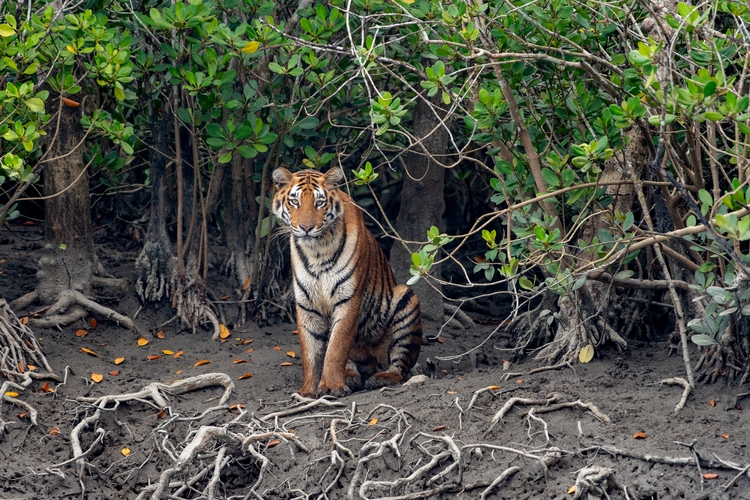
Located in the Ganges Delta, the Sundarbans is one of the largest mangrove forests in the world. It is home to more than 260 bird species, the Bengal tiger and other threatened species such as the estuarine crocodile and the Indian python.
The plethora of tidal mangrove forests comprising the Sundarbans are in fact a mosaic of islands of various shapes of sizes. The mangroves within them can store carbon via photosynthesis, incorporating it into their biomass and burying it in waterlogged, oxygen-poor soils.
3) Banc d’Arguin National Park – 112 million tonnes of carbon

Situated on the Atlantic – and stretching along 30 per cent of the Mauritanian coast – the Banc d’Arguin is a landscape comprised of sand dunes, coastal swamps, small islands and shallow coastal waters.
It is also home to an abundance of seagrasses, known as a vital carbon sink for their ability to capture and store carbon. In the area, an estimated 772km2 of seagrass hold 109 million tonnes of carbon, equivalent to the average emissions of 97 coal-fired power plants in one year.
Seagrass can lock carbon into the seabed 35 times faster than tropical rainforests. And although seagrass meadows only occupy 0.2 per cent of the seafloor, they account for a staggering 10 per cent of the total carbon annually buried in the sea.
2) Everglades National Park – 400 million tonnes of carbon

At number two is the Everglades, whose vast mangrove forests act as vital carbon sinks. It is estimated that the mangroves in the national park alone hold enough carbon to heat more than 19 million homes, while the water conservation areas in the central Everglades store the equivalent carbon emitted by 131.5 million passenger vehicles over an entire year.
In general, Florida acts as an all-important carbon sink. Its coastal wetlands remove an estimated 31.8 million metric tonnes of carbon from the atmosphere each year, equivalent to the carbon emissions of a commercial aircraft circling the globe more than 26,000 times.
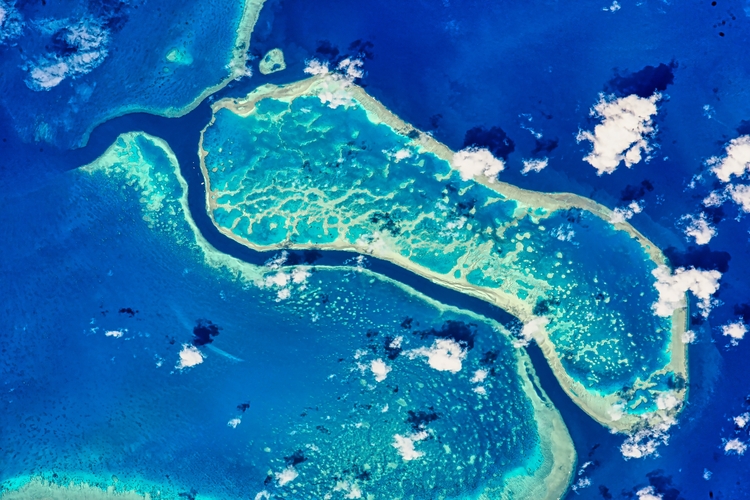
1) Great Barrier Reef – 502 million tonnes of carbon

The Great Barrier Reef is officially the largest blue carbon sink in the world, holding around 502 million tonnes of carbon in its coastal wetlands and vast ecosystems. For example, its seagrass and mangrove forests store around 13 per cent of Australia’s blue carbon stock, notable given the area encompasses only four to six per cent of the total extent of Australia’s wetlands.
A recent study has revealed that restoring blue carbon ecosystems in the Great Barrier Reef could have beneficial impacts to blue carbon storage. By restoring these ecosystems in 90,000 hectares of land, an additional five million tonnes of carbon dioxide could be captured by the end of the century.