
Shakespeare may have thought names changed little, but for nations, they can embody history, identity, sovereignty – and sometimes a considerable amount of politics

By
As the great philosopher W C Fields said, ‘It ain’t what they call you, it’s what you answer to.’ This is a far better maxim than the Bard’s ‘a rose by any other name would smell as sweet’, because the answer to the question ‘what’s in a name?’ is — a great deal.
This brings us to the South Pacific and the island formerly known as Nauru. It is now to be known as Naoero, (pronounced Now-ero). In case you want to pick out its athletes at the next Olympic Games — the country’s international code has changed from NRU to NRO. I say ‘athletes’, but it might be ‘athlete’ as only one made it to Paris 2024. Still, not bad going for the world’s third-smallest country by population — just 12,000 souls.
Enjoying this article? Check out our related reads…
The people always knew who they were, but in 1888, along came the Germans, who, as late starters, were looking for somewhere to colonise. They found saying Nowero too difficult and, to the locals’ annoyance, gradually changed it to Nowroo, which continued during Australian administration and since independence in 1968. According to the government, the real name was never lost, ‘but rather waiting to be fully embraced’.
It’s the latest country to signal a shift from a colonial past. Remember Swaziland? It reverted to its historic name — Eswatini — in 2018.
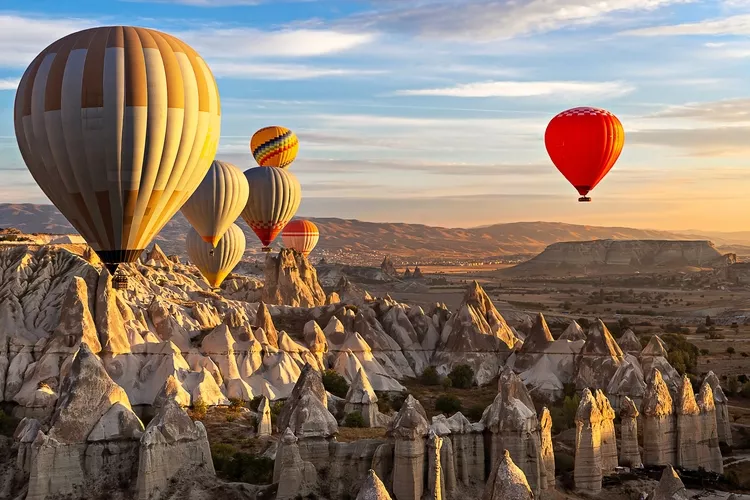
Names matter. They are the building blocks of identity and can reflect a country’s heritage, culture and aspirations. Let’s talk Turkey, or rather Türkiye, which is what Turks have known it as since the fall of the Ottoman Empire. In 2022 the UN agreed to Türkiye’s request for Türkiye to be used in official business. Aside from official documents, it hasn’t properly caught on, but from Erdoğan’s perspective, he’s pushed the name into international institutions, thus burnishing his nationalist credentials.
Feathers were ruffled the following year when India’s prime minister, Narendra Modi, sat behind a sign using the Sanskrit name ‘Bharat’ at the G20 summit. Modi argues that the name India is tied to colonialism and points to previous name changes such as Bombay becoming Mumbai. Critics say it’s a political ploy intended to appeal to Hindu nationalism.
The French may have named a region Upper Volta, but in 1984 its people preferred Burkina Faso — a name derived from some of the languages spoken there. The Congo became the Democratic Republic of the Congo, while its capital, Léopoldville, was later renamed Kinshasa as part of a drive to remove colonial-era names.
Siam became Thailand, Burma is now Myanmar, and we know Ceylon as Sri Lanka. The latter reverted to an ancient name in the 1970s. The Sanskrit term ‘Lanka’, meaning ‘island’, appears in the Ramayana, in which a bridge is built between India and Sri Lanka. In the 1500s, the Portuguese called it Ceilão, which eventually became Ceylon under the British. In 1972, ‘Sri’ — an honorific conveying splendour or distinction — was added. The tea remains unchanged.
Few people, including those who live there, are going to call North Macedonia by the name it adopted in 2019. The change from Macedonia was made to resolve a dispute with Greece — which has a region called Macedonia — and remove a Greek obstacle to joining NATO.
Czechia is a work in progress. The Czech Republic remains the country’s formal name, but Czechia has been its official short name since 2016 and is increasingly used in international forums. It also makes a better football chant.
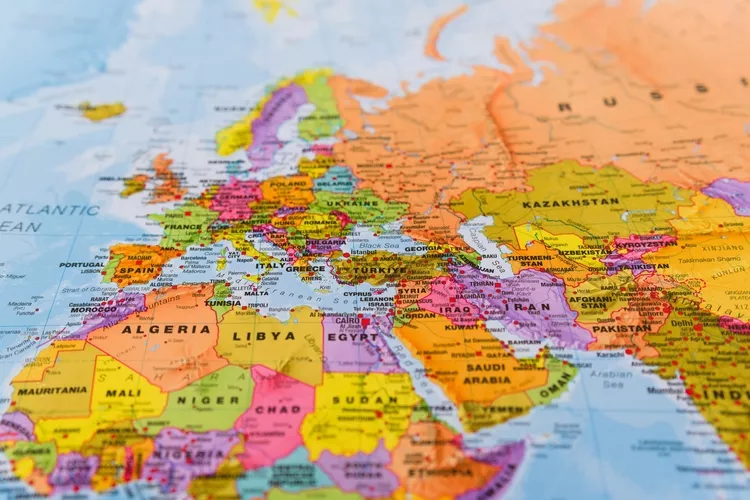
On around the world we go… Tibet or Xizang? Beijing wants the latter; many Tibetans don’t. Taiwan or Chinese Taipei? That depends on whether you back Beijing’s view and, if not, there’s a price to pay. In 2021, Lithuania allowed a ‘Taiwanese representative office’ to open in Vilnius rather than using the customary ‘Taipei’. Beijing retaliated and Lithuanian exports to China subsequently collapsed.
Nothing lasts for ever. Paris was Lutetia, Toronto was York, Istanbul was Constantinople. Oh, and this summer president Trump trolled Canada again by floating the idea that Lake Ontario might be renamed Lake America.
And why are turkeys called turkeys? Because the East African guinea fowl resembles a turkey. It was imported into Europe via the Ottoman Empire and became known as the ‘turkey-hen’. When settlers in America began to send similar-looking birds back to Europe, they called them turkeys. By the 1930s, they were calling awful movies ‘turkeys’, as the bird is considered to be a few feathers short of a headdress. That was hardly an association Erdoğan was keen to preserve.
Some changes are more successful than others. Many people in Mumbai still refer to the city as Bombay, perhaps including those who work at the Bombay Stock Exchange and the Bombay High Court. More importantly, ever seen ‘Mumbai Aloo’ on a menu?
Knowing the right name is important. As the memorably forgetful Zsa Zsa Gabor said, ‘How do you think the “dahling” thing got started?’