
The Jaecoo 7’s UK success reveals a striking reversal: Chinese car brands are no longer catching up with Europe – they’re selling aspiration back to it

By
The bestselling car in the UK in March 2026 was the Jaecoo 7, a Chinese family SUV. More than 10,000 were sold that month alone, around 800 more than the second-placed Ford Puma. Jaecoo 7s, alongside offerings from other Chinese companies, such as the quixotically named Build Your Dreams and the resurrected, but no longer British, MG brand (part of SAIC Motor), are now a familiar sight on the roads. Until recently, you wouldn’t have associated China with car manufacturing.
Enjoying this article? Check out our related reads…
In the 1990s, China twice featured as the underdeveloped backdrop to memorable adverts for German cars. The first, from 1996, was for a VW Golf VR6, whose point of difference was packaging a powerful 2.8-litre, six-cylinder engine into a bestselling family hatchback. The TV commercial opens with a manic crowd of Chinese gamblers gathered around a baize-green table waving money. Excitement is building for a beetle race. Then a cool, calm Western man enters the fray, bringing his own competitor to the party. While his insect looks like the rest, ‘it has a more powerful muscle structure under its shell’, and it wins the race easily. The advert reproduced orientalist tropes – the subtext was that Chinese people weren’t as savvy and discerning as Europeans. The Western man has the judgement and class to pick the fastest beetle, and the most capable car.
The second car ad, from 1997, was more sober. It claims to be based on real events and opens with a junk being boarded by police on the Hong Kong–China border. They search the vessel but leave without finding any contraband. The ship sails on. Hidden underwater, it tows a car-shaped package: a new Audi A6. A voiceover reveals the story: ‘Communism meets consumerism in the handover of Hong Kong, fuelling China’s desire for advanced consumer goods. Some consumers, however, are already one step ahead.’
So why is the Jaecoo 7 now more appealing than products offered by European brands such as VW and Audi? Cost is a factor. It’s priced from £29,210, which puts it at the more affordable end of the SUV market in the UK, although it does have cheaper rivals. It’s neither fast nor especially green, so isn’t a car for enthusiasts or environmentalists. Autocar magazine reports that it ‘handles like a boat, drinks like a fish!’ and Top Gear gave it a middling 5/10 rating. What the Jaecoo 7 gets right is having the Goldilocks combination of price, functionality and, especially, desirability. Inside, it’s tech-laden, with screens and gadgetry. Outside, it mimics the much-coveted Range Rover. The design cues of clean monolithic surfaces and detailing are so reminiscent of the luxury British off-roader that it has earned the nickname the ‘Temu Range Rover’. It isn’t a great or highly original car, but it’s perfect transport for aspirational individuals who like flash things.

What’s so interesting about the Jaecoo phenomenon is that it contrasts with the trajectory of previous new foreign brands that launched in the UK market. When Japanese cars first arrived in the late 1960s and 1970s, Honda, Nissan and Toyota steadily built reputations for value and reliability. It would take decades for them to pivot to producing desirable models such as the premium-adjacent Jaecoo 7. The same was true of the Hyundai and Kias that came out of South Korea in the 1980s and 1990s. The Romanian brand Dacia, which launched in the UK in 2013, is still targeting the bottom of the market. In contrast, while there are very cheap Chinese cars on the market, some marques have leapfrogged the stage of developing brand awareness and reputation, and arrived fully formed as coveted commodities.
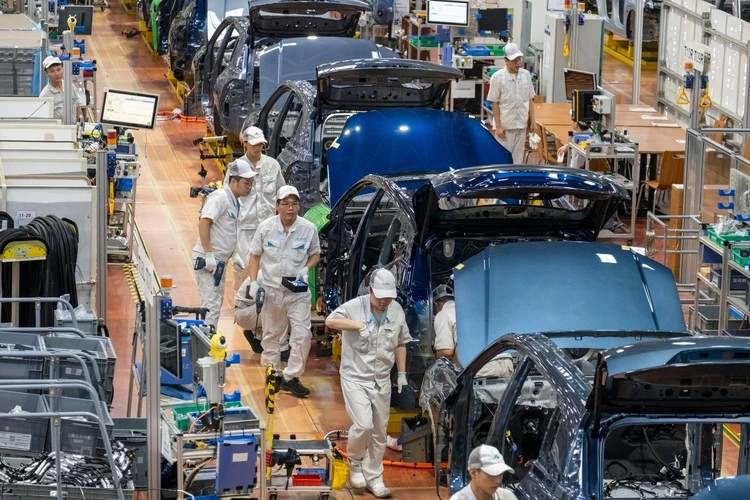
Compared to the story told by the VW and Audi adverts of the 1990s, the geographical relationships have been flipped. Europe has switched from being a net exporter of cars to China to an importer; more than a million vehicles travel east to west. Chinese manufacturers are producing vehicles as advanced and desirable as their European counterparts, certainly at a mass-market price point. As the UK motoring press suggests, these might not be the best-engineered vehicles on the road, but they could be the most commercially successful. It’s doubtful that a European car brand would now have the chutzpah to take a knowing prod at Chinese society for being guileless in the way that VW did in 1996.
In China, the Jaecoo 7 is marketed as the Chery Tansuo 06. There, the retail price starts at around 129,900 yuan – that’s only about £14,300. While there will be differences in specification and taxes, that figure is sobering for British Jaecoo 7 customers who paid more than double, or are locked into an inflated monthly payment scheme. Perhaps many Chinese consumers are now ‘one step ahead’ of their Western counterparts.