From the US to Turkmenistan, discover the nations whose water consumption ranks highest per capita – and why
By
Around the world, 11.7 billion cubic metres of freshwater are used per day – averaging around roughly 1,500 litres per person daily. However, usage varies dramatically between countries: a Briton uses around 142 litres per day while a resident in the Democratic Republic of the Congo may use just 20.
The majority of freshwater around the world is used for agriculture, in crop irrigation and livestock, followed by industry – for manufacturing, mining, cooling power plants and data centres – as well as domestic usage.
But which nations in the world use the most water per person? Here we reveal them, in reverse order, according to data from a 2025 report by the Food and Agriculture Organisation (FAO) of the UN.
5) United States – 46,969 cubic feet per person

As vast as the US’s water resources are – comprising more than seven per cent of the global renewable freshwater resources – it is vital that it is conserved, considering that the average American uses nearly twice the global average.
Around 90 per cent of daily water use in the lower 48 states of the US goes toward crop irrigation, power plants and public supply – equal to 224,000 million gallons of freshwater per day. The greatest proportion goes to thermoelectric power plants for cooling, followed by agriculture.
A significant drain on the US’s water reserves in coming years will likely be AI data centres: larger ones can require up to five million gallons of water per day – as much water as a 50,000-strong city would use. Many AI companies only report the water used directly on site for cooling, leaving out ‘indirect’ water consumption required by power plants that generate electricity. As such, the true scale of water used by these data centres may be far higher than estimates suggest.
4) Guyana – 61,907 cubic feet per person
In Guyana, water is primarily used for agricultural irrigation – specifically for rice and sugarcane farming. These industries can be found along the coastal plains and require extensive, year-round flooding. As well as this, high domestic water losses add to total usage, thanks to leaks and unmetered connections.
The Guyanan government has implemented policies to improve water management efficiency, such as upgrading drainage systems, distributing equipment and farming inputs, as well as increasing freshwater availability.
3) New Zealand – 68,652 cubic feet per person
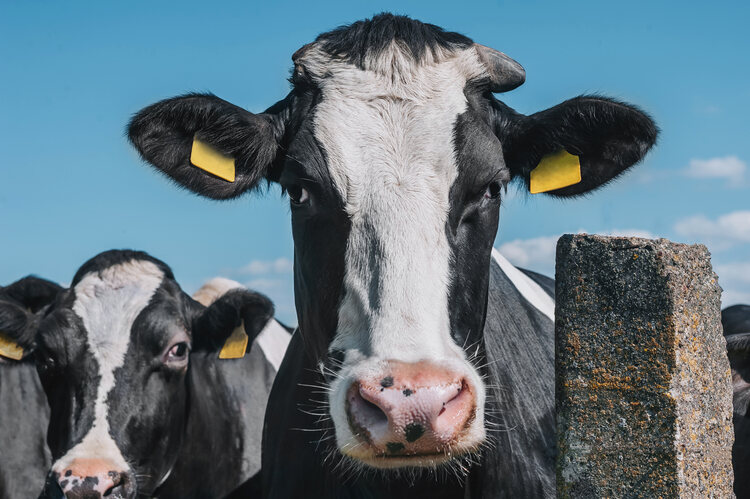
New Zealand has 425,000 kilometres of rivers and streams, almost 4,000 lakes larger than one hectare and around 200 aquifiers. However, while freshwater is plentiful in the country, demand for water is increasing.
New Zealand’s high water usage is primarily driven by its huge agricultural sector. The food system – and in particular pasture-based dairy farming – accounts for around 74 per cent of all allocated freshwater in the country, mostly to support irrigation.
Allocation of water in New Zealand increased by 50 per cent between 1999 and 2006, mainly resulting from an increase in the area of irrigated land. Today, irrigation uses almost 80 per cent of all water allocated.
2) Montenegro – 125,155 cubic feet per person
Because of climatic conditions, the uncontrolled use of water, huge losses in the water supply system and inadequate infrastructure, water consumption in Montenegro is double that of western Europe. As well as this, during the tourist season, there are insufficient provisions for drinking water in coastal regions.
In particular, unrealised leakages in ageing water infrastructure contribute to the nation’s significant water usage.
Montenegro utilises hydropower as its most important energy resource, however due to enviromental concerns and seismic risks, the country only harnesses 17 per cent of its potential hydropower. The nation also utiliss groundwater from its karst terrains, but these are especially vulnerable to pollution and climate change.
1) Turkmenistan – 128,228 cubic feet per person

At number one is Turkmenistan, the most water-stressed country in Central Asia thanks to its arid terrain and ineffective household and industrial water usage.
The nation relies heavily on the Amu Darya River for 90 per cent of its water, however the river is under severe stress from upstream withdrawals and declining flow, which threatens both agricultural productivity and ecosystem stability.
As one of the biggest cotton producers in Central Asia, Turkmenistan also uses vast quantities of water to produce this crop. To produce one kilogram of lint – roughly equivalent to a pair of jeans and one T-shirt – cotton requires up to 1,931 litres of irrigation water and 6,003 litres of rainwater on average. In addition, growing the fiber is just the beginning of its vast water usage – dyeing, bleaching and finishing cotton adds to consumption.