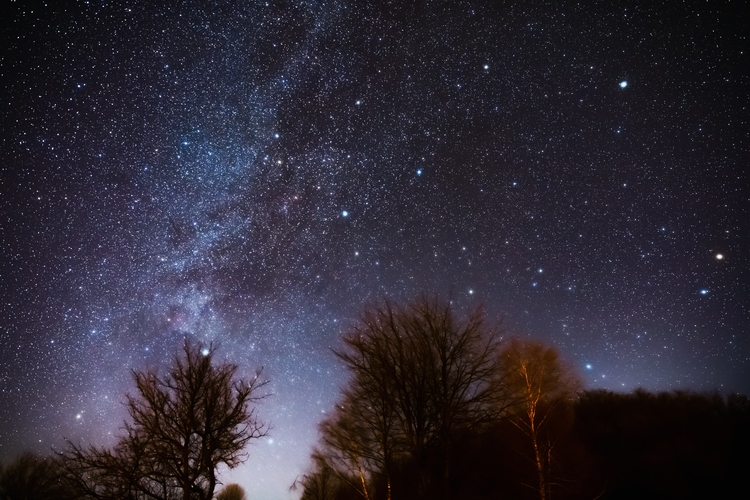
From Denmark to France, the UK to Portugal, discover the top ten places to stargaze around Europe this year
By
For decades, light pollution has been increasing globally. In the UK alone, between 1993 and 2000, light pollution increased by 24 per cent, with the amount of truly dark night sky falling from 15 per cent to 11 per cent.
However, despite the uptick in light pollution, there are still havens – particularly around Europe – that offer the opportunity to look upwards and see a magnitude of stars. Here, we cycle through the top ten places to visit if stargazing is on your bucket list for 2026…
Enjoying this article? Check out our related reads…
10) Kerry International Dark Sky Reserve, Republic of Ireland
Kerry International Dark Sky Reserve features a variety of amenities, including a church, a pub, several beaches, and even a chocolate factory. The reserve is composed of two sections, the Core Zone and the Buffer Zone. Usually, the Core Zone is the darkest part of a reserve, but in Kerry’s a lot of places in the Buffer Zone have equally dark areas.
Without the aid of any instrument, you’ll be able to gaze into the night sky and see thousands of stars varying in size and colour. On clear, moonless nights, it becomes difficult to see constellations because of just how many stars there are in the sky.
9) Dark Sky Park Bulbjerg, Denmark
Located in the Thy region along the North Sea’s shores in northwestern Denmark lies the Dark Sky Park Bulbjerg, a 12.54 square kilometre expanse of star-gazing opportunity. The region has diverse wildlife and fauna, including migratory birds such as the black-legged kittiwake and fulmar, that you can spot during your time there.
From the park, you’ll be able to see breathtaking views of moonlit skies, stars, the Milky Way and occasional displays of the Northern Lights. While it is in an isolated location, it is easily accessible from northern Thy, making it the perfect year-round destination.
8) Alqueva Dark Sky Observatory, Portugal
In Cumeada, a small village near Reguengos de Monsaraz, you’ll find Alqueva Dark Sky Observatory, the perfect place to observe planets and look at craters on the moon with cutting-edge telescopes. Outdoors, the observatory also offers opportunities for walking, horseback excursions by moonlight and astrophotography workshops.
7) Exmoor International Dark Sky Reserve, UK
Exmoor’s dark night skies are some of the best in the UK. With minimal light pollution, on cloudless nights you’ll be able to spot thousands of stars and astronomical sights such as the Milky Way with the naked eye. Back in 2011, the site was granted International Dark-Sky Reserve status, making it the first reserve to achieve such a status in the entirety of Europe.
Every October, the National Park hosts a two-to three-week Dark Skies Festival of events at locations all over the moor.
6) Moffat Dark Sky Town, UK
Moffat in Dumfries & Golloway is Europe’s first very first Dark Sky Town, having adopted special street lighting to keep light pollution to a minimum to preserve starry skies above the area. In 2021, the Moffat Community Observstory opened as a regularly-visited venue for public stargazing sessions.
This website offers a handy guide on when it is best to visit Moffat, according to the times when the bright moon is least visible in the sky.
5) OM Dark Sky Park & Observatory, UK
At number five is OM Dark Sky Park & Observatory in Northern Ireland. Combining the latest tech, from holographic installations to VR headsets, visitors to the centre can explore the solar system and star-gaze using telescopes to view the night sky without light pollution. It is the only official ‘dark sky’ park in Northern Ireland.
The observatory is at the heart of a rich landscape of cultural significance, located near the ancient Beaghmore Stone Circles at the foot of the Sperrin mountains.
4) Brecon Beacons Dark Sky Reserve, UK
Back in 2021, the Brecon Beacons National Park became an International Dark Sky Reserve. On moonless nights, the Milky Way is easily observable. Local accomodation providers offer plenty of ‘stay-and-gaze’ options, with scenic landscapes making for wonderful astrophotography opportunities.

3) Pic du Midi Observatory, France
France’s Pic du Midi Observatory takes third place, but comes first for being Europe’s highest planetarium at an altitude of 2,877 metres. It took two years to transport the plantearium to the summit on the back of men and mules in 1907 and 1908.
When you reach the planetarium, you’ll be treated to a unique panorama across 300 kilometres of Pyrenean summits, as well as some of the best viewing conditions in Europe to stargaze.
2) Yorkshire Dales International Dark Sky Reserve, UK
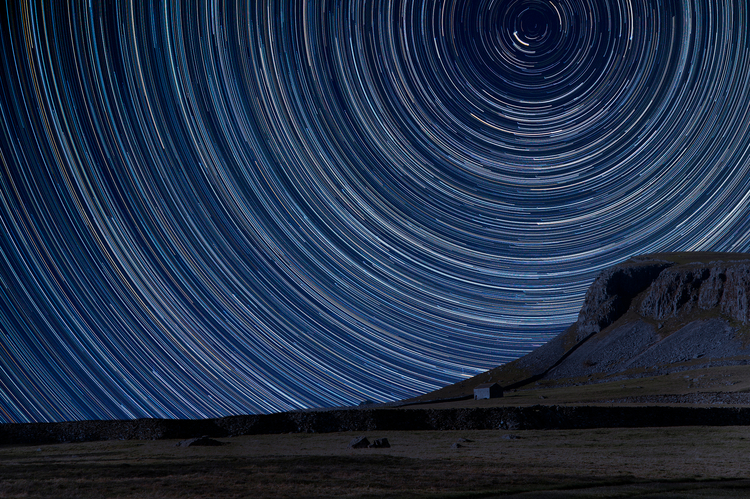
In 2020, the Yorkshire Dales National Parks were awarded the status of ‘Dark Sky Reserve’. In particular, the region benefits from stunning scenery by day, and incredible starry skies by night. A scheme running throughout the national parks encourages accommodation providers to host stargazers, so you won’t be short of a place to stay should you visit. As well as this, there are plenty of public events that take place throughout the year, many of which can be found on this website.
1) Kielder Observatory, UK
At number one is Kielder Observatory in the heart of Northumberland. Such a location means the observatory benefits from particularly dark skies, free from light pollution. Events run all year and include viewing opportunities where planets, moons, stars, meteors and satellites can all be seen. On most nights – especially at weekends – booking is required severasl weeks in advance.
The best time to visit Kielder Observatory is during the observing season (September to March), when skies are at their darkest and best for viewing stars. It’s best to avoid periods around the full moon, as full moonlight reduces visibility. Use this dark sky calendar to check the best times to visit.