
• Skip to main content
  • Skip to secondary menu
  • Skip to primary sidebar
  • Skip to footer
Geographical

Geographical

Official magazine of the Royal Geographical Society (with IBG)

  • Home
  • Briefing
  • Science & Environment
  • Climate
    • Climatewatch
  • Wildlife
  • Culture
  • Geopolitics
    • Geopolitical hotspots
  • Study Geography
    • University directory
    • Masters courses
    • Course guides
      • Climate change
      • Environmental science
      • Human geography
      • Physical geography
    • University pages
      • Aberystwyth University
      • Brunel University
      • Cardiff University
      • University of Chester
      • Edge Hill University
      • The University of Edinburgh
      • Newcastle University
      • Nottingham Trent University
      • Oxford Brookes University
      • The University of Plymouth
      • Queen Mary University of London
    • Geography careers
      • Charity/non-profit
      • Education & research
      • Environment
      • Finance & consulting
      • Government and Local Government
    • Applications and advice
  • Quizzes
  • Magazine
    • Issue previews
    • Subscribe
    • Manage My Subscription
    • Special Editions
    • Podcasts
    • Geographical Archive
    • Book reviews
    • Crosswords
    • Advertise with us
  • Subscribe
    • Direct Debit Changes

Norway rules out Arctic deep-sea mining until 2029

3 December 2025
3 minutes

Arctic waters
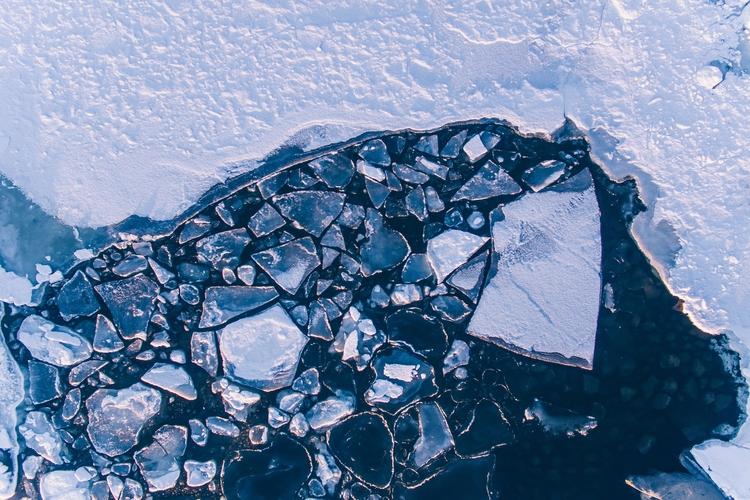
Norway has joined almost 40 countries calling for a pause, ban or moratorium on deep-sea mining. Image: Shutterstock

Ruling from newly-elected government means Arctic deep-sea mineral exploration and exploitation will stop until the end of decade


By Victoria Heath

The newly-elected Norwegian government has ruled out deep-sea mining licenses in the Arctic until at least the end of 2029. Such a deal was confirmed today after pressure from environmental movements and hard negotiations from green opposition parties in the nation.

As well as the ban, Norway will also cut all public funding for government-led mineral mapping, marking a notable shift in its stance on deep-sea mining. Prior to this, the nation was one of the mining industry’s strongest proponents – but now Norway is moving to halt both exploration and exploitation in its own waters.


Enjoying this article? Check out our related reads:

  • Sharks, rays & chimaeras face threats from deep-sea mining
  • Should we mine the deep-sea floor?
  • What could Trump’s ‘drill, baby, drill’ for oil mean for the US?
  • How deep-sea vents can help warn of future eruptions
  • Diving into the twilight zone

The decision comes as another blow to the deep-sea mining industry, whose viability has been thrown into question before even going into business. In November, Cook Islands authorities announced deep-sea mining applications in the Pacific nation’s waters would be subject to five-year extensions, delaying mining in the region until at least 2032.

‘Deep-sea mining in Norway has once again been successfully stopped,’ said deep-sea mining campaigner at Greenpeace Nordic, Haldis Tjeldflaat Helle. ‘We will not let this industry destroy the unique life in the deep sea, not in the Arctic, nor anywhere else. Now Norway must step up and become a real ocean leader, join the call for a global moratorium against deep-sea mining, and bring forward a proposal of real protection for the Arctic deep sea.’

A visualisation of how deep-sea mining would work. Video: MIT Mechanical Engineering

Since 2022, 33 countries have called for a precautionary pause, moratorium or ban on deep-sea mining. That number has since risen to almost 40, with the addition of Slovenia, Latvia, Cyprus and the Marshall Islands this year alone. In particular, Portugal passed a moratorium this year and made history by becoming the first country to ban deep-sea mining in its waters for the next 25 years.

International opposition to deep-sea mining has also been expressed by companies such as Google, Samsung, and Ecotricity, which have all pledged to avoid using ocean-mined minerals.

In addition, more than 700 scientists from 44 countries have become signatories on an open call to pause deep-sea mining.

What is deep-sea mining?

Deep-sea mining involves heavy machinery scooping up rare metals and minerals from the ocean floor from nodules located thousands of metres below sea-level. Metals like cobalt and nickel are of particular interest to companies who use them to create products such as electronics and computer chips. These minerals would then be pumped up to the surface, using machinery weighing more than a blue whale.

The industry is very new – apart from small tests, no commercial mining has yet to occur.

Like mining on land, deep-sea mining is extremely destructive. The nodules containing metal and mineral deposits are likely valuable ecosystems that cannot be replaced once removed. Mining these deposits would also destroy biodiversity and habitats that aren’t yet fully understood.

Undersea mining can also lead to an increase in underwater noise, causing extreme disruption to marine mammals like dolphins and whales who use echolocation as a primary means of communication and sensing.

Themes Briefing

Protected by Copyscape

Primary Sidebar

OUR UK DIRECT DEBITS ARE CHANGING
THE PRESENT THAT LASTS ALL YEAR

Geographical subscriptions

GEOGRAPHICAL WEEKLY LOGOFREE - Sign up to get global stories, told well, straight to your inbox every Friday

Popular Now

Warren Beach, Folkestone

Where the dinosaurs last walked in Britain

QUIZ: Flags of the World – Central America

QUIZ: Flags of the World – Central America

QUIZ: Geography Trivia

QUIZ: Geography Trivia

Tongass National Park in Alaska

The top five countries with the largest forests in 2025

Trail running in winter

The art of winter trail running

Footer

  • Facebook
  • Instagram
  • LinkedIn
  • Reddit
  • TikTok
  • Twitter
  • YouTube

Geographical print magazine cover

Published in the UK since 1935, Geographical is the official magazine of the Royal Geographical Society (with IBG).

Informative, authoritative and educational, this site’s content covers a wide range of subject areas, including geography, culture, wildlife and exploration, illustrated with superb photography.

Click Here for SUBSCRIPTION details

Want to access Geographical on your tablet or smartphone? Press the Apple, Android or PC/Mac image below to download the app for your device

Footer Apple Footer Android Footer Mac-PC

More from Geographical

  • Subscriptions
  • Get our Newsletter
  • About Us
  • Contact Us
  • Advertise with us
  • Privacy policy
  • Terms & Conditions

Copyright © 2025 · Site by Syon Media