
From human cooperation to the chemistry of life, bonds hold our world together – but PFAS show what happens when nature’s ties are made almost impossible to break

By
Long-lasting human bonds form the foundation of our social and familial fabric, as celebrated in wedding vows. However, they are also inherently fragile. Human history is dotted with conflicts and betrayals, somehow obscuring the fact that our millennia-long adventure has been fundamentally blessed by a non-zero-sum game of bonded cooperation – a civilisational trajectory famously mapped out in Robert Wright’s book Nonzero.
We also happen to be here because of another type of bond – chemical bonds. Life as we know it is based on carbon, an element capable of forming four stable covalent bonds at the same time. It’s a chemical flexibility that allows it to build the complex, three-dimensional molecular scaffolding that sustains any form of life. It’s one of the many wonders of nature – a nature humankind has increasingly interfered with to the extremes.
Enjoying this article? Check out our related reads…
Chemical bonds were never meant to be eternal. With time, bacteria or ultraviolet radiation, water or lipids break them down for sound evolutionary reasons. Yet humans have devised a way to tie the knot of almost unbreakable bonds.
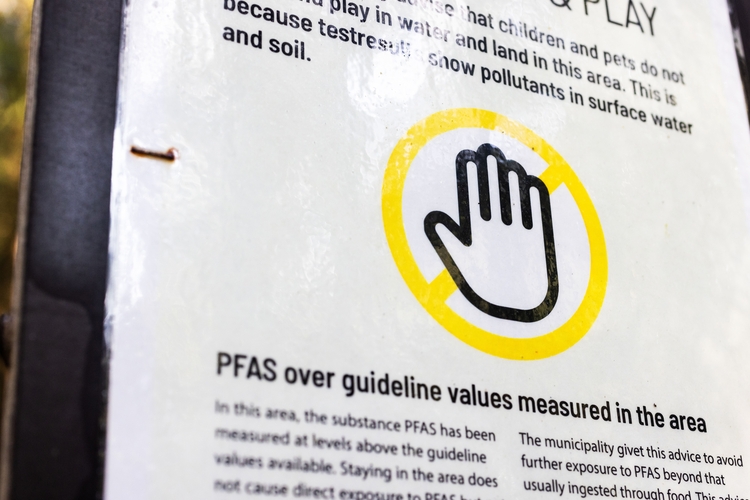
Since the 1940s, we’ve been manufacturing an increasing amount of PFAS, a peculiar category of synthetic compounds. They’re useful in non-stick cookware, stain-resistant clothing and carpets, cosmetics, firefighting foam and much more. They’ve ended up in water and soils, in livestock and plants. And so, they are estimated to be in the blood, liver and kidneys of practically every human being on Earth. They are eloquently called ‘forever chemicals’.

Basically, it’s all due to a single bond, the strongest existing single covalent bond in organic chemistry: carbon (C) and fluorine (F) atoms that, in the case of PFAS, are repeated in chains. The C–F relationship is so sturdy that – depending on which of the thousands of compounds in the PFAS cohort you look at – it is bound to last for centuries or millennia. No bacterium is capable of breaking molecules that didn’t exist in nature before.
Several documentaries have been shot, books have been written and the internet is rife with horror stories. Like the farmer in Michigan who was encouraged by the EPA – the US environmental agency – to fertilise his soils with the biosolids of municipal waste treatment, only to be notified later by the EPA that his cows were too contaminated to be eaten. What is striking, though, is that PFAS – whose toxicity has been well known to the chemical industry since 1973 – are still around.
Scientific research has already linked diverse C–F compounds to an increased risk of kidney and testicular cancers, liver damage, immune system suppression, thyroid disease and reproductive troubles.
In recent years, several companies have vowed to get rid of PFAS. Promising studies on how to replace them, and on how to break the existing C–F bonds, are underway. Growing public awareness may start to favour the purchase of PFAS-free items. Class actions and the campaigns of anti-PFAS activists are making strides. But all these promises and efforts are terribly late.
Since January, EU drinking-water rules have required member states to meet binding PFAS limit values. In August, an EU-wide restriction on PFAS in food packaging will enter into force. The UK launched its PFAS Plan in February, which could soon translate into stricter regulations. Industrialised countries, including China, a major producer, are broadly following the Stockholm Convention on Persistent Organic Pollutants, which, since 2009, has banned or restricted a few PFAS – out of thousands. The industry has responded by substituting banned molecules with permitted versions. And the USA – homeland of Teflon, the primordial PFAS – isn’t a party to the convention, along with Israel and Malaysia.
Under the Biden administration, the EPA set landmark limits on six types of PFAS in drinking water, and was promptly sued by the chemical industry. The same agency announced just a few weeks ago that it would repeal the limits on four of the six chemicals. It will later decide if and how those substances should be regulated. While a few CEOs and lobbyists may feel relieved, it won’t be an easy call: the EPA’s reversal clashes with the MAHA movement of Health Secretary Robert F Kennedy Jr – it makes America unhealthy again.
The trouble with forever chemicals may be eased in the lab – several substitutes are being found – but can be eradicated only by regulation.
We exist and prosper because of bonds. However, in politics as in biology, they should never be unbreakable.